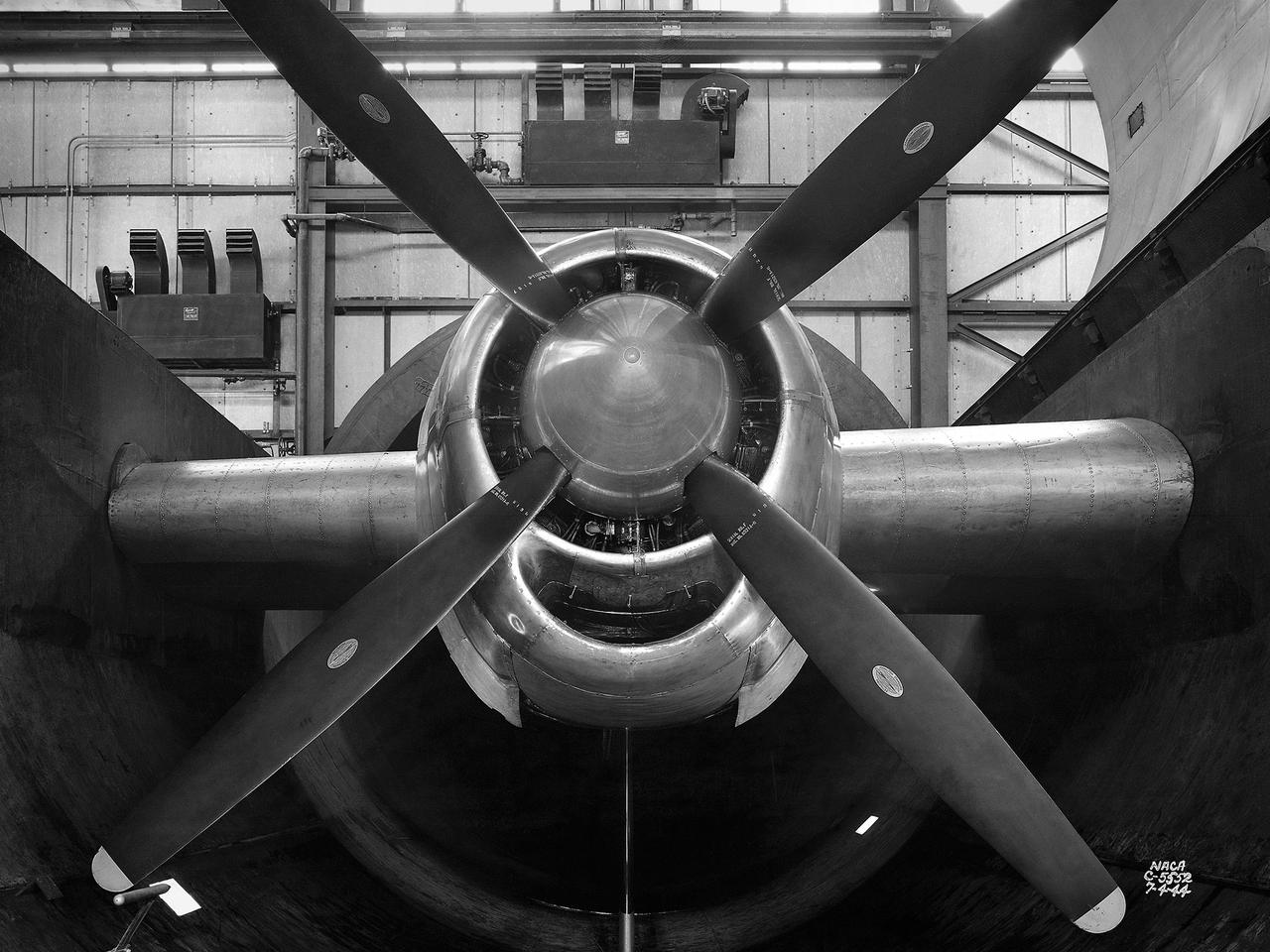
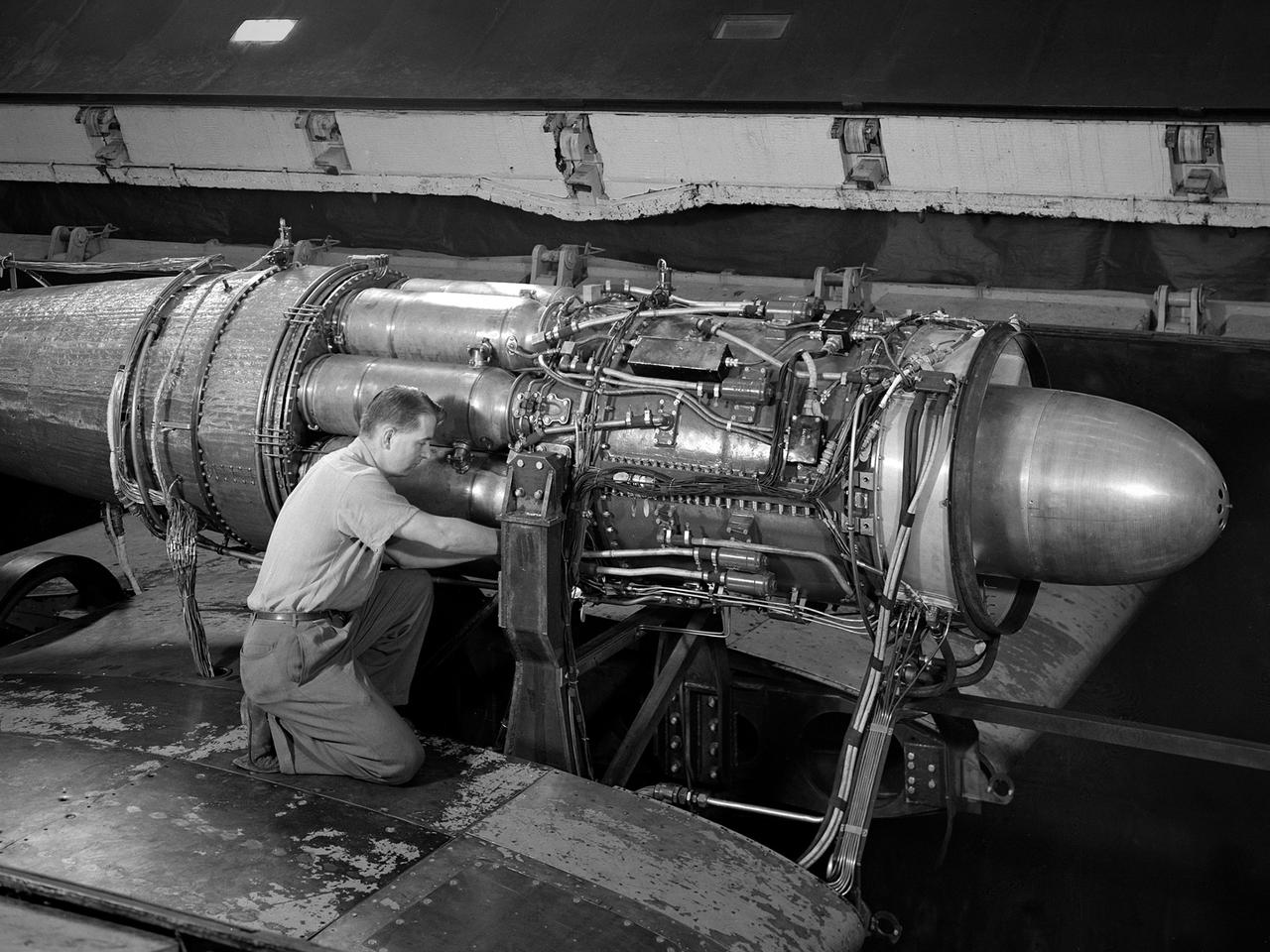
B-29 Superfortress Engine in the Altitude Wind Tunnel
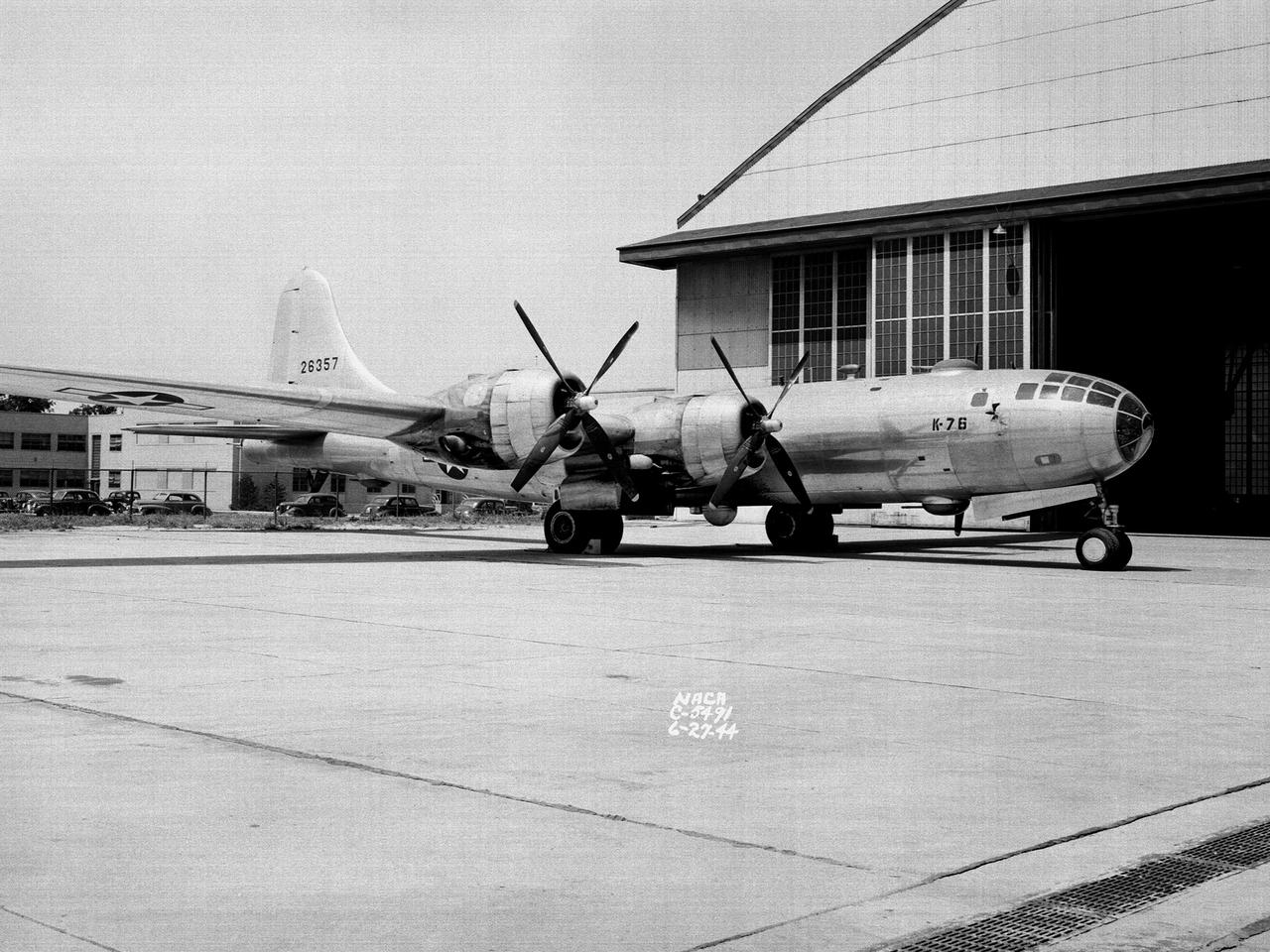
The resolution of the Boeing B-29 Superfortress’ engine cooling problems was one of the Aircraft Engine Research Laboratory’s (AERL) key contributions to the World War II effort. The B-29 leapfrogged previous bombers in size, speed, and altitude capabilities. The B–29 was intended to soar above anti-aircraft fire and make pinpoint bomb drops onto strategic targets. Four Wright Aeronautical R-3350 engines powered the massive aircraft. The engines, however, frequently strained and overheated due to payload overloading. This resulted in a growing number of engine fires that often resulted in crashes. The military asked the NACA to tackle the overheating issue. Full-scale engine tests on a R–3350 engine in the Prop House demonstrated that a NACA-designed impeller increased the fuel injection system’s flow rate. Single-cylinder studies resolved a valve failure problem by a slight extension of the cylinder head, and researchers in the Engine Research Building combated uneven heating with a new fuel injection system. Investigations during the summer of 1944 in the Altitude Wind Tunnel, which could simulate flight conditions at high altitudes, led to reduction of drag and improved air flow
- Date
- 1944-07-23
- Collection
- GRC
- Archive
- NASA Image and Video Library
- Type
- photograph
Public domainsafest
Reason: a NASA work: not copyrighted in the United States.
Read from: NASA media usage guidelines: NASA material is not copyrighted in the US unless noted; no third-party credit or mark found.
Credit line
"B-29 Superfortress Engine in the Altitude Wind Tunnel" (1944-07-23). NASA/GRC. Public domain. https://images.nasa.gov/details/GRC-1944-C-05552Need photos for a whole script? Add Find Any Photo to Claude and ask for this one by its id: 90517.
More like this
Boeing B–29 Superfortress at the Aircraft Engine Research Laboratory
1944-07-23 · NASA Image and Video Library
Altitude Wind Tunnel Control Room at the Aircraft Engine Research Laboratory
1944-07-23 · NASA Image and Video Library
Wright R–2600–8 Engine in the Engine Propeller Research Building
1943-03-23 · NASA Image and Video Library
First Test Program in the NACA’s Altitude Wind Tunnel
1944-03-23 · NASA Image and Video Library
Python Turboprop Prepared for a Test in the Altitude Wind Tunnel
1949-08-23 · NASA Image and Video Library
Aircraft in the Flight Research Building at the Aircraft Engine Research Laboratory
1944-06-23 · NASA Image and Video Library
Ramjet Testing in the NACA's Altitude Wind Tunnel
1946-02-23 · NASA Image and Video Library
General Electric TG-180 Turbojet in the Altitude Wind Tunnel
1947-09-23 · NASA Image and Video Library