Early Rockets
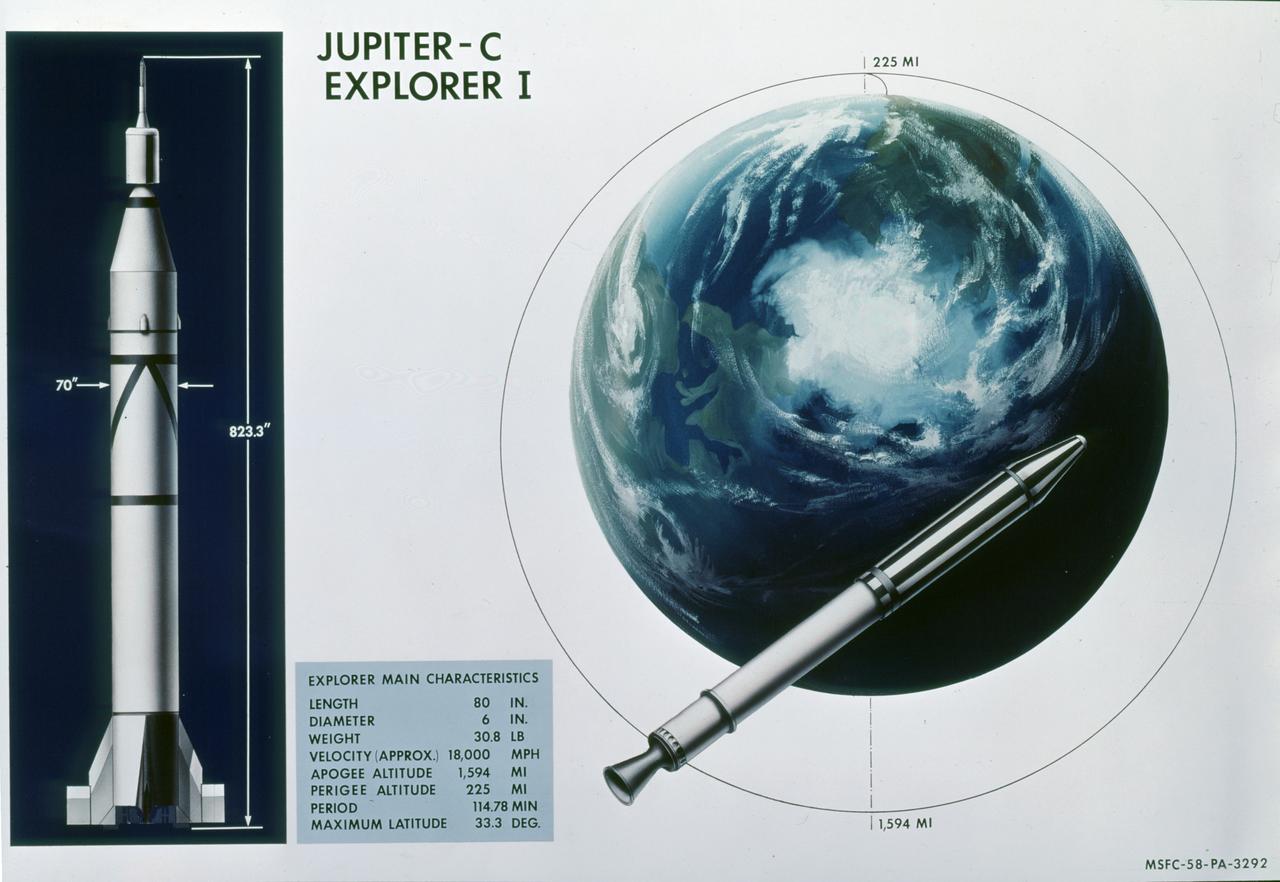
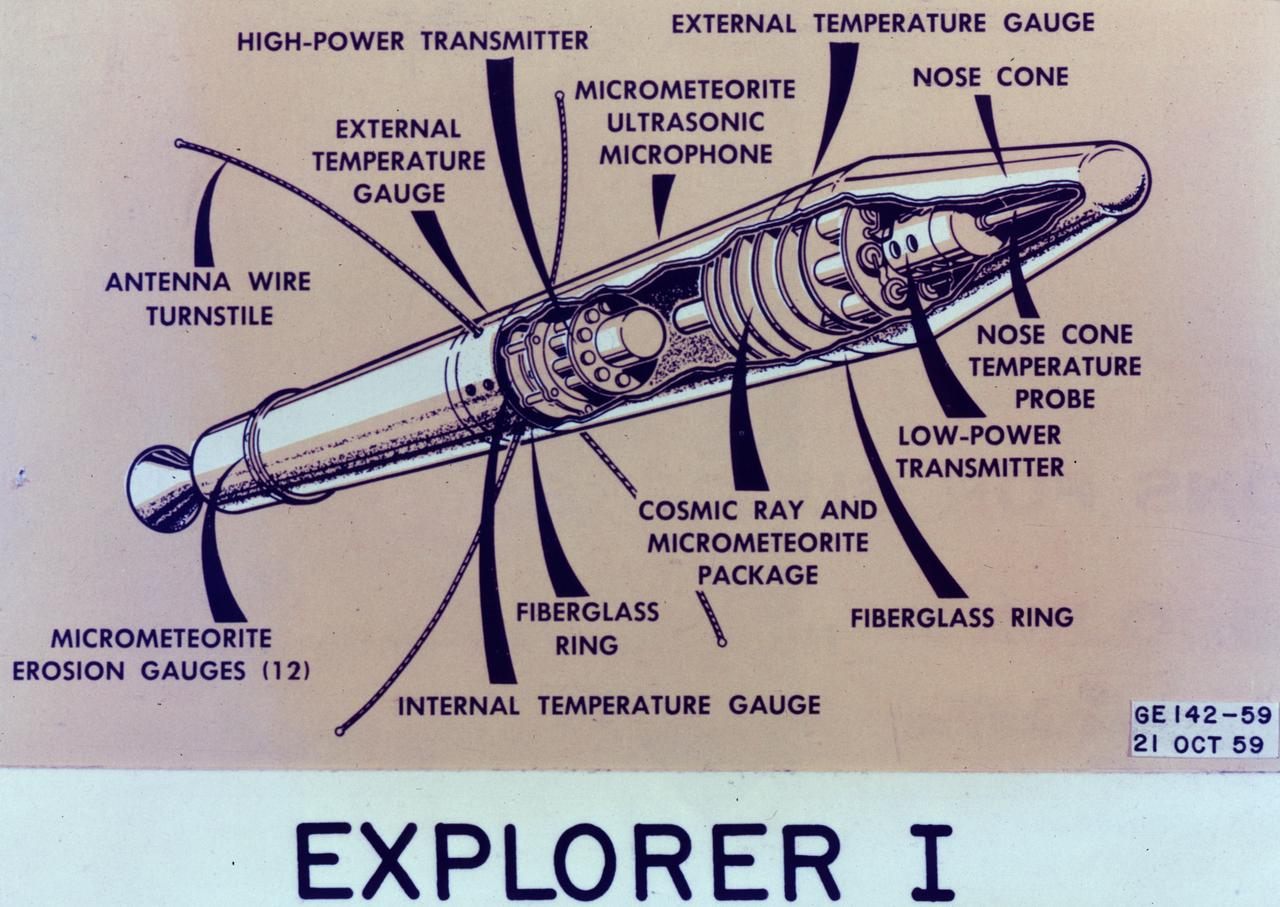
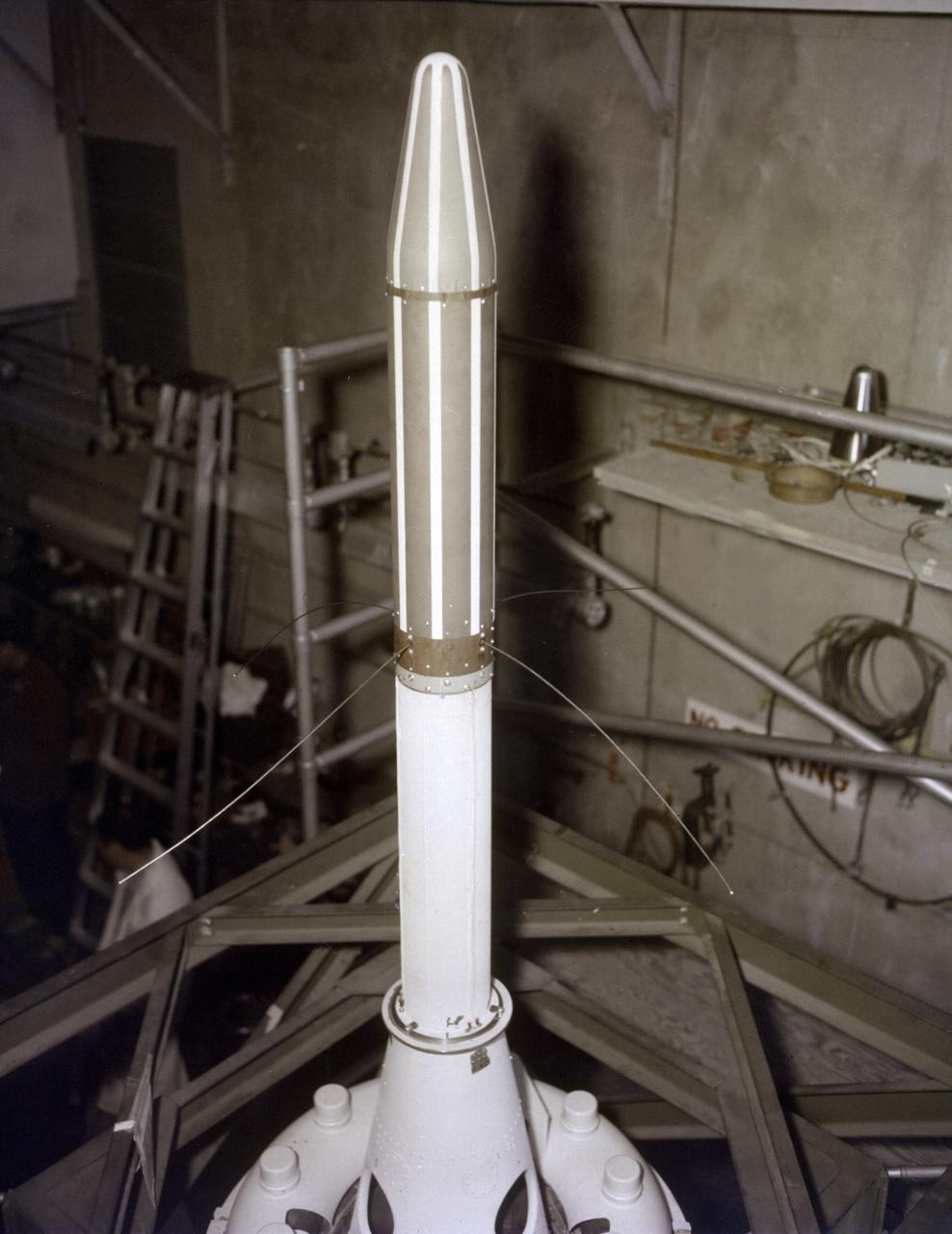
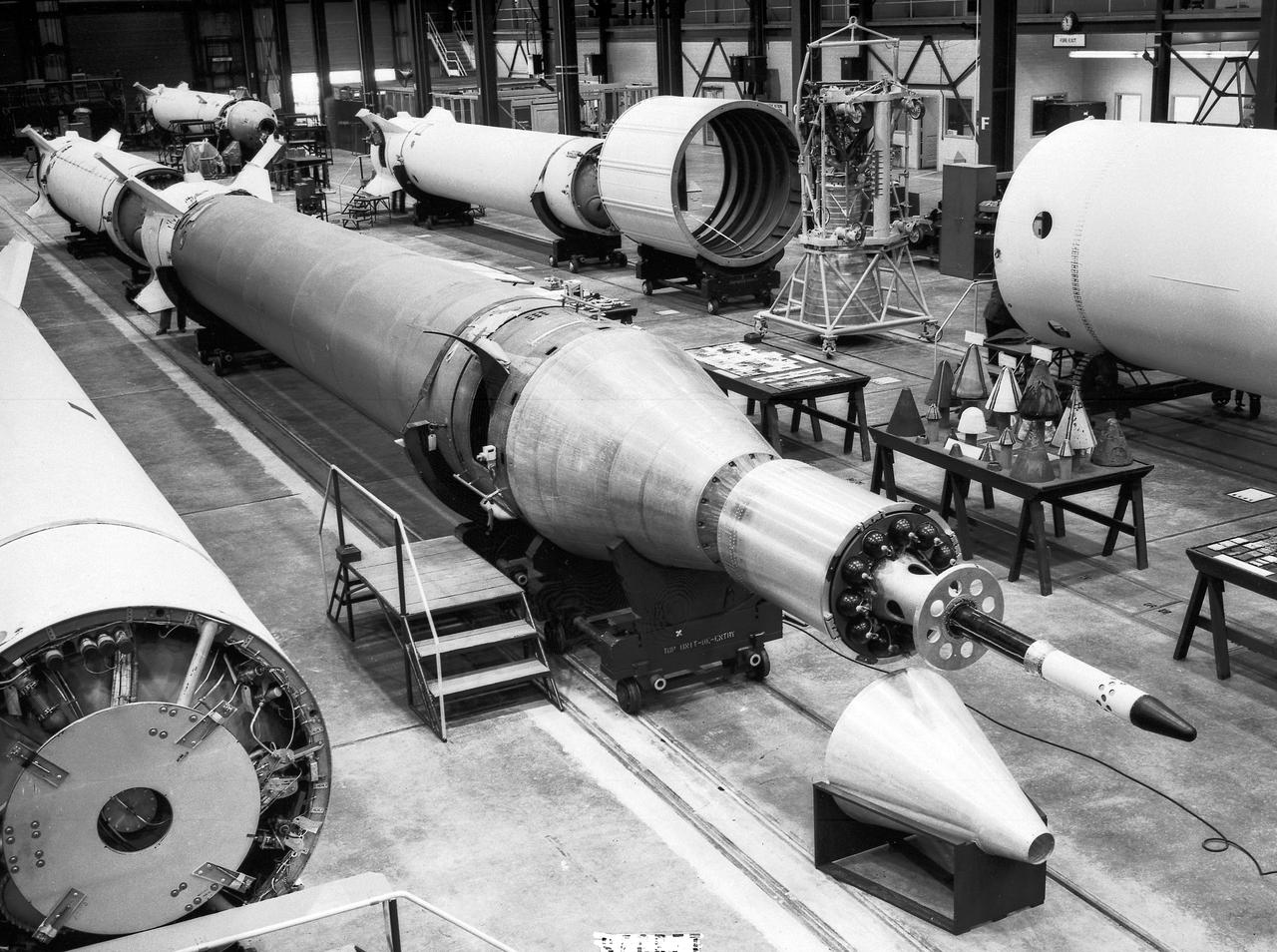
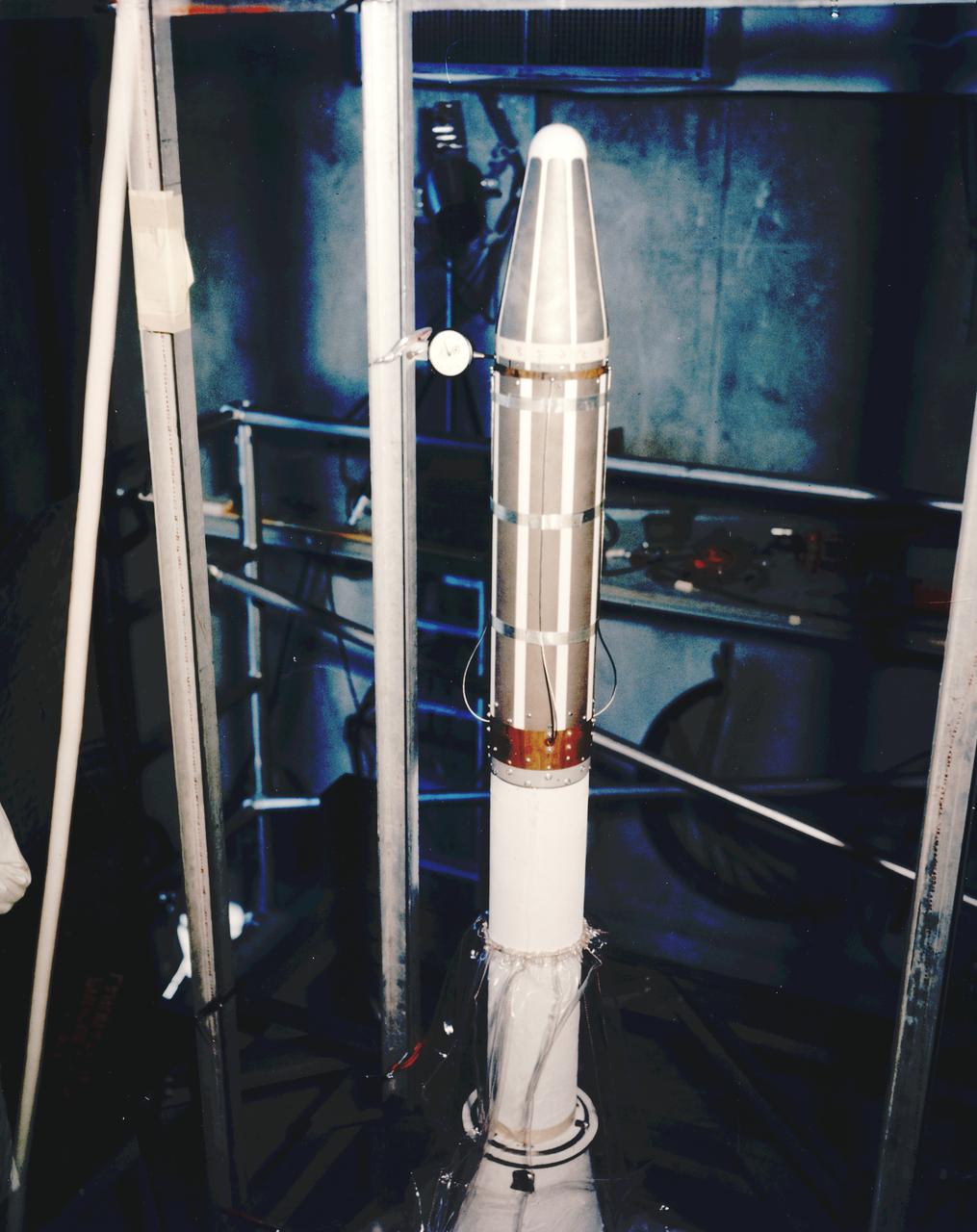
This illustration shows the main characteristics of the Jupiter C launch vehicle and its payload, the Explorer I satellite. The Jupiter C, America's first successful space vehicle, launched the free world's first scientific satellite, Explorer 1, on January 31, 1958. The four-stage Jupiter C measured almost 69 feet in length. The first stage was a modified liquid fueled Redstone missile. This main stage was about 57 feet in length and 70 inches in diameter. Fifteen scaled down SERGENT solid propellant motors were used in the upper stages. A "tub" configuration mounted on top of the modified Redstone held the second and third stages. The second stage consisted of 11 rockets placed in a ring formation within the tub. Inserted into the ring of second stage rockets was a cluster of 3 rockets making up the third stage. A fourth stage single rocket and the satellite were mounted atop the third stage. This "tub", all upper stages, and the satellite were set spirning prior to launching. The complete upper assembly measured 12.5 feet in length. The Explorer I carried the radiation detection experiment designed by Dr. James Van Allen and discovered the Van Allen Radiation Belt.
- Date
- 1958-01-31
- Collection
- MSFC
- Archive
- NASA Image and Video Library
- Type
- illustration (NASA artwork)
Public domainsafest
Reason: a NASA work: not copyrighted in the United States.
Read from: NASA media usage guidelines: NASA material is not copyrighted in the US unless noted; no third-party credit or mark found.
Credit line
"Early Rockets" (1958-01-31). NASA/MSFC. Public domain. https://images.nasa.gov/details/0200147Need photos for a whole script? Add Find Any Photo to Claude and ask for this one by its id: 22252.
More like this
Early Rockets
1958-01-31 · NASA Image and Video Library
Early Rockets
1958-01-31 · NASA Image and Video Library
Early Rockets
1958-01-01 · NASA Image and Video Library
Early Rockets
1959-10-21 · NASA Image and Video Library
Early Rockets
1958-01-01 · NASA Image and Video Library

Early Rockets
1958-01-31 · NASA Image and Video Library
Early Rockets
1958-01-31 · NASA Image and Video Library
Early Rockets
1957-10-03 · NASA Image and Video Library