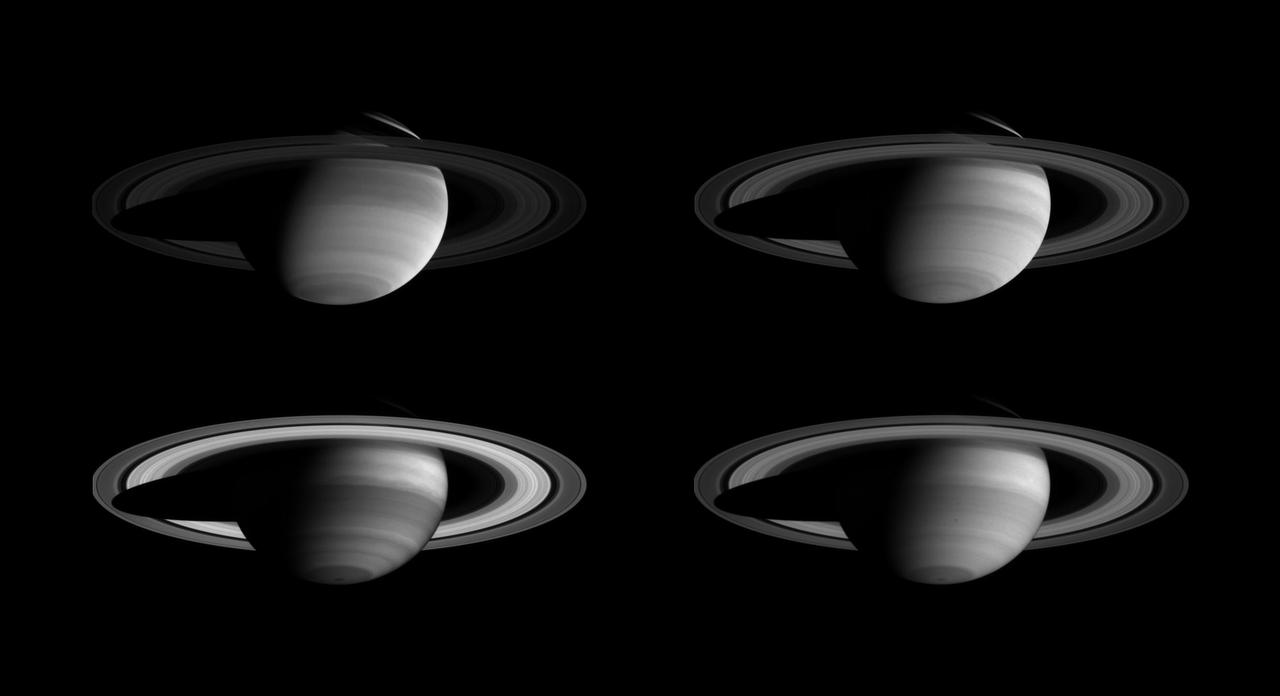
Four Ways to See Saturn
A montage of Cassini images, taken in four different regions of the spectrum from ultraviolet to near-infrared, demonstrates that there is more to Saturn than meets the eye. The pictures show the effects of absorption and scattering of light at different wavelengths by both atmospheric gas and clouds of differing heights and thicknesses. They also show absorption of light by colored particles mixed with white ammonia clouds in the planet's atmosphere. Contrast has been enhanced to aid visibility of the atmosphere. Cassini's narrow-angle camera took these four images over a period of 20 minutes on April 3, 2004, when the spacecraft was 44.5 million kilometers (27.7 million miles) from the planet. The image scale is approximately 267 kilometers (166 miles) per pixel. All four images show the same face of Saturn. In the upper left image, Saturn is seen in ultraviolet wavelengths (298 nanometers); at upper right, in visible blue wavelengths (440 nanometers); at lower left, in far red wavelengths just beyond the visible-light spectrum (727 nanometers; and at lower right, in near-infrared wavelengths (930 nanometers). The sliver of light seen in the northern hemisphere appears bright in
- Date
- 2004-04-22
- Photographer / author
- NASA/JPL/Space Science Institute
- Collection
- JPL
- Archive
- NASA Image and Video Library
- Type
- photograph
Public domainsafest
Reason: a NASA work: not copyrighted in the United States.
Read from: NASA media usage guidelines: NASA material is not copyrighted in the US unless noted; no third-party credit or mark found.
Credit line
"Four Ways to See Saturn" (2004-04-22). NASA/JPL/NASA/JPL/Space Science Institute. Public domain. https://images.nasa.gov/details/PIA05388Need photos for a whole script? Add Find Any Photo to Claude and ask for this one by its id: 84647.
More like this
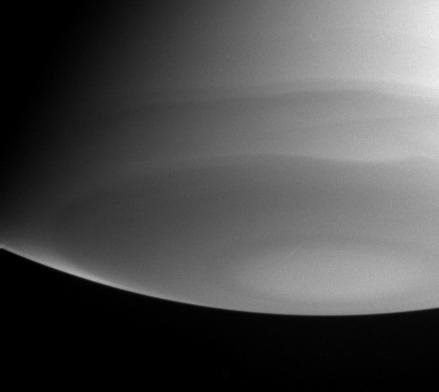
South Polar Features
2004-08-25 · NASA Image and Video Library
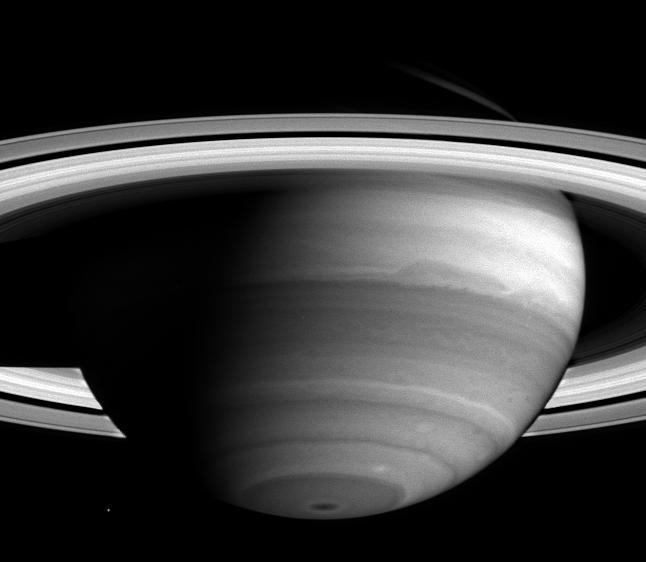
Bands of Clouds and Lace
2004-05-13 · NASA Image and Video Library
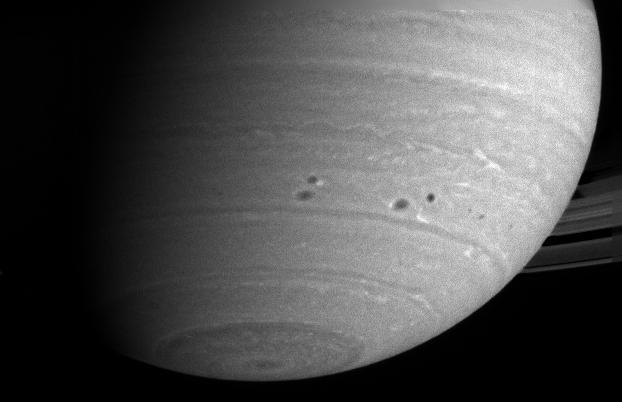
Two Pairs of Storms
2004-06-04 · NASA Image and Video Library
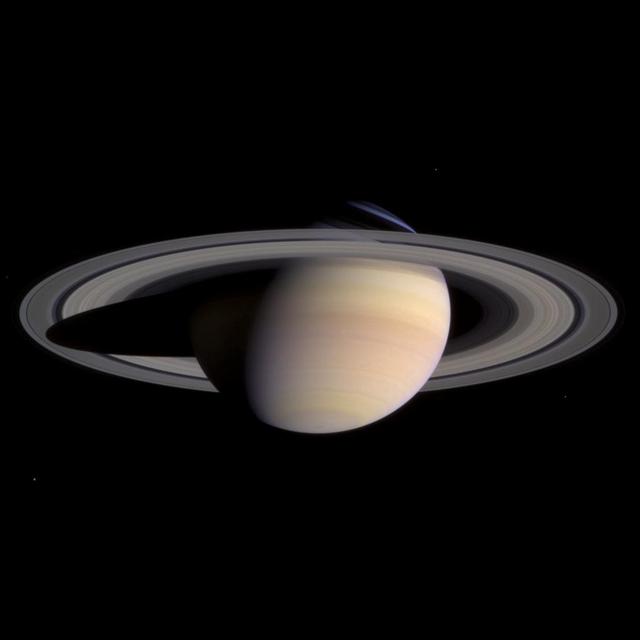
Saturn in Color
2004-04-29 · NASA Image and Video Library
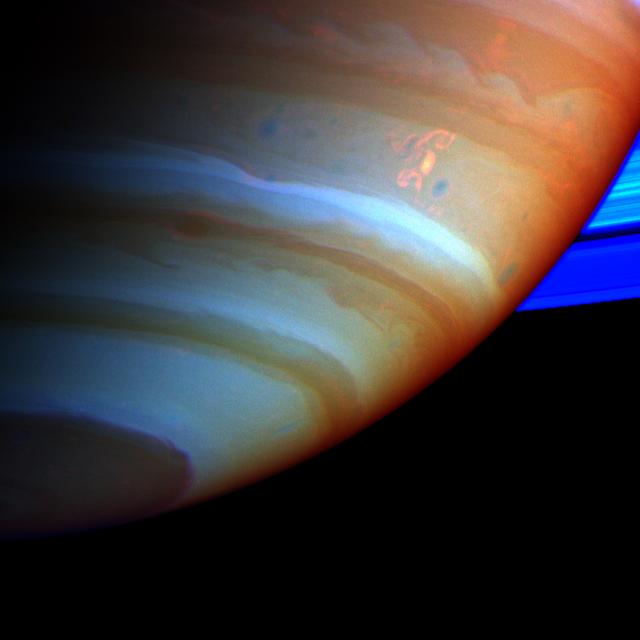
The Dragon Storm
2005-02-24 · NASA Image and Video Library
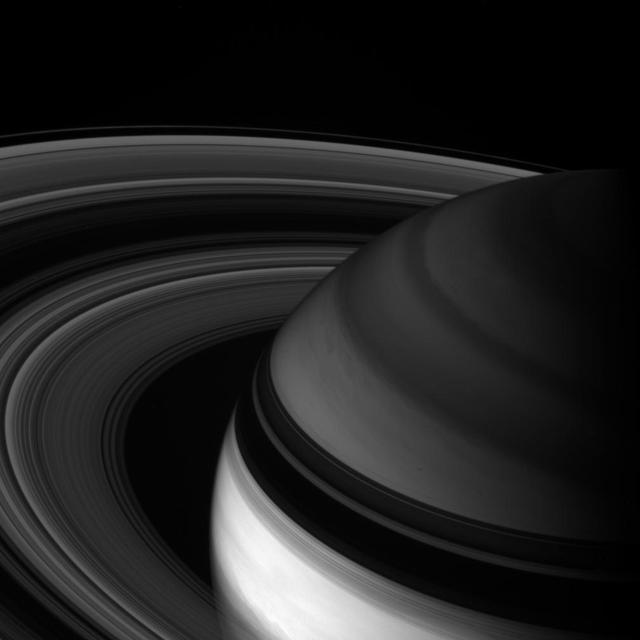
Depth Sounding
2007-06-29 · NASA Image and Video Library
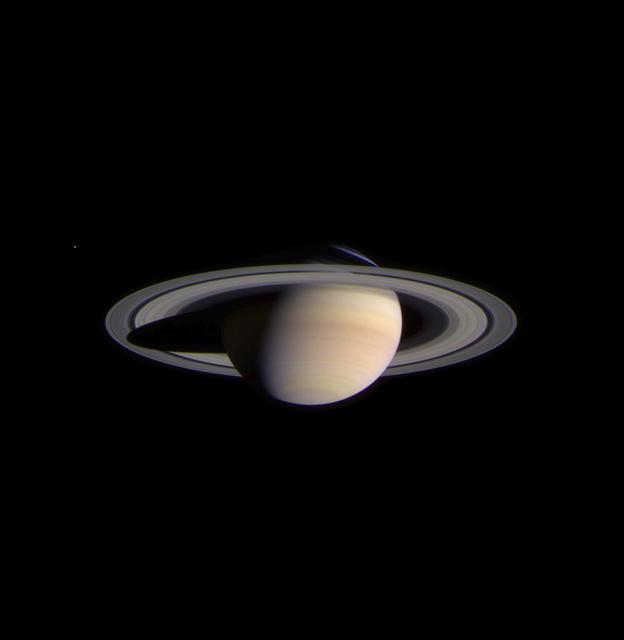
Approach to Saturn
2004-02-26 · NASA Image and Video Library

Impressionistic Saturn
2013-11-18 · NASA Image and Video Library