http://www.nasa.gov/image-feature/goddard/hubble-spots-the-layers-of-ngc-3923
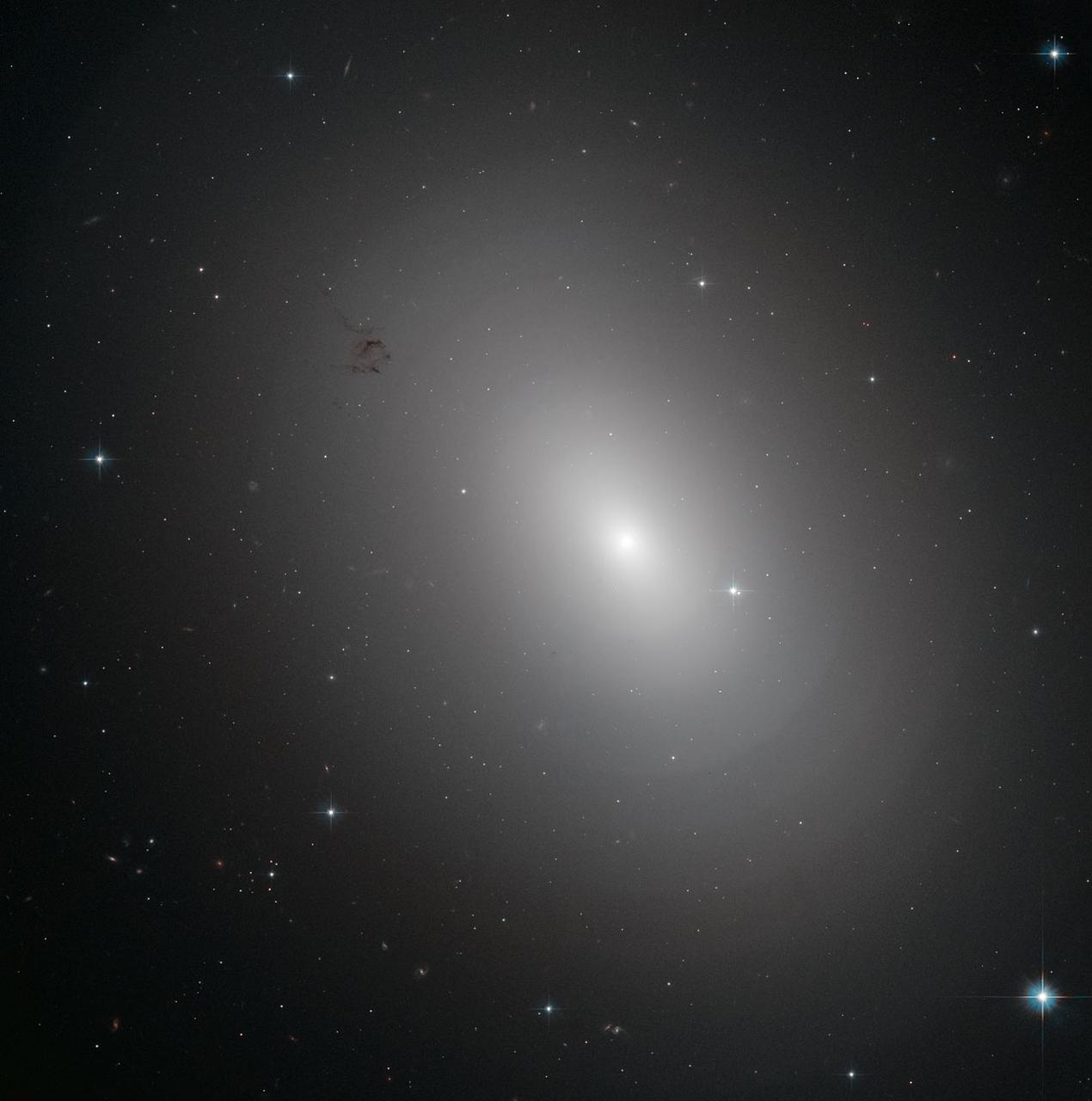
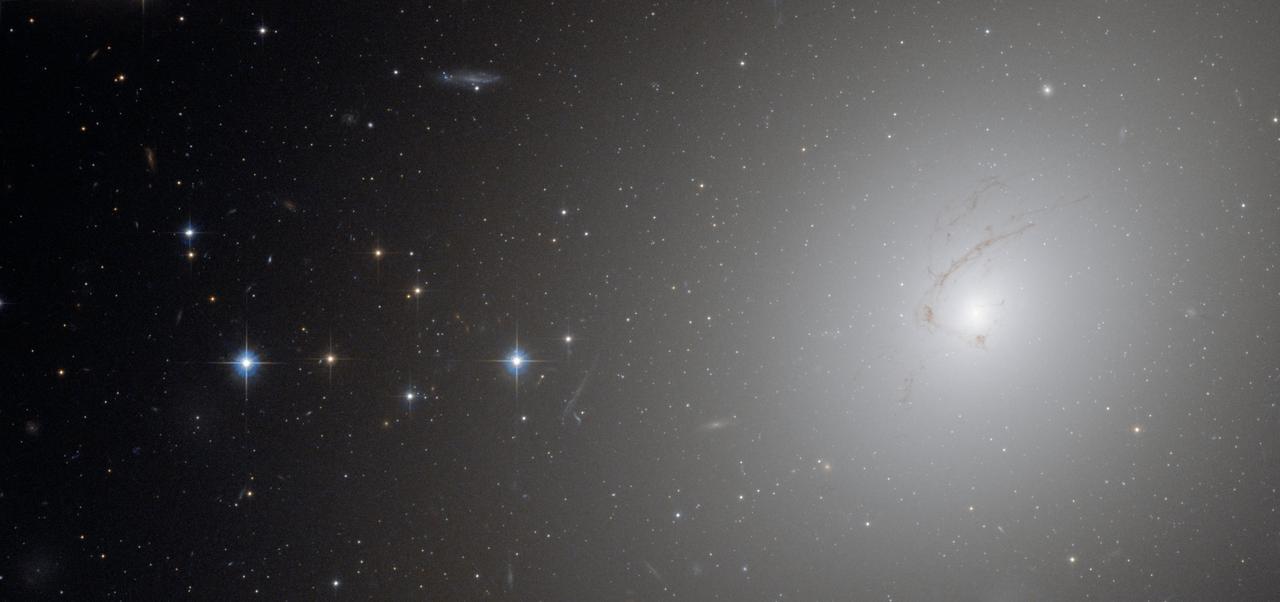
The glowing object in this Hubble Space Telescope image is an elliptical galaxy called NGC 3923. It is located over 90 million light-years away in the constellation of Hydra. NGC 3923 is an example of a shell galaxy where the stars in its halo are arranged in layers. Finding concentric shells of stars enclosing a galaxy is quite common and is observed in many elliptical galaxies. In fact, every tenth elliptical galaxy exhibits this onion-like structure, which has never been observed in spiral galaxies. The shell-like structures are thought to develop as a consequence of galactic cannibalism, when a larger galaxy ingests a smaller companion. As the two centers approach, they initially oscillate about a common center, and this oscillation ripples outwards forming the shells of stars just as ripples on a pond spread when the surface is disturbed. NGC 3923 has over twenty shells, with only a few of the outer ones visible in this image, and its shells are much more subtle than those of other shell galaxies. The shells of this galaxy are also interestingly symmetrical, while other shell galaxies are more skewed. Credit: ESA/Hubble & NASA
- Date
- 2017-12-08
- Collection
- GSFC
- Archive
- NASA Image and Video Library
- Type
- photograph
Public domainsafest
Reason: a NASA work: not copyrighted in the United States.
Read from: NASA media usage guidelines: NASA material is not copyrighted in the US unless noted; no third-party credit or mark found.
Credit line
"http://www.nasa.gov/image-feature/goddard/hubble-spots-the-layers-of-ngc-3923" (2017-12-08). NASA/GSFC. Public domain. https://images.nasa.gov/details/GSFC_20171208_Archive_e000721Need photos for a whole script? Add Find Any Photo to Claude and ask for this one by its id: 16264.
More like this
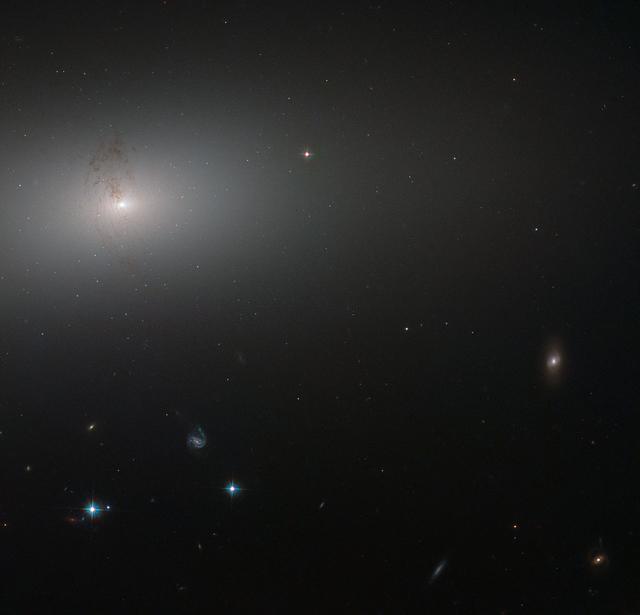
Hubble Peers Through the Elliptical Haze
2017-12-08 · NASA Image and Video Library
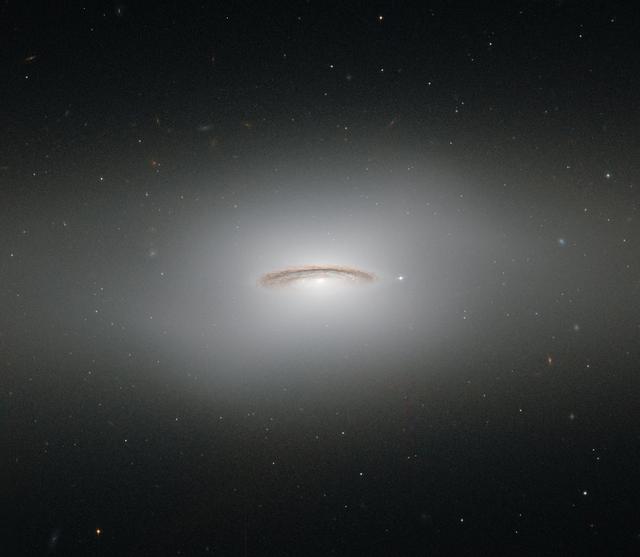
Hubble Views the Whirling Disk of NGC 4526
2017-12-08 · NASA Image and Video Library
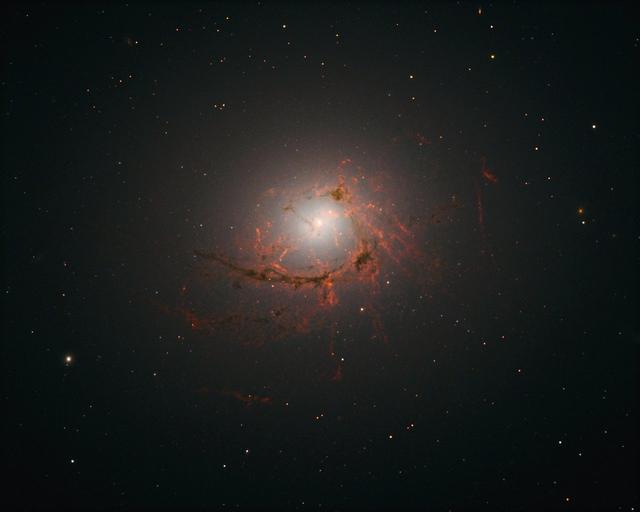
Hubble sees tangled threads weave through cosmic oddity
2017-12-08 · NASA Image and Video Library
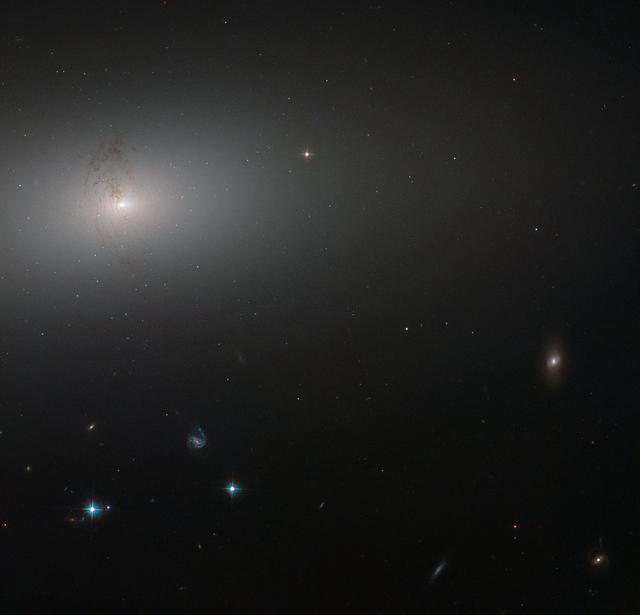
Through the elliptical haze
2015-11-30 · NASA Image and Video Library
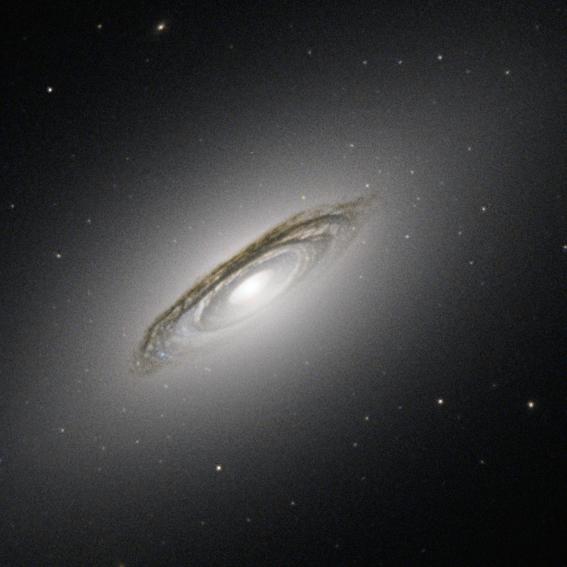
Hubble Views 'Third Kind' of Galaxy
2017-12-08 · NASA Image and Video Library
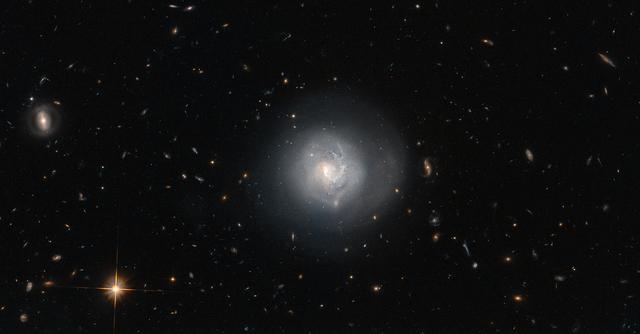
A Galaxy at the Center of the Hubble Tuning Fork
2017-12-08 · NASA Image and Video Library
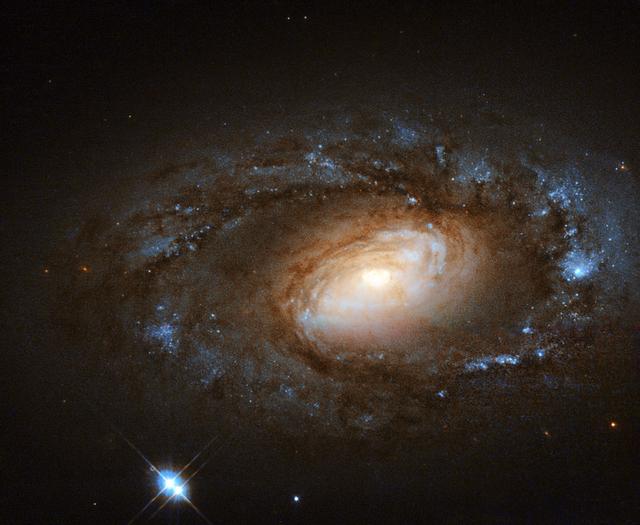
Hubble Spies Charming Spiral Galaxy Bursting with Stars
2017-12-08 · NASA Image and Video Library
A cosmic question in NGC 4696
2017-12-08 · NASA Image and Video Library