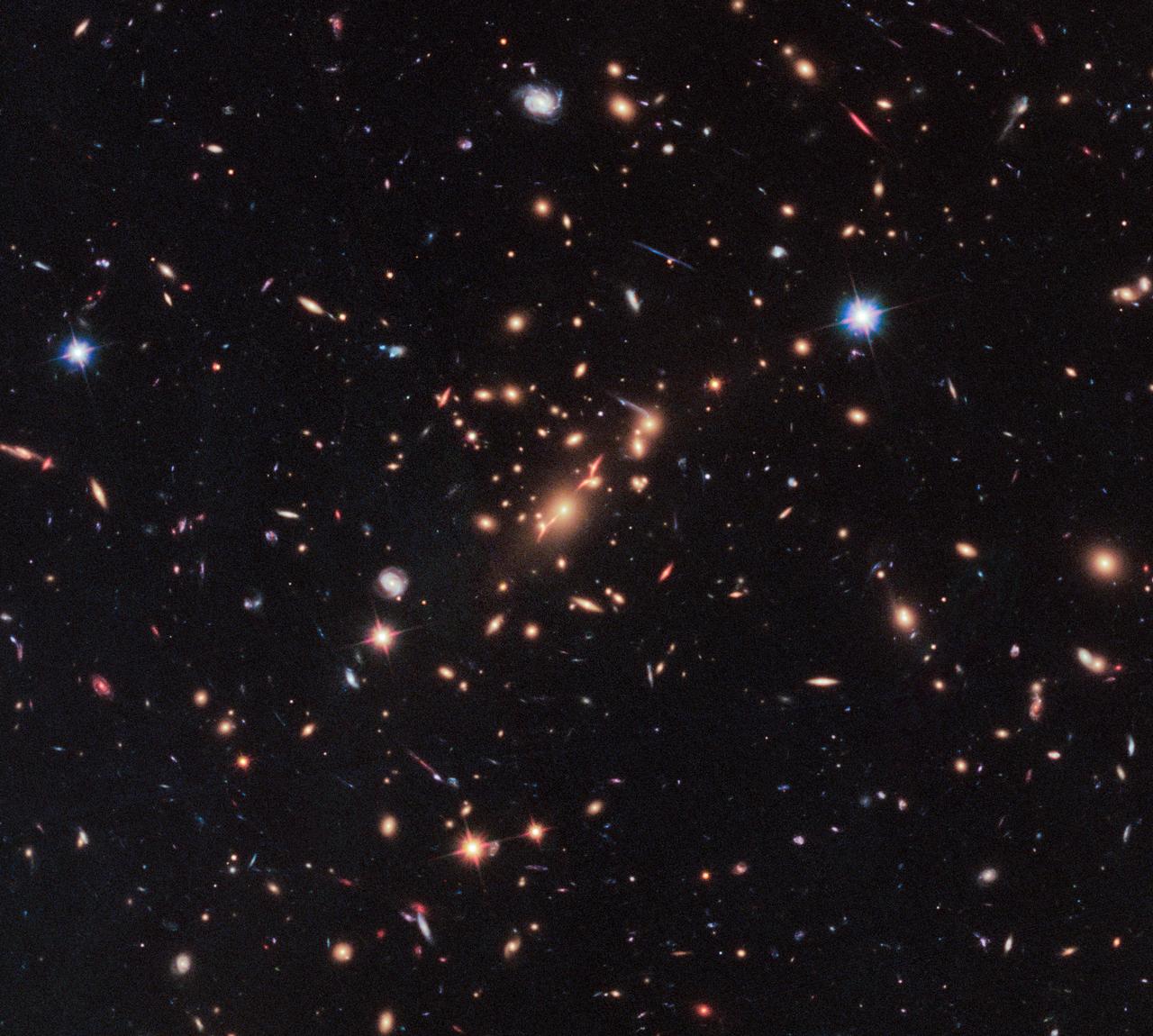
Hubble Captures Massive Dead Disk Galaxy that Challenges Theories of Galaxy Evolution
By combining the power of a "natural lens" in space with the capability of NASA's Hubble Space Telescope, astronomers made a surprising discovery—the first example of a compact yet massive, fast-spinning, disk-shaped galaxy that stopped making stars only a few billion years after the big bang. Finding such a galaxy early in the history of the universe challenges the current understanding of how massive galaxies form and evolve, say researchers. Read more: go.nasa.gov/2sWwKkc caption: Acting as a “natural telescope” in space, the gravity of the extremely massive foreground galaxy cluster MACS J2129-0741 magnifies, brightens, and distorts the far-distant background galaxy MACS2129-1, shown in the top box. The middle box is a blown-up view of the gravitationally lensed galaxy. In the bottom box is a reconstructed image, based on modeling that shows what the galaxy would look like if the galaxy cluster were not present. The galaxy appears red because it is so distant that its light is shifted into the red part of the spectrum. Credits: NASA, ESA, M. Postman (STScI), and the CLASH team NASA image use policy. NASA Goddard Space Flight Center enables NASA’s mission through four
- Date
- 2017-12-08
- Collection
- GSFC
- Archive
- NASA Image and Video Library
- Type
- photograph
Public domainsafest
Reason: a NASA work: not copyrighted in the United States.
Read from: NASA media usage guidelines: NASA material is not copyrighted in the US unless noted; no third-party credit or mark found.
Credit line
"Hubble Captures Massive Dead Disk Galaxy that Challenges Theories of Galaxy Evolution" (2017-12-08). NASA/GSFC. Public domain. https://images.nasa.gov/details/GSFC_20171208_Archive_e000033Need photos for a whole script? Add Find Any Photo to Claude and ask for this one by its id: 15831.
More like this
NASA Telescopes Uncover Early Construction of Giant Galaxy
2017-12-08 · NASA Image and Video Library

NASA Telescopes Help Discover Surprisingly Young Galaxy
2017-12-08 · NASA Image and Video Library
Hubble Spies Big Bang Frontiers
2017-12-08 · NASA Image and Video Library
Hubble Observes One-of-a-Kind Star Nicknamed ‘Nasty’
2017-12-08 · NASA Image and Video Library
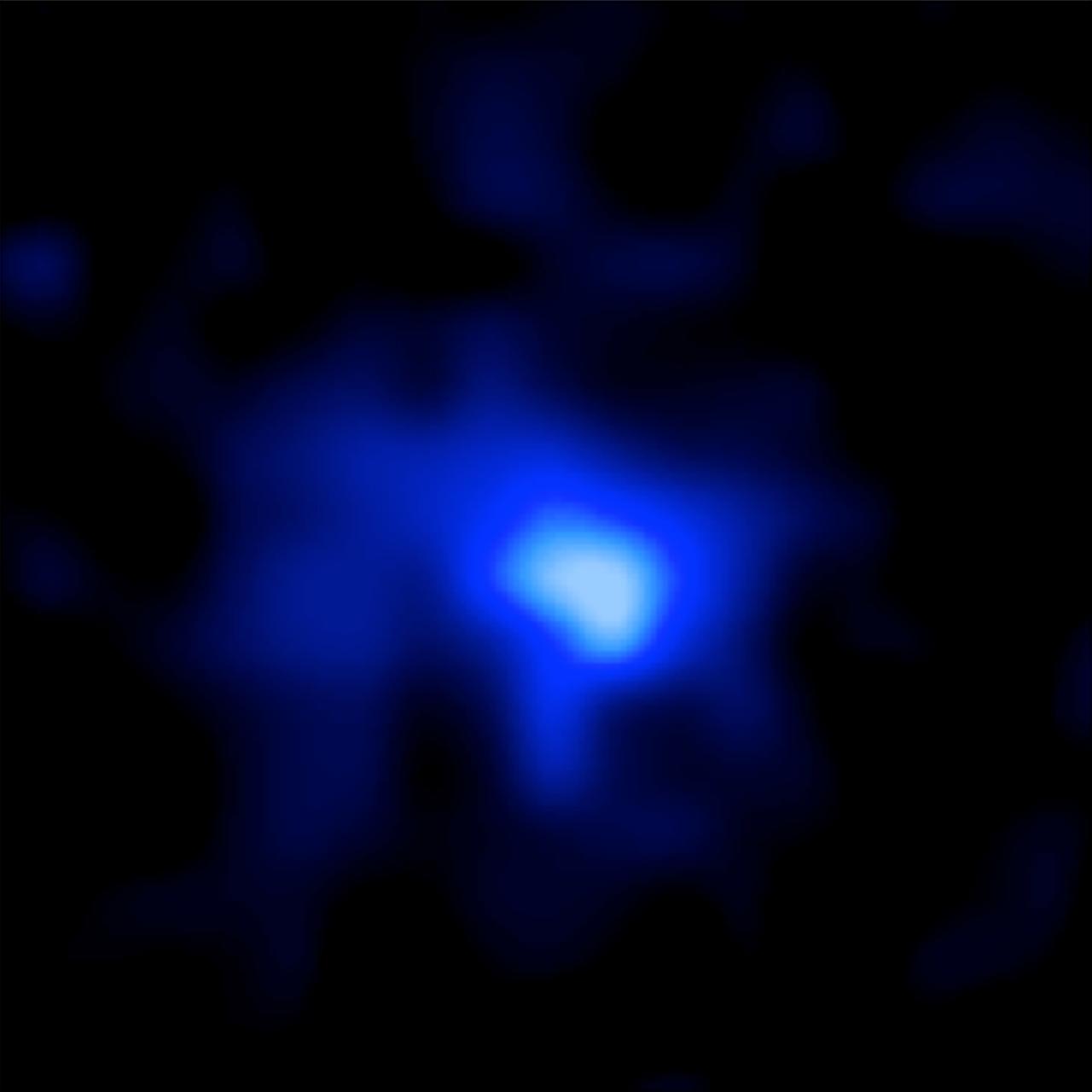
Astronomers Set a New Galaxy Distance Record
2017-12-08 · NASA Image and Video Library
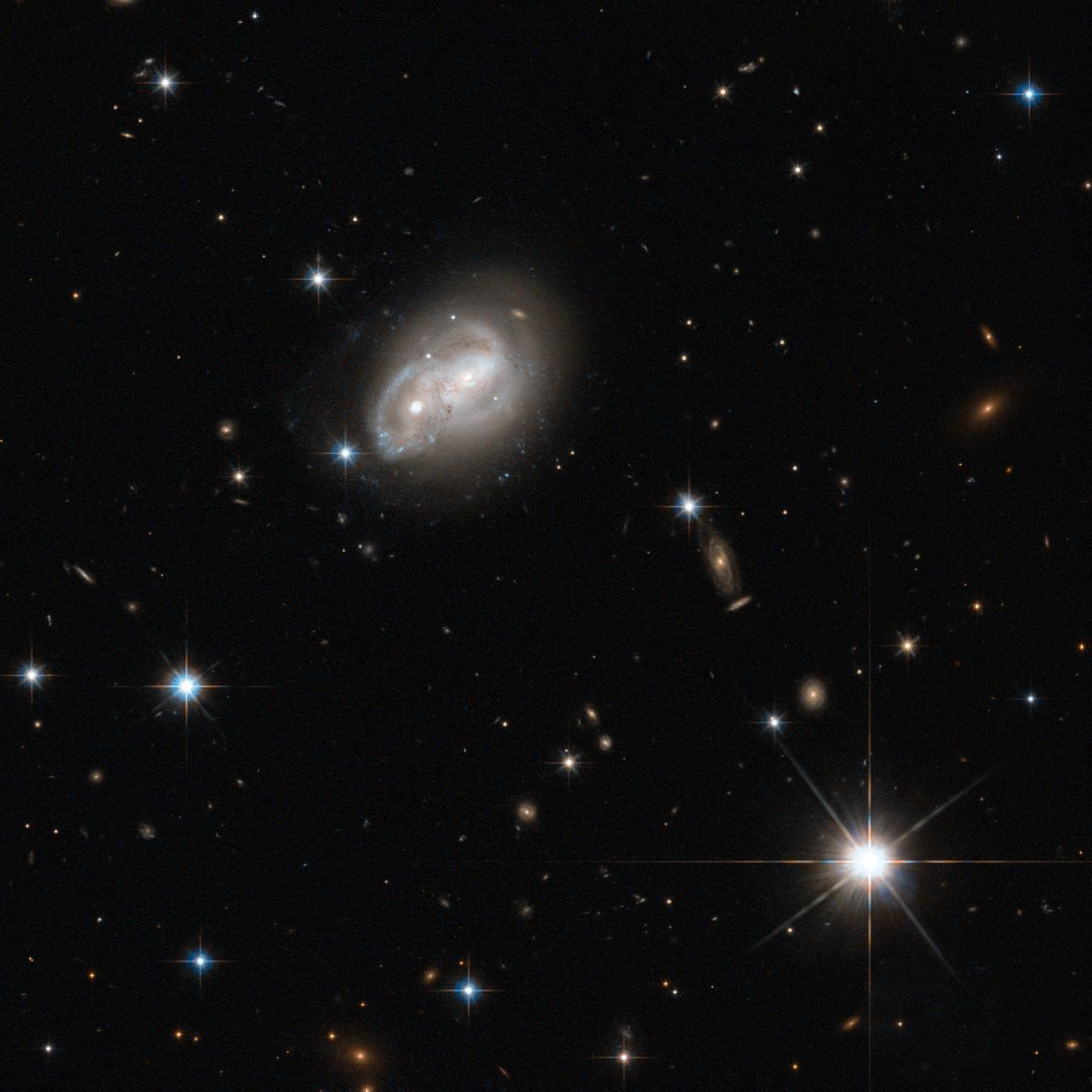
Hubble Eyes Galaxy as it Gets a Cosmic Hair Ruffling
2017-12-08 · NASA Image and Video Library
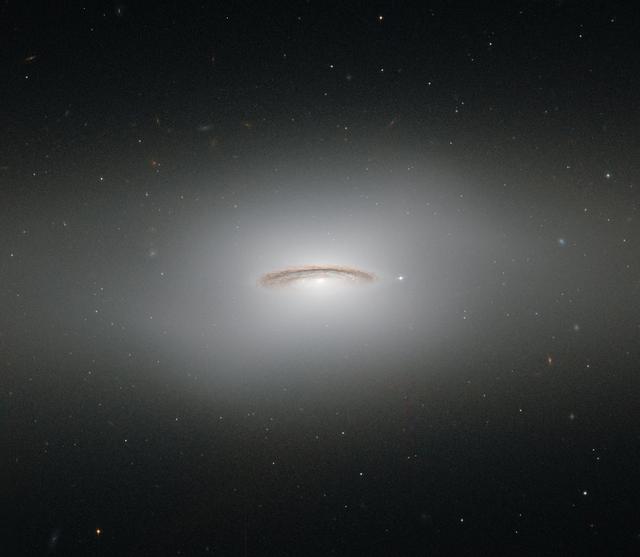
Hubble Views the Whirling Disk of NGC 4526
2017-12-08 · NASA Image and Video Library
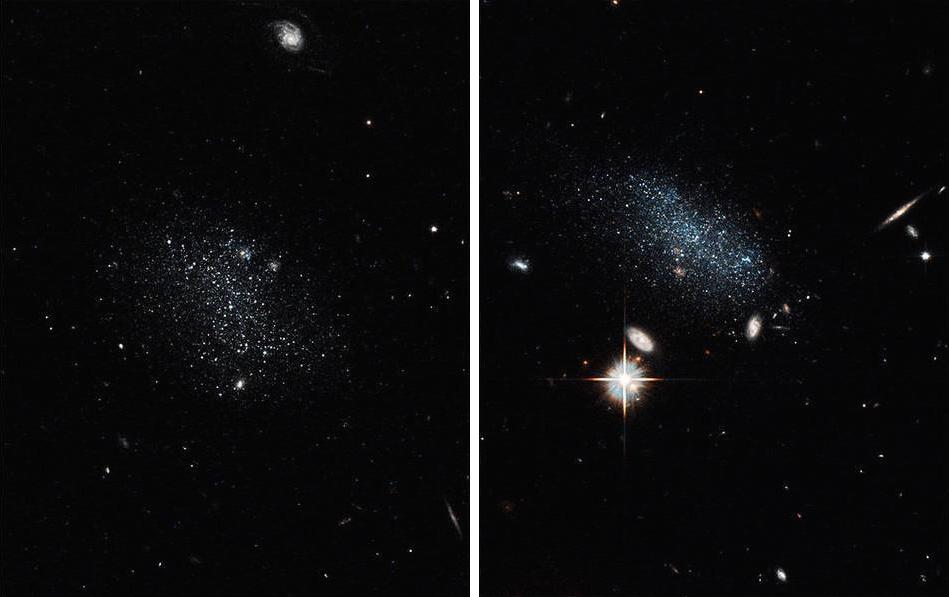
Hubble Uncovers a Galaxy Pair Coming in from the Wilderness
2017-12-08 · NASA Image and Video Library