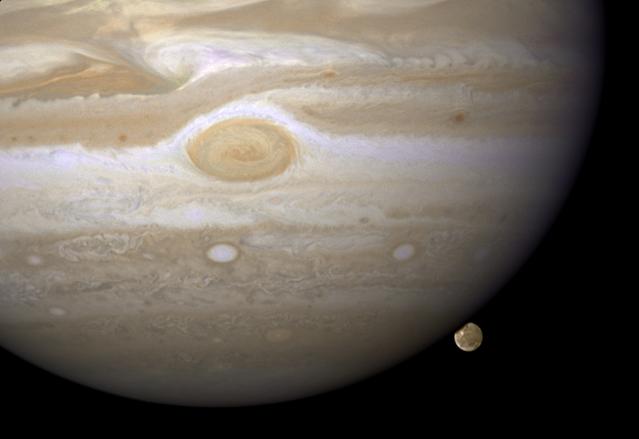
Hubble Catches Jupiter's Largest Moon Going to the 'Dark Side'
Hubble Catches Jupiter's Largest Moon Going to the 'Dark Side' HST/WFPC2 Image of Jupiter and Ganymede Taken April 9, 2007 NASA's Hubble Space Telescope has caught Jupiter's moon Ganymede playing a game of "peek-a-boo." In this crisp Hubble image, Ganymede is shown just before it ducks behind the giant planet. Ganymede completes an orbit around Jupiter every seven days. Because Ganymede's orbit is tilted nearly edge-on to Earth, it routinely can be seen passing in front of and disappearing behind its giant host, only to reemerge later. Composed of rock and ice, Ganymede is the largest moon in our solar system. It is even larger than the planet Mercury. But Ganymede looks like a dirty snowball next to Jupiter, the largest planet in our solar system. Jupiter is so big that only part of its Southern Hemisphere can be seen in this image. Hubble's view is so sharp that astronomers can see features on Ganymede's surface, most notably the white impact crater, Tros, and its system of rays, bright streaks of material blasted from the crater. Tros and its ray system are roughly the width of Arizona. The image also shows Jupiter's Great Red Spot, the large eye-shaped feature at uppe
- Date
- 2017-12-08
- Collection
- GSFC
- Archive
- NASA Image and Video Library
- Type
- photograph
Public domainsafest
Reason: a NASA work: not copyrighted in the United States.
Read from: NASA media usage guidelines: NASA material is not copyrighted in the US unless noted; no third-party credit or mark found.
Credit line
"Hubble Catches Jupiter's Largest Moon Going to the 'Dark Side'" (2017-12-08). NASA/GSFC. Public domain. https://images.nasa.gov/details/GSFC_20171208_Archive_e002091Need photos for a whole script? Add Find Any Photo to Claude and ask for this one by its id: 16885.
More like this
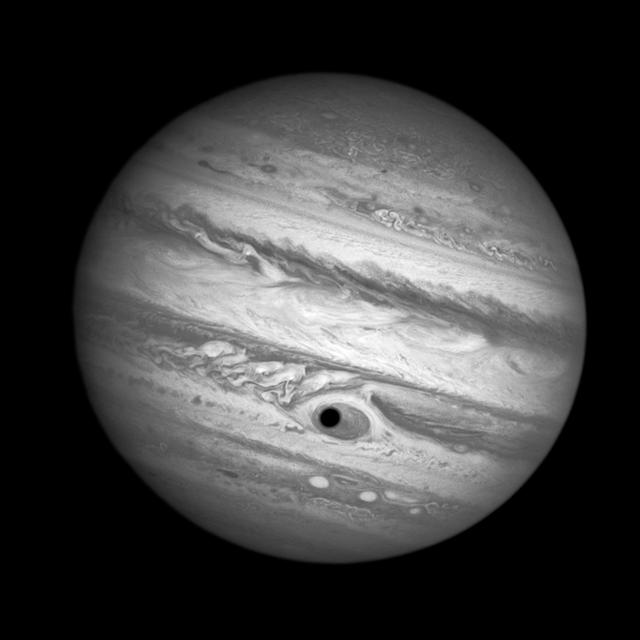
Hubble Spies Spooky Shadow on Jupiter's Giant Eye
2017-12-08 · NASA Image and Video Library
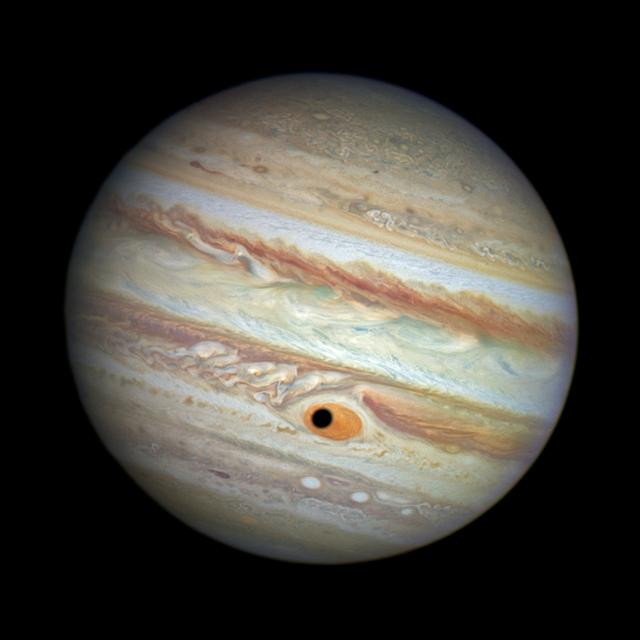
Hubble Spies Spooky Shadow on Jupiter's Giant Eye (color)
2017-12-08 · NASA Image and Video Library
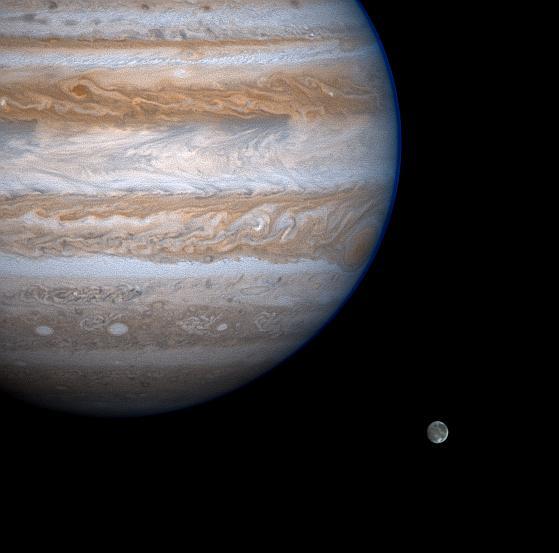
Eyeing Ganymede
2000-12-06 · NASA Image and Video Library
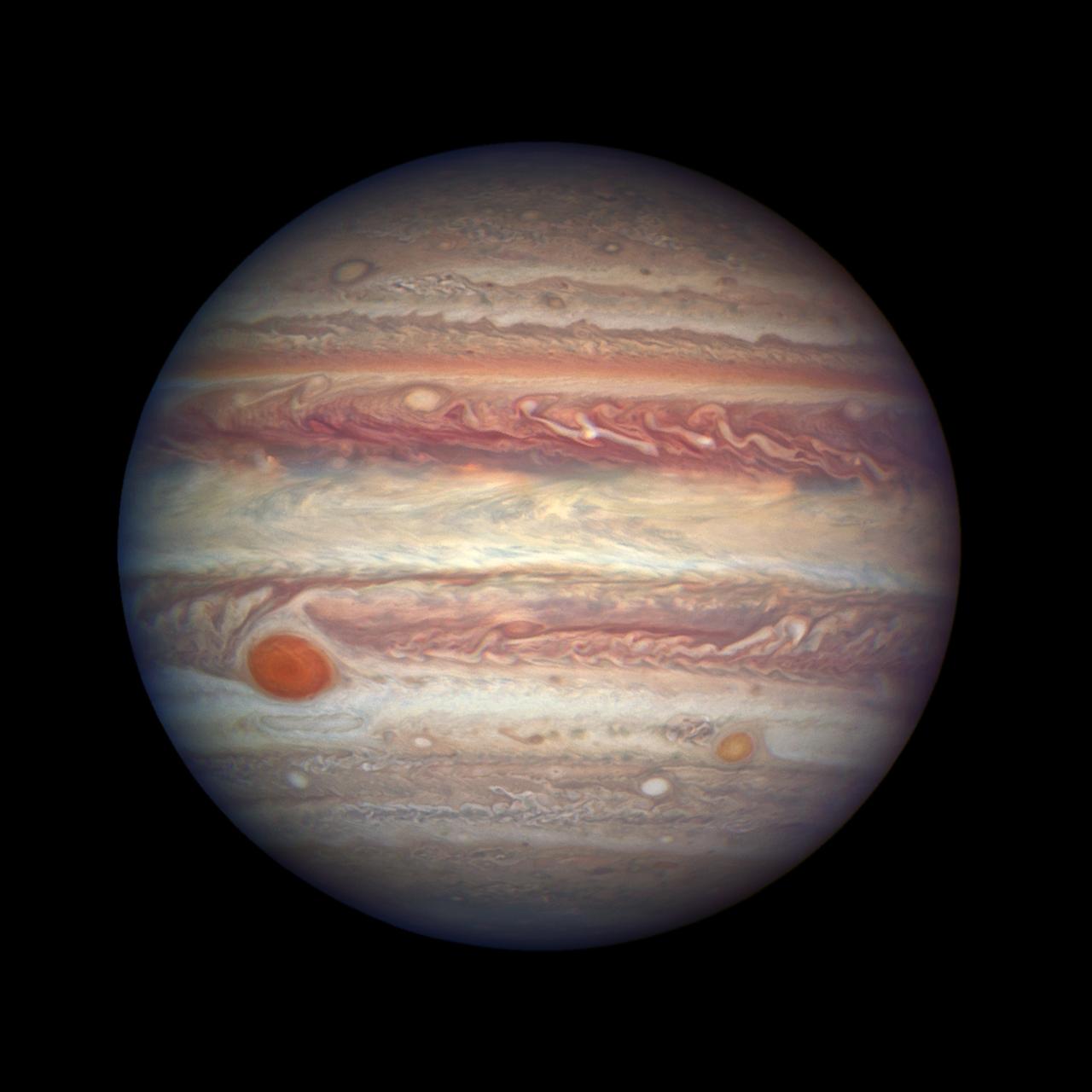
NASA's Hubble Takes Close-up Portrait of Jupiter
2017-12-08 · NASA Image and Video Library
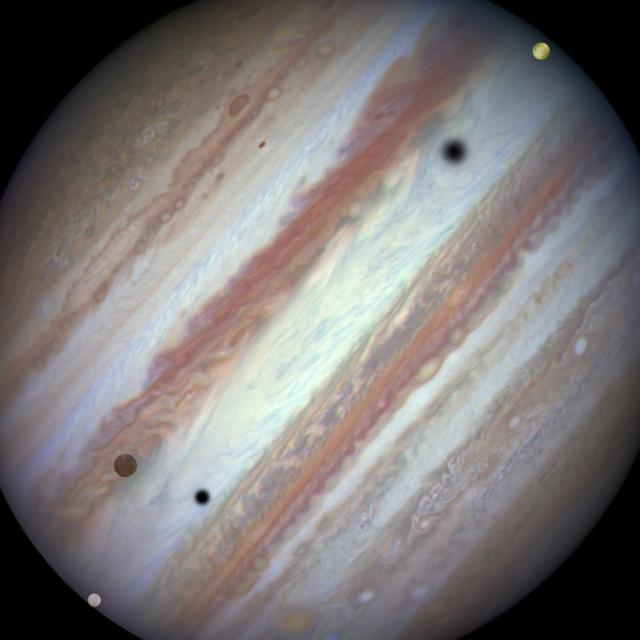
Hubble Captures Rare Triple-Moon Conjunction
2017-12-08 · NASA Image and Video Library
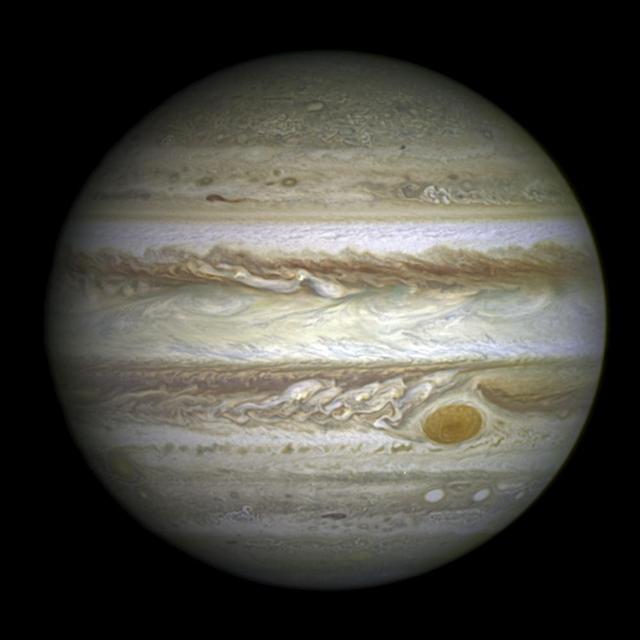
NASA's Hubble Shows Jupiter's Great Red Spot is Smaller than Ever
2017-12-08 · NASA Image and Video Library
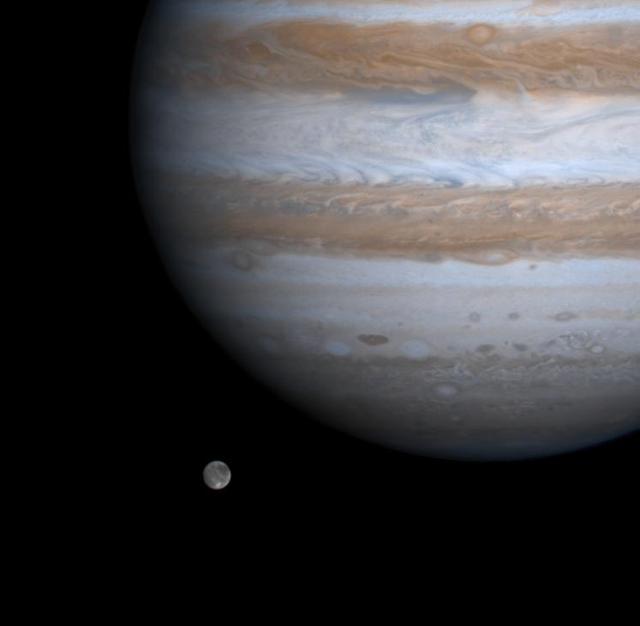
Ganymede and Jupiter
2000-12-23 · NASA Image and Video Library

Rare Hubble Portrait of Io and Jupiter
1998-05-02 · NASA Image and Video Library