
Hubble’s Spirograph
Hubble’s Spirograph In this classic Hubble image from 2000, the planetary nebula IC 418 glows like a multifaceted jewel with enigmatic patterns. IC 418 lies about 2,000 light-years from Earth in the direction of the constellation Lepus. A planetary nebula represents the final stage in the evolution of a star similar to our sun. The star at the center of IC 418 was a red giant a few thousand years ago, but then ejected its outer layers into space to form the nebula, which has now expanded to a diameter of about 0.1 light-year. The stellar remnant at the center is the hot core of the red giant, from which ultraviolet radiation floods out into the surrounding gas, causing it to fluoresce. Over the next several thousand years, the nebula will gradually disperse into space, and then the star will cool and fade away for billions of years as a white dwarf. Our own sun is expected to undergo a similar fate, but fortunately, this will not occur until some 5 billion years from now. The Hubble image of IC 418 is shown with colors added to represent the different camera filters used that isolate light from various chemical elements. Red shows emission from ionized nitrogen (the coolest gas in
- Date
- 2017-12-08
- Collection
- GSFC
- Archive
- NASA Image and Video Library
- Type
- photograph
Public domainsafest
Reason: a NASA work: not copyrighted in the United States.
Read from: NASA media usage guidelines: NASA material is not copyrighted in the US unless noted; no third-party credit or mark found.
Credit line
"Hubble’s Spirograph" (2017-12-08). NASA/GSFC. Public domain. https://images.nasa.gov/details/GSFC_20171208_Archive_e000034Need photos for a whole script? Add Find Any Photo to Claude and ask for this one by its id: 17352.
More like this

Hubble sees the beautiful demises of dying star
2017-12-08 · NASA Image and Video Library
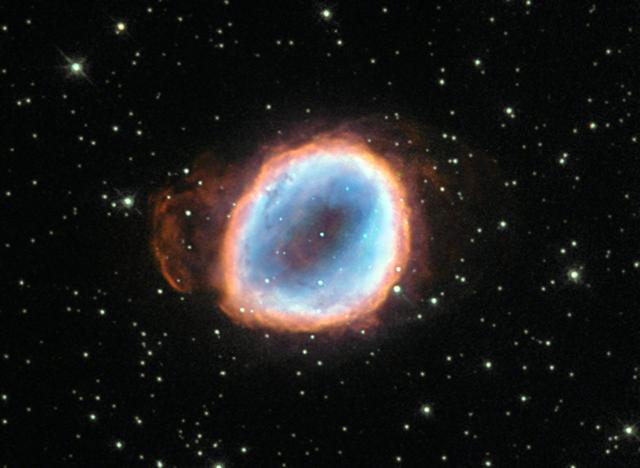
Hubble Sees a Dying Star's Final Moments
2017-12-08 · NASA Image and Video Library
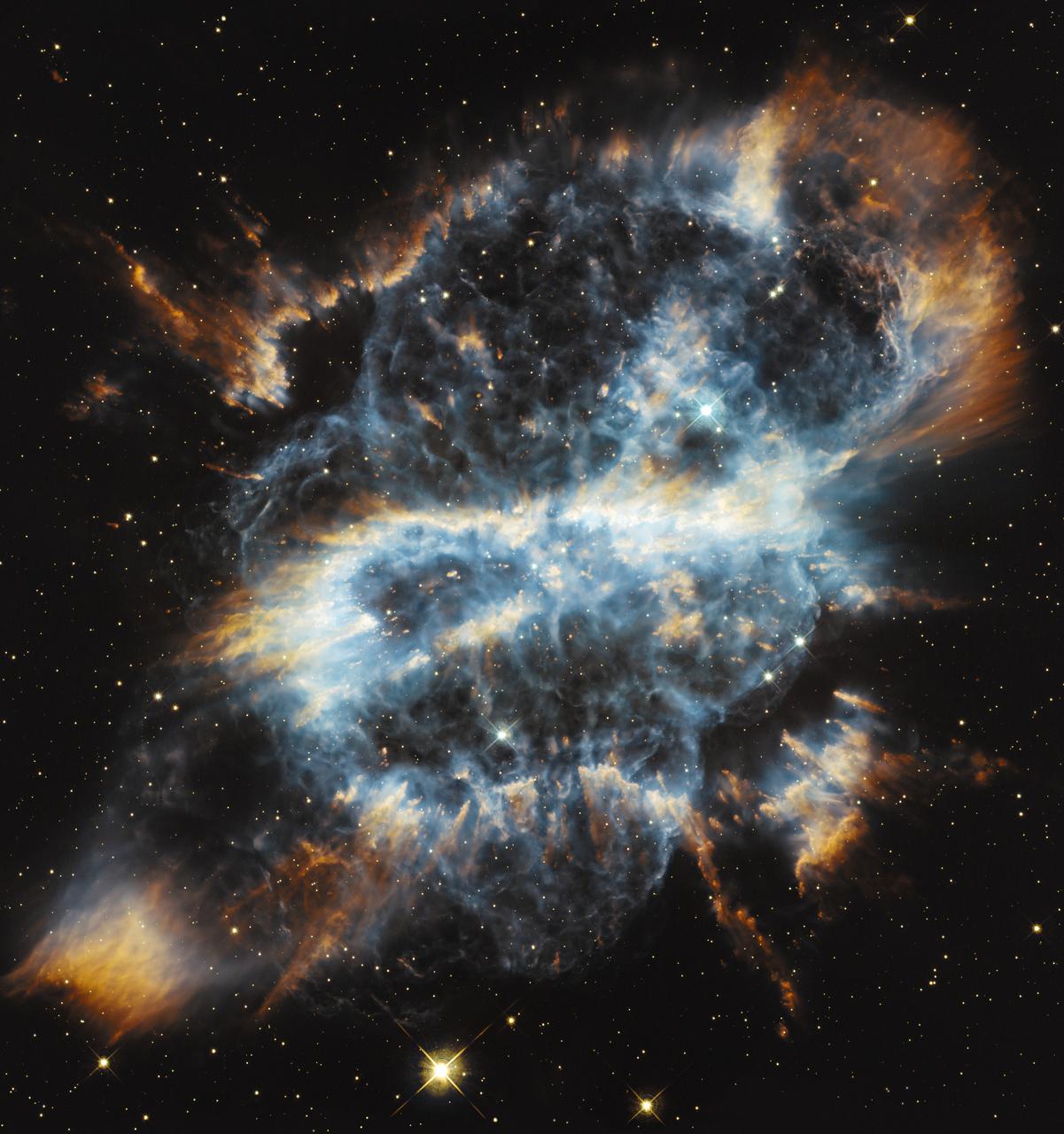
A Cosmic Holiday Ornament, Hubble-Style
2017-12-08 · NASA Image and Video Library

Planetary Nebula
2017-12-08 · NASA Image and Video Library
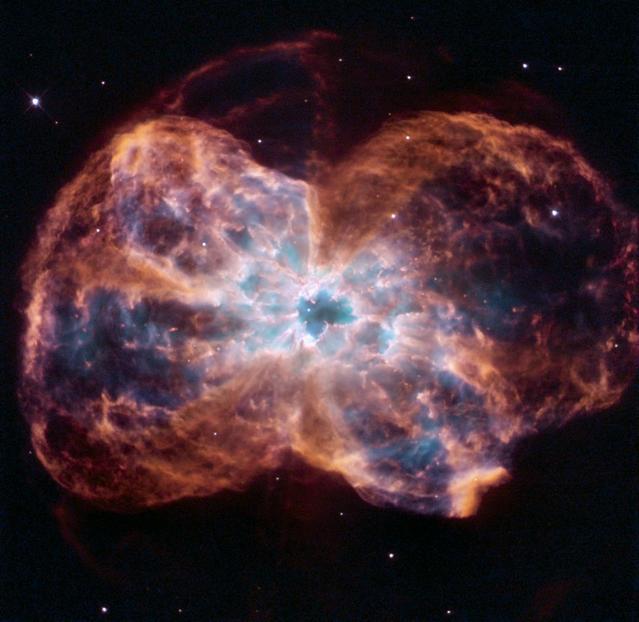
The Colorful Demise of a Sun-like Star
2007-02-13 · NASA Image and Video Library

Hubble sniffs out a brilliant star death in a “rotten egg” nebula
2017-12-08 · NASA Image and Video Library

Little gem
2015-08-03 · NASA Image and Video Library

Hubble Images Searchlight Beams from a Preplanetary Nebula
2017-12-08 · NASA Image and Video Library