
Juno Listens to Jupiter Auroras Sing
During its close flyby of Jupiter on August 27, 2016, the Waves instrument on NASA's Juno spacecraft received radio signals associated with the giant planet's very intense auroras. This video displays these radio emissions in a format similar to a voiceprint, showing the intensity of radio waves as a function of frequency and time. The largest intensities are indicated in warmer colors. The frequency range of these signals is from 7 to 140 kilohertz. Radio astronomers call these "kilometric emissions" because their wavelengths are about a kilometer long. The time span of this data is 13 hours, beginning shortly after Juno's closest approach to Jupiter. Accompanying this data display is an audio rendition of the radio emissions, shifted into a lower register since the radio waves are well above the audio frequency range. In the video, a cursor moves from left to right to mark the time as the sounds are heard. These radio emissions were among the first observed by early radio astronomers in the 1950s. However, until now, they had not been observed from closely above the auroras themselves. From its polar orbit vantage point, Juno has -- for the first time -- enabled observations of t
- Date
- 2016-09-02
- Photographer / author
- NASA/JPL-Caltech/SwRI/Univ. of Iowa
- Collection
- JPL
- Archive
- NASA Image and Video Library
- Type
- photograph
Public domainsafest
Reason: a NASA work: not copyrighted in the United States.
Read from: NASA media usage guidelines: NASA material is not copyrighted in the US unless noted; no third-party credit or mark found.
Credit line
"Juno Listens to Jupiter Auroras Sing" (2016-09-02). NASA/JPL/NASA/JPL-Caltech/SwRI/Univ. of Iowa. Public domain. https://images.nasa.gov/details/PIA21037Need photos for a whole script? Add Find Any Photo to Claude and ask for this one by its id: 22095.
More like this
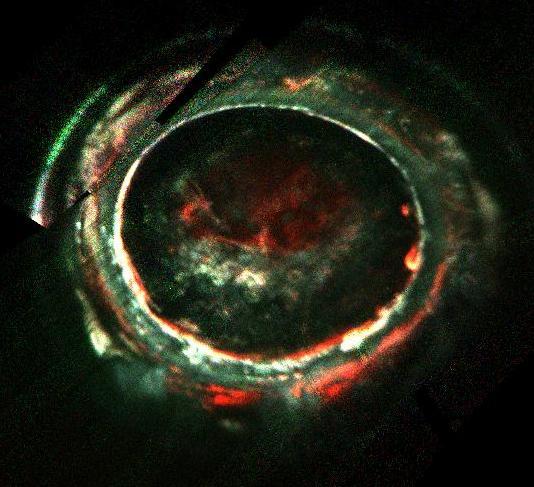
Jupiter's Auroras Acceleration Processes
2017-09-06 · NASA Image and Video Library
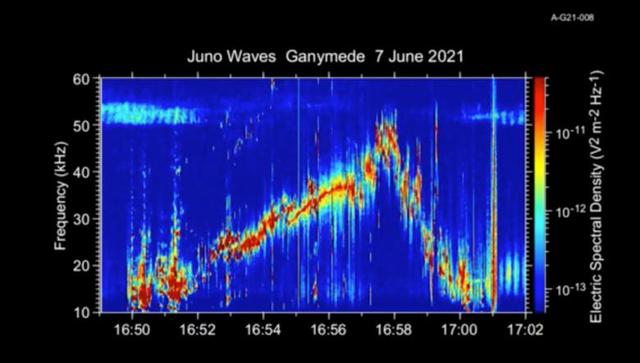
Audio of Juno's Ganymede Flyby
2021-12-17 · NASA Image and Video Library
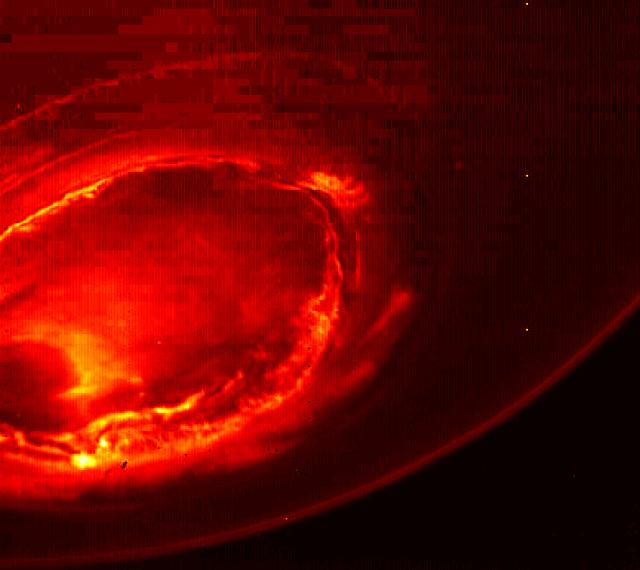
Juno View of Jupiter Southern Lights
2016-09-02 · NASA Image and Video Library

Jupiter's Northern Lights
2017-09-06 · NASA Image and Video Library
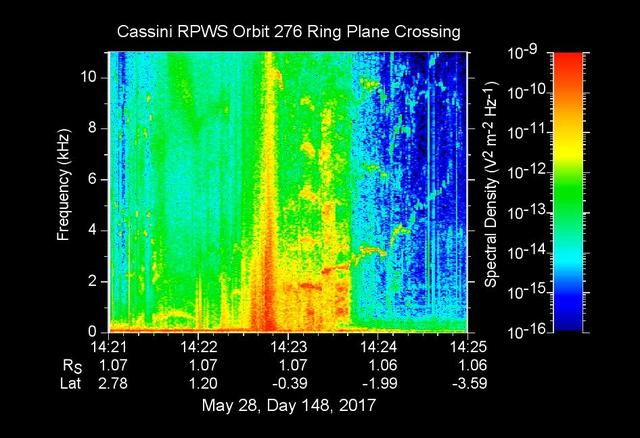
Cassini's First D-Ring Crossing
2017-07-24 · NASA Image and Video Library
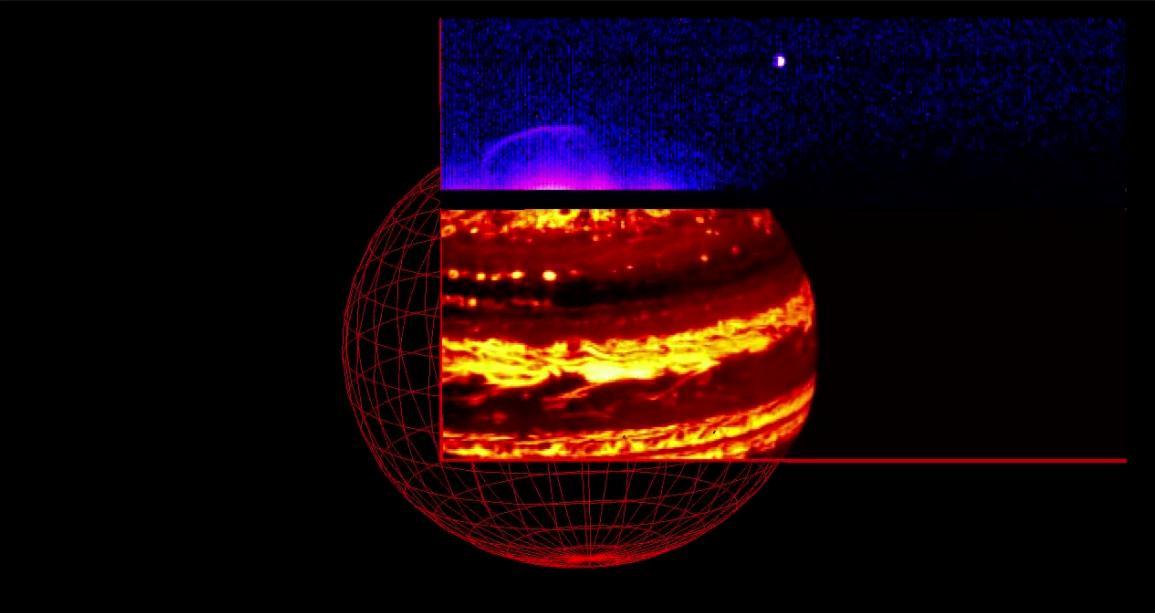
Juno Captures Jupiter Glow in Infrared Light
2016-09-02 · NASA Image and Video Library
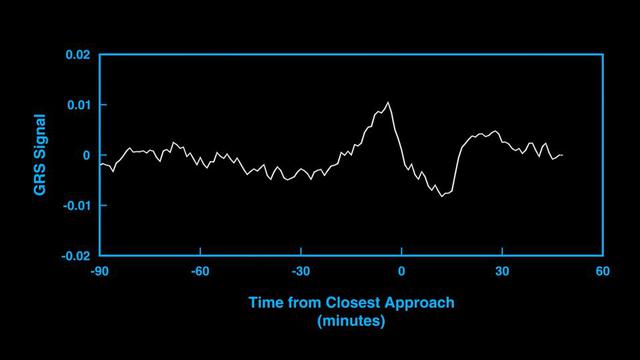
Great Red Spot Gravity
2021-10-28 · NASA Image and Video Library
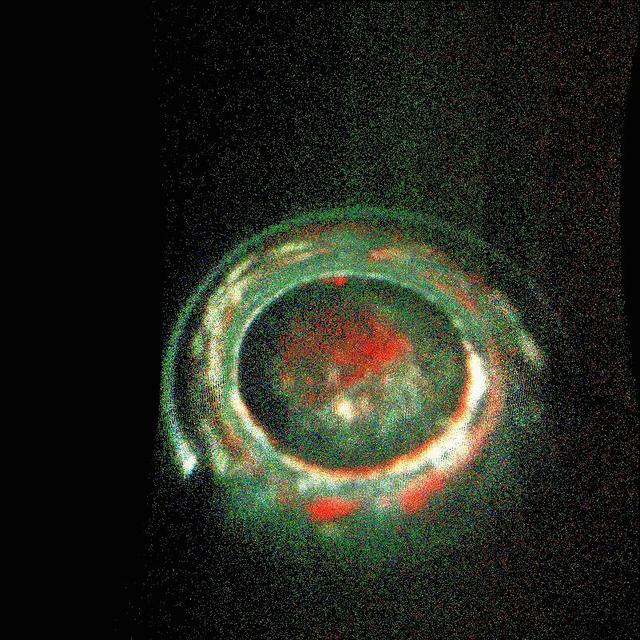
Jupiter's Southern Lights
2017-05-25 · NASA Image and Video Library