Space Science
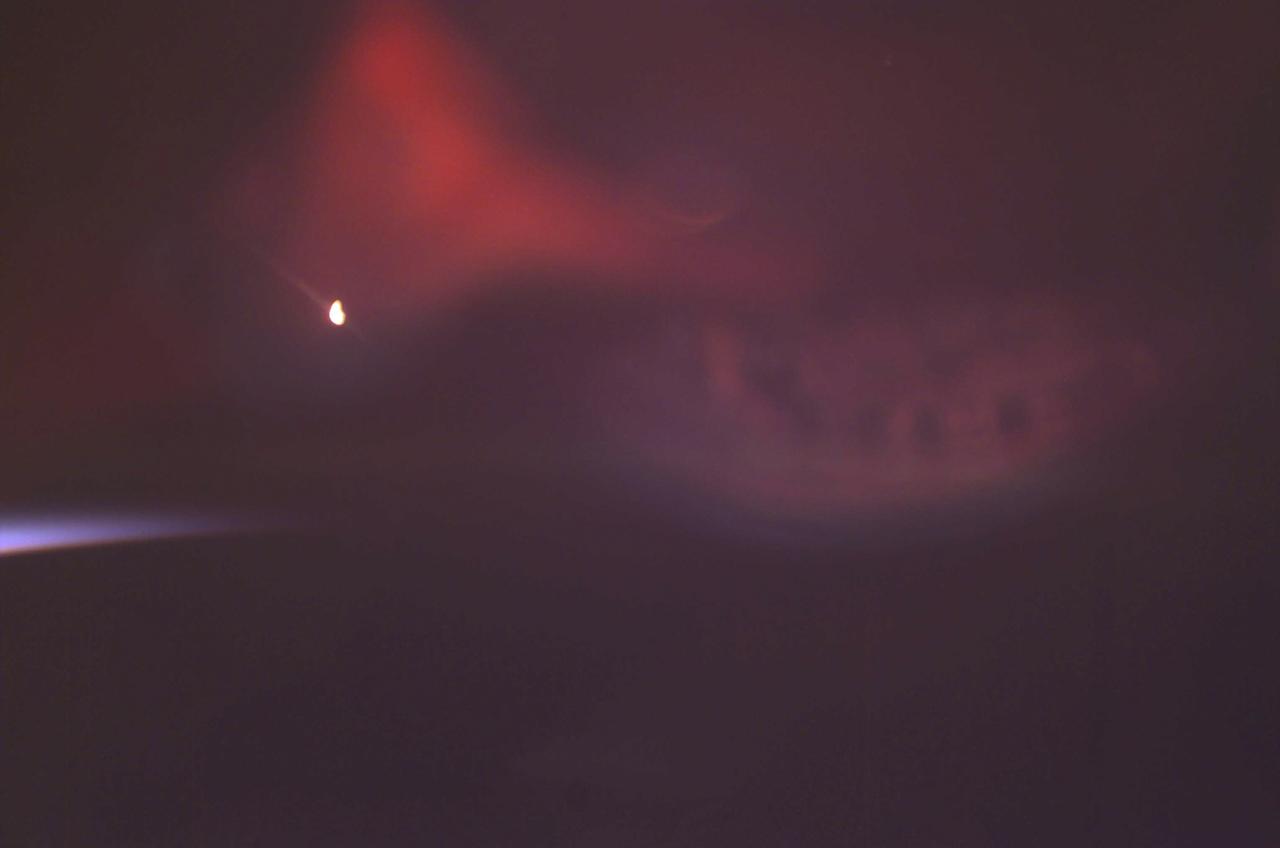
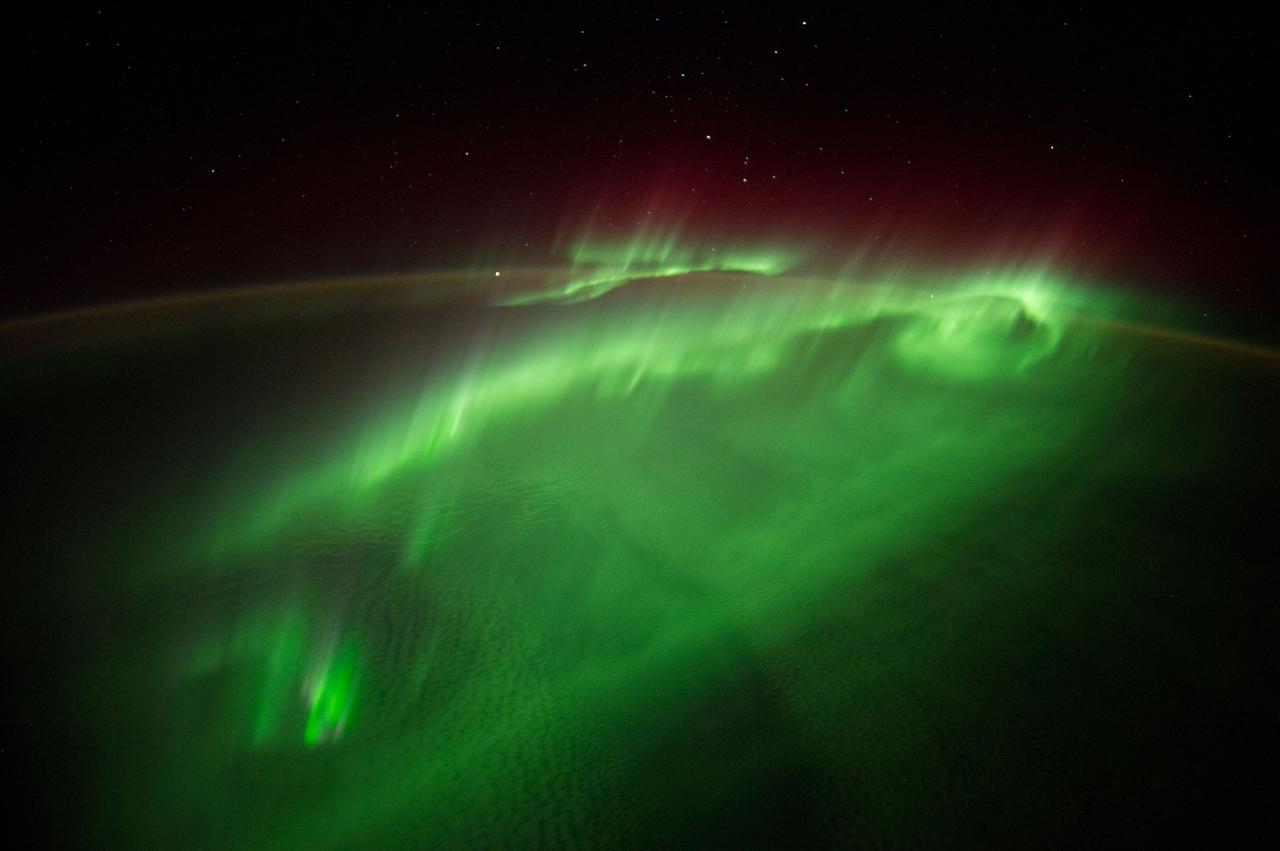
Auroras are caused when high-energy electrons pour down from the Earth's magnetosphere and collide with atoms. Red aurora, as captured here by a still digital camera aboard the International Space Station (ISS), occurs from 200 km to as high as 500 km altitude and is caused by the emission of 6300 Angstrom wavelength light from oxygen atoms. The light is emitted when the atoms return to their original unexcited state. The white spot in the image is from a light on inside of the ISS that is reflected off the inside of the window. The pale blue arch on the left side of the frame is sunlight reflecting off the atmospheric limb of the Earth. At times of peaks in solar activity, there are more geomagnetic storms and this increases the auroral activity viewed on Earth and by astronauts from orbit.
- Date
- 2001-10-01
- Collection
- MSFC
- Archive
- NASA Image and Video Library
- Type
- photograph
Public domainsafest
Reason: a NASA work: not copyrighted in the United States.
Read from: NASA media usage guidelines: NASA material is not copyrighted in the US unless noted; no third-party credit or mark found.
Credit line
"Space Science" (2001-10-01). NASA/MSFC. Public domain. https://images.nasa.gov/details/0300803Need photos for a whole script? Add Find Any Photo to Claude and ask for this one by its id: 20031.
More like this
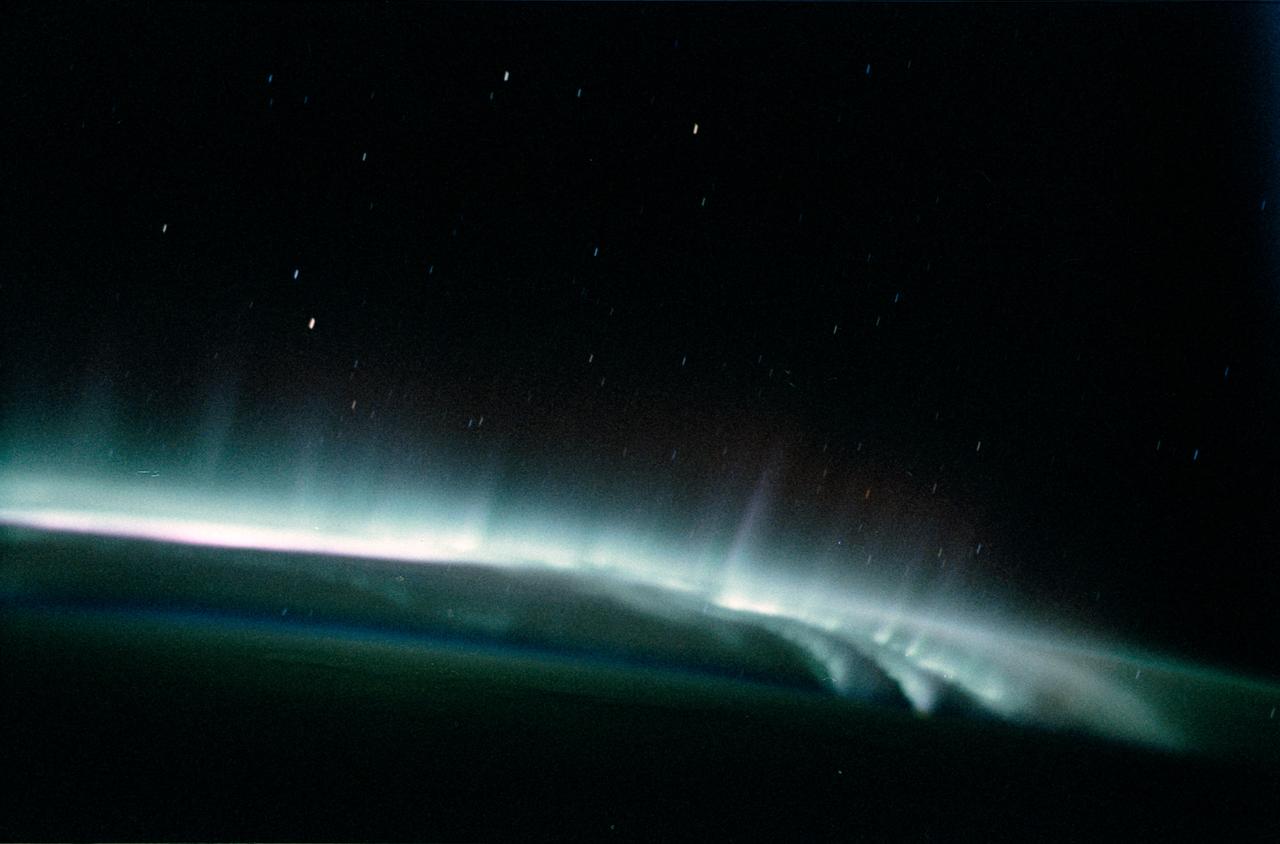
Aurora Australis as seen from STS-62
1994-03-05 · NASA Image and Video Library
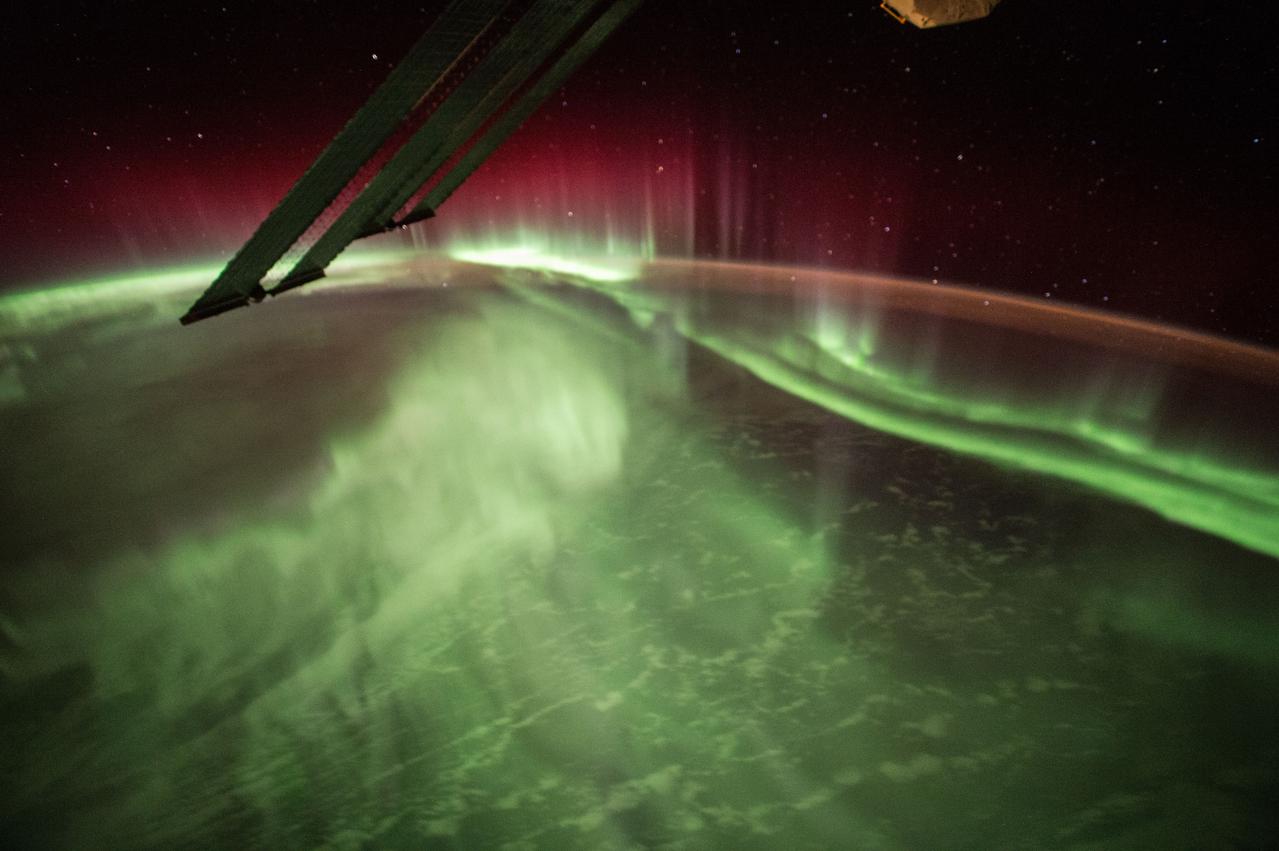
Earth observations taken by Expedition 44 crewmember
2015-07-13 · NASA Image and Video Library
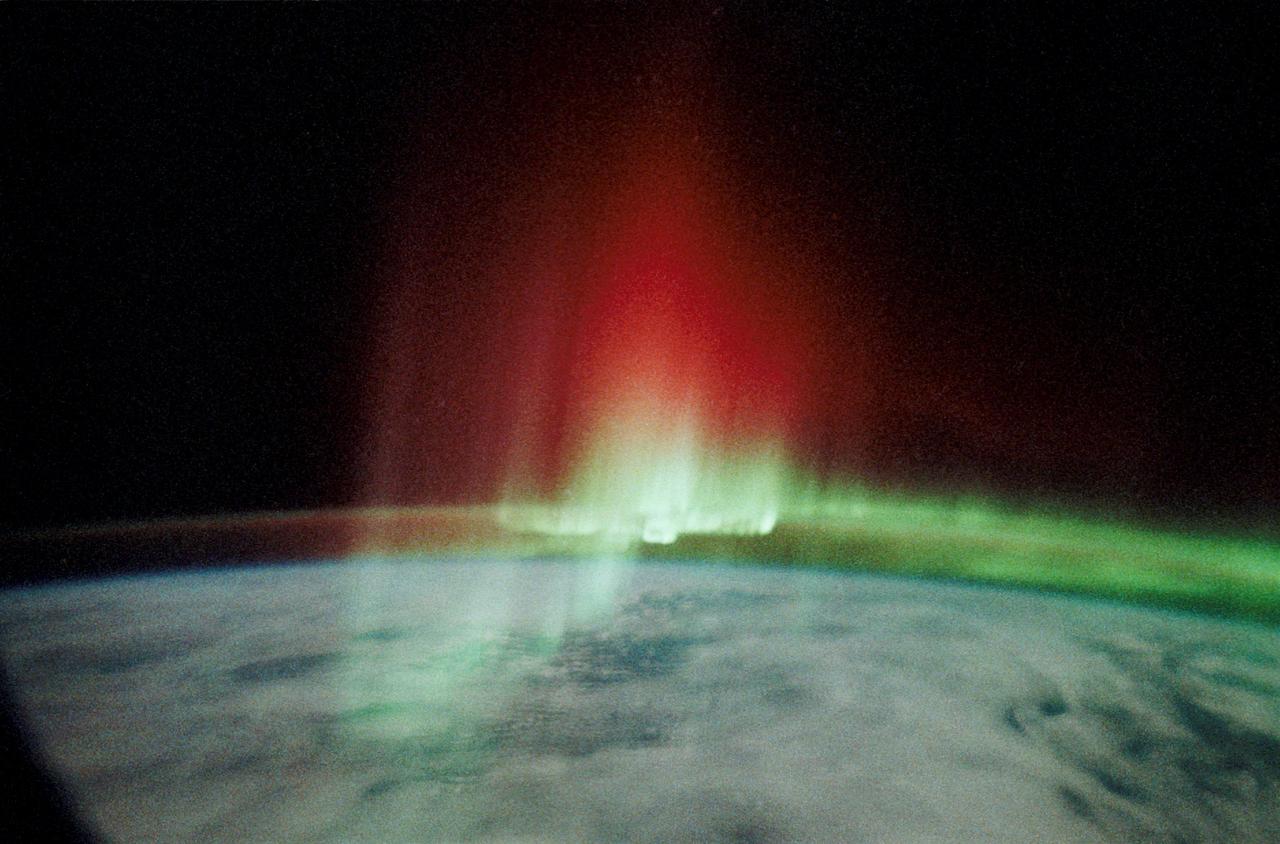
Aurora Australis, Red Crown
1991-05-06 · NASA Image and Video Library
Earth Observation
2014-09-01 · NASA Image and Video Library
Time lapse - Aurora Australis
2013-07-05 · NASA Image and Video Library
STS-47 view of the Aurora Australis
1992-09-20 · NASA Image and Video Library
Aurora Australis, Spiked and Sinuous Red and Green Airglow
1991-05-06 · NASA Image and Video Library
Earth Observation
2014-08-27 · NASA Image and Video Library