Space Science
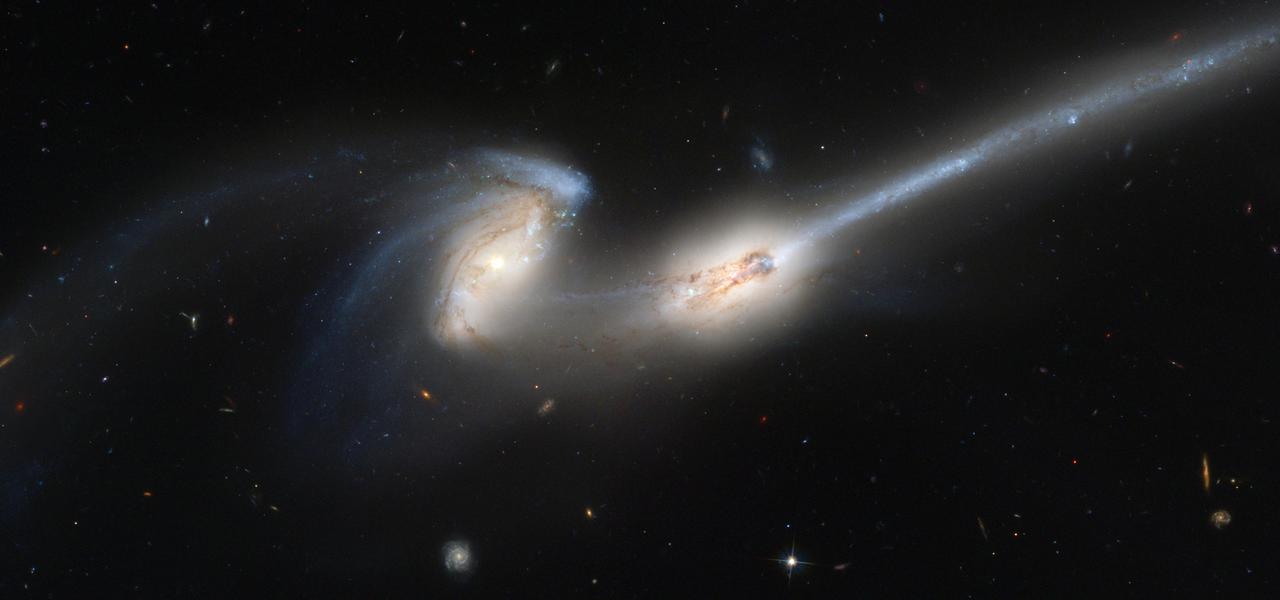
The Advanced Camera for Surveys (ACS), the newest camera on the Hubble Space Telescope, has captured a spectacular pair of galaxies. Located 300 million light-years away in the constellation Coma Berenices, the colliding galaxies have been nicknamed "The Mice" because of the long tails of stars and gas emanating from each galaxy. Otherwise known as NGC 4676, the pair will eventually merge into a single giant galaxy. In the galaxy at left, the bright blue patch is resolved into a vigorous cascade of clusters and associations of young, hot blue stars, whose formation has been triggered by the tidal forces of the gravitational interaction. The clumps of young stars in the long, straight tidal tail (upper right) are separated by fainter regions of material. These dim regions suggest that the clumps of stars have formed from the gravitational collapse of the gas and dust that once occupied those areas. Some of the clumps have luminous masses comparable to dwarf galaxies that orbit the halo of our own Milky Way Galaxy. Computer simulations by astronomers show that we are seeing two near identical spiral galaxies approximately 160 million years after their closest encounter. The simulatio
- Date
- 2002-04-07
- Collection
- MSFC
- Archive
- NASA Image and Video Library
- Type
- photograph
Public domainsafest
Reason: a NASA work: not copyrighted in the United States.
Read from: NASA media usage guidelines: NASA material is not copyrighted in the US unless noted; no third-party credit or mark found.
Credit line
"Space Science" (2002-04-07). NASA/MSFC. Public domain. https://images.nasa.gov/details/0203049Need photos for a whole script? Add Find Any Photo to Claude and ask for this one by its id: 16286.
More like this
Space Science
2002-04-01 · NASA Image and Video Library
A Galactic Spectacle
2010-08-05 · NASA Image and Video Library
Hubble Catches a Galaxy Duo by the "Hare"
2017-12-08 · NASA Image and Video Library
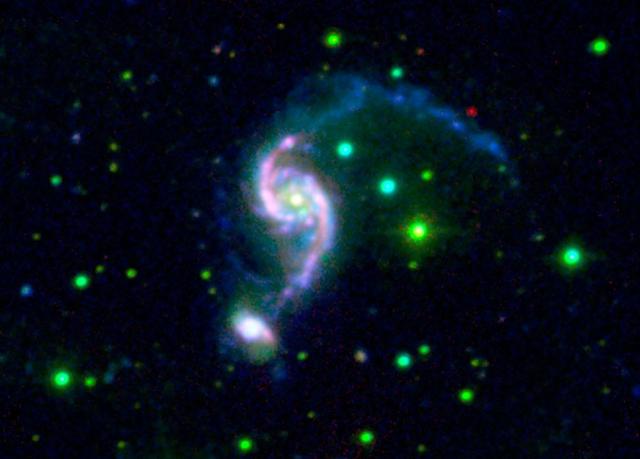
Older Galaxy Pair Has Surprisingly Youthful Glow
2007-01-16 · NASA Image and Video Library
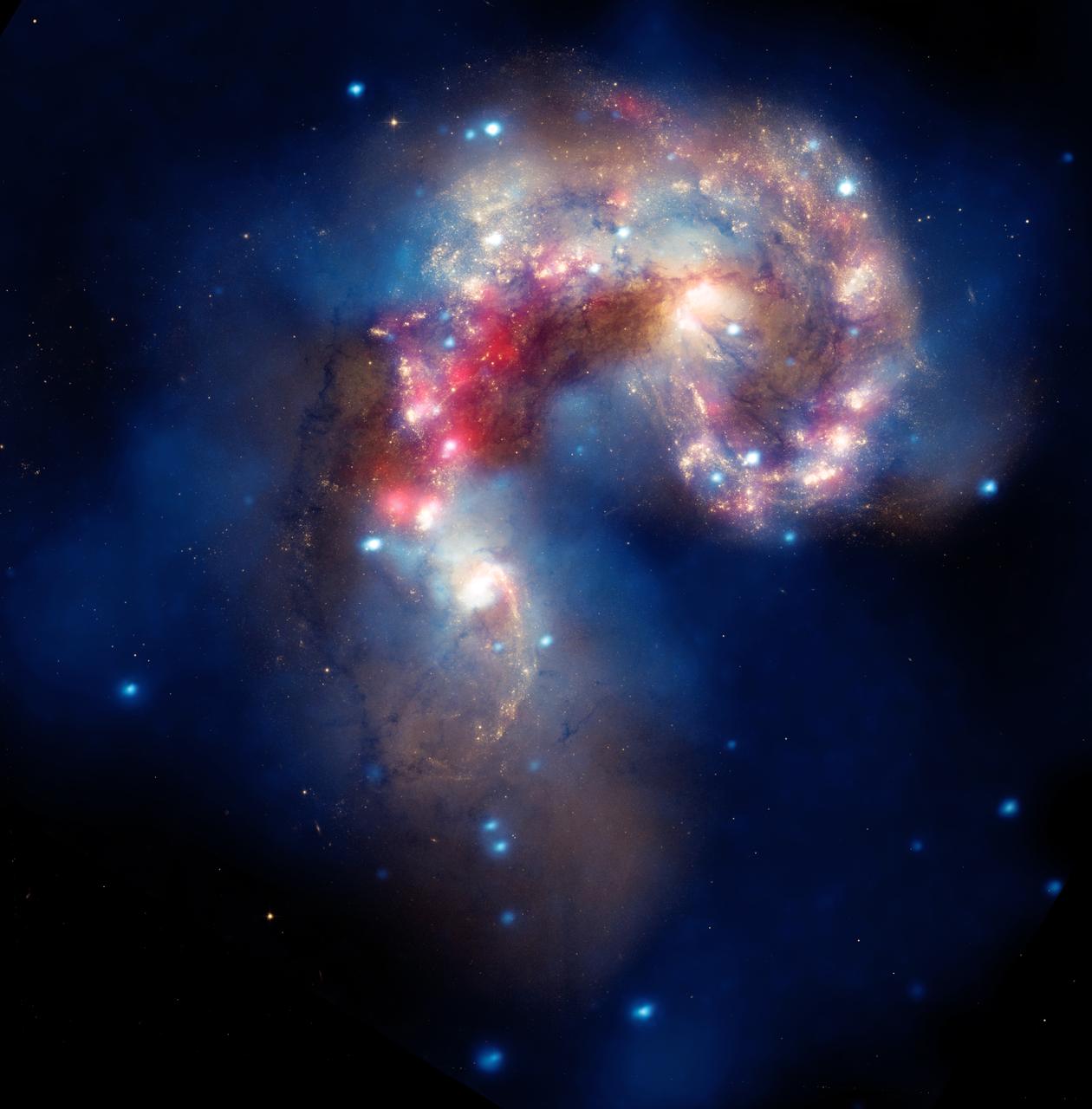
A Galactic Spectacle
2017-12-08 · NASA Image and Video Library

Fire within the Antennae Galaxies
2004-09-07 · NASA Image and Video Library
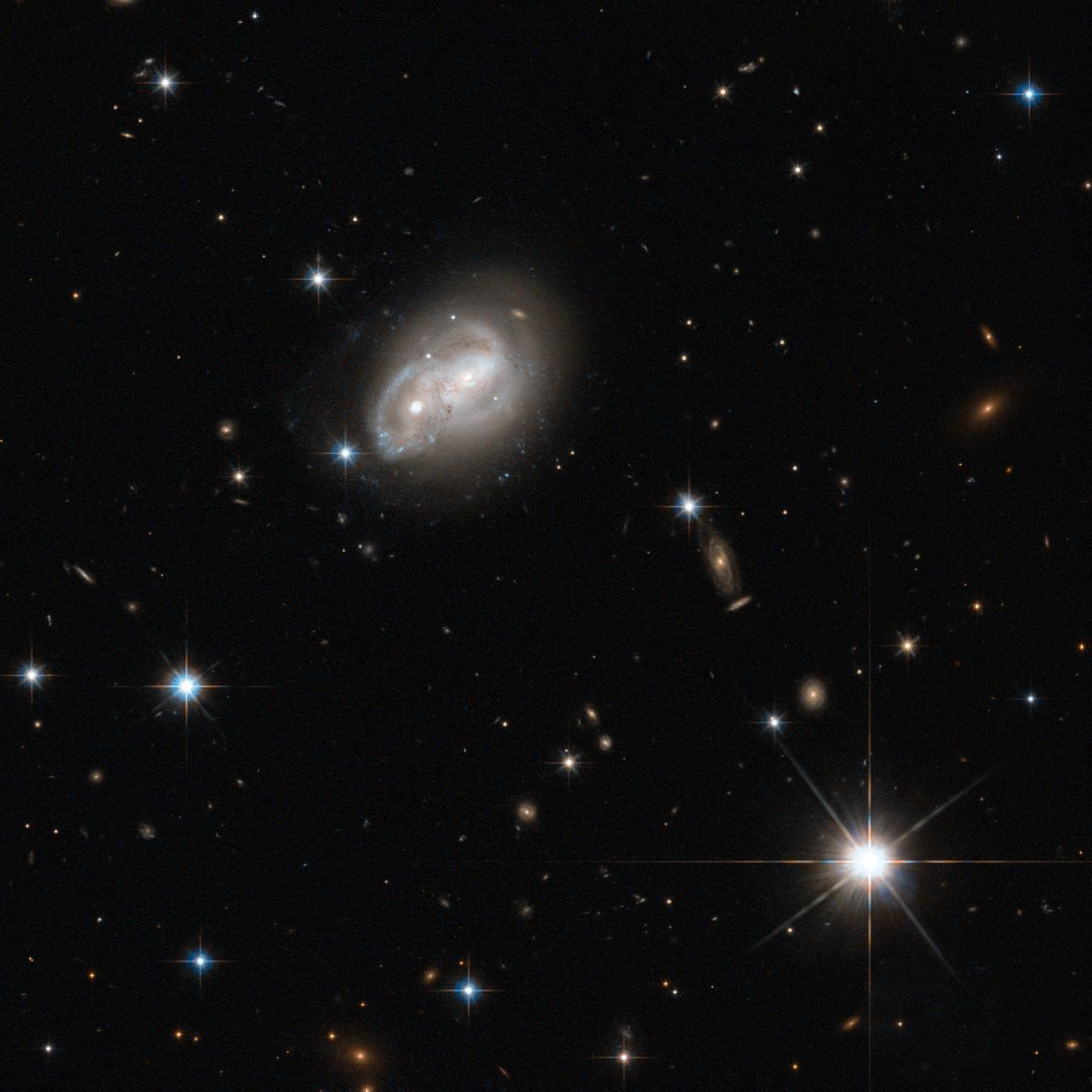
Hubble Eyes Galaxy as it Gets a Cosmic Hair Ruffling
2017-12-08 · NASA Image and Video Library
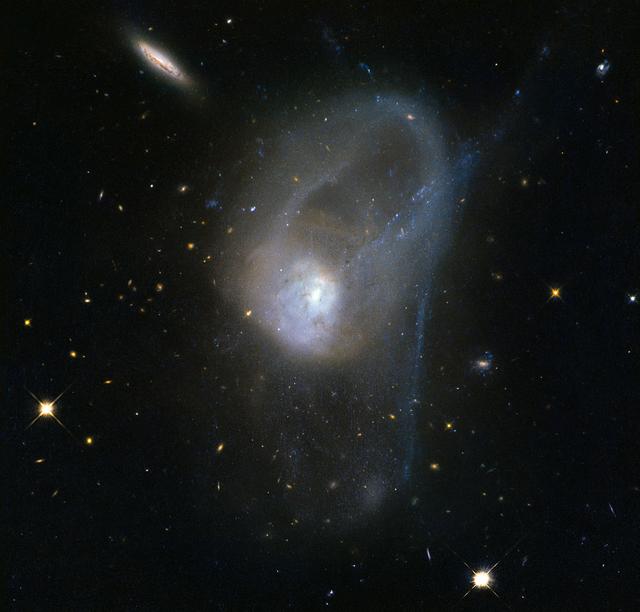
Evolution in slow motion
2015-09-14 · NASA Image and Video Library