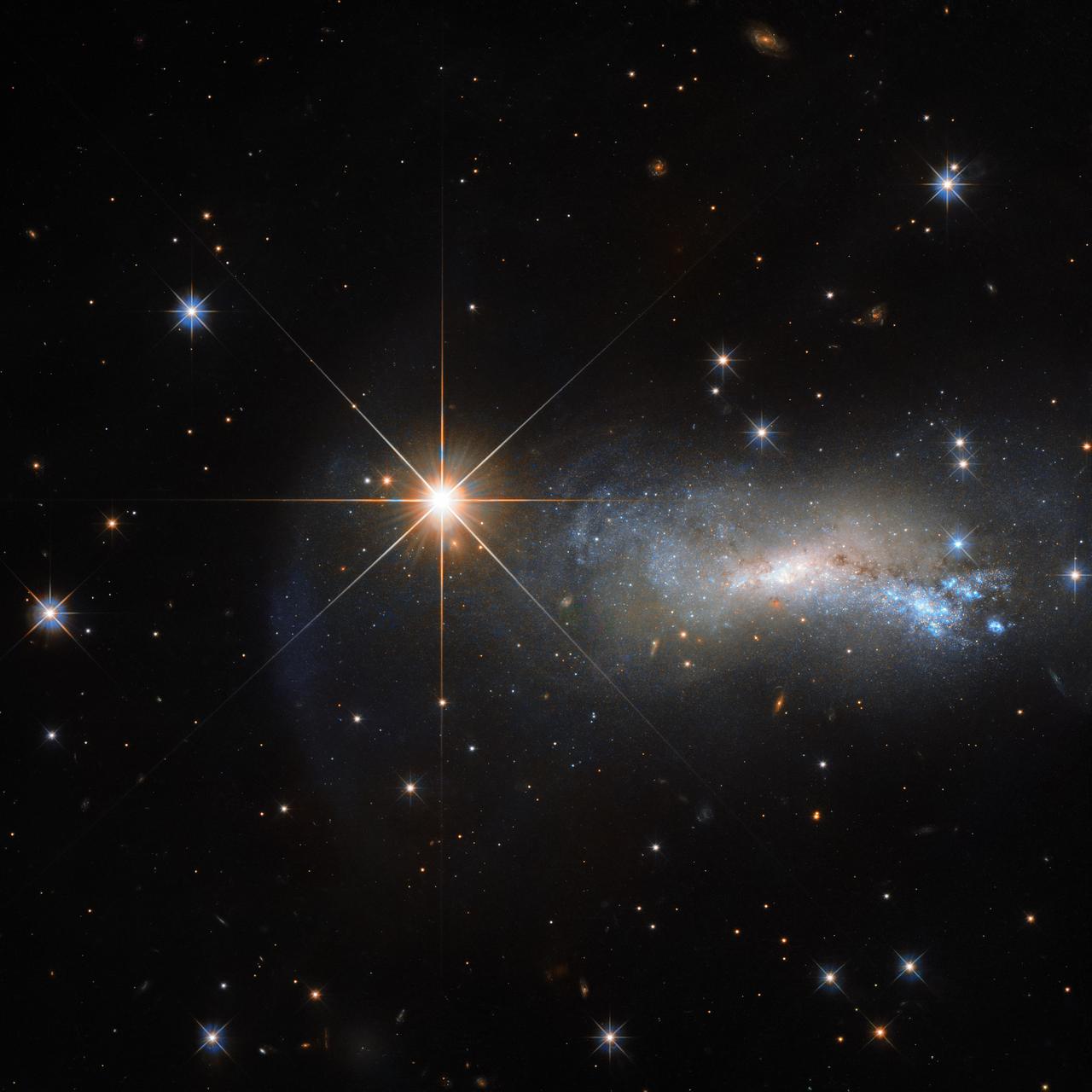
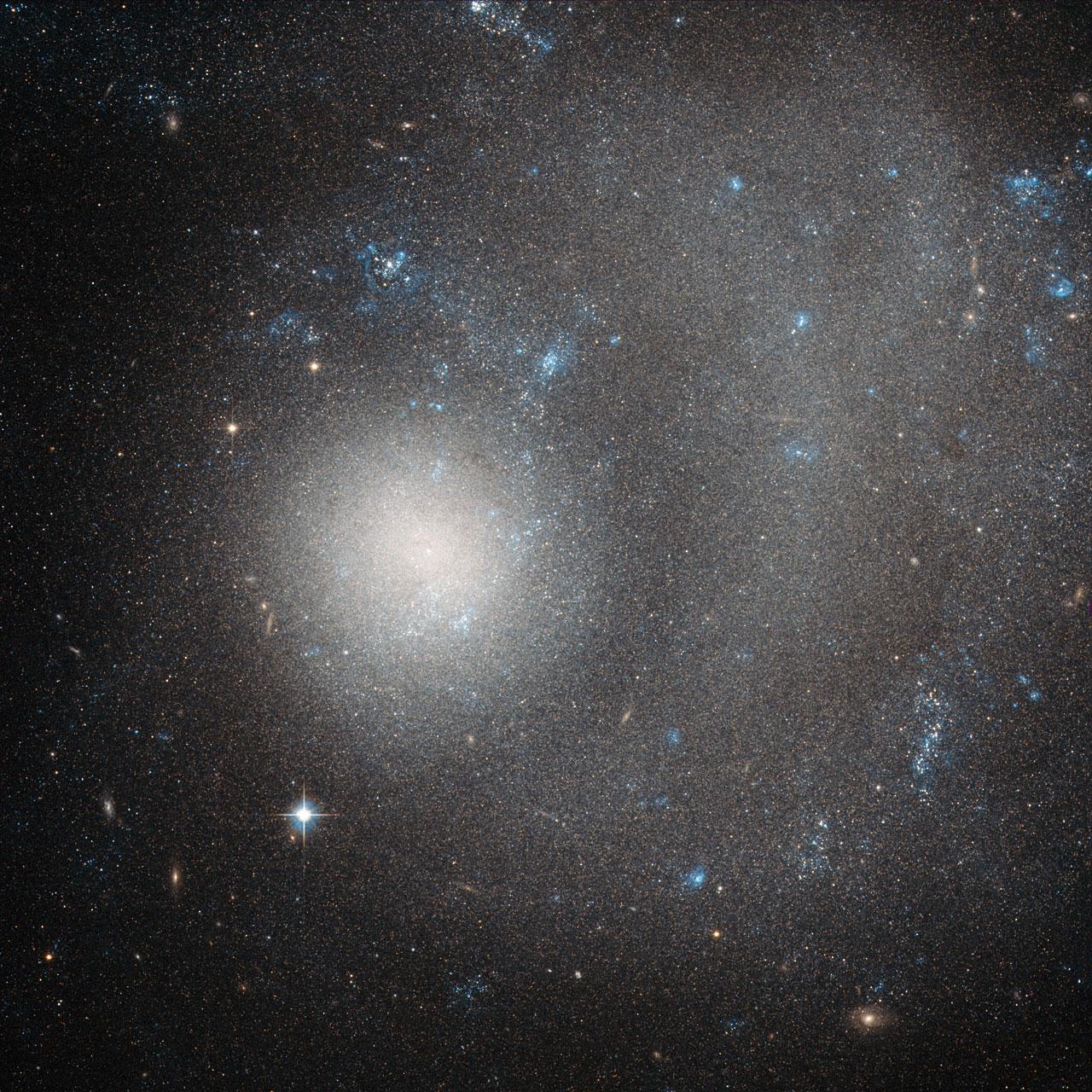
Star from the Lizard Constellation Photobombs Hubble Observation
In space, being outshone is an occupational hazard. This NASA/ESA Hubble Space Telescope image captures a galaxy named NGC 7250. Despite being remarkable in its own right — it has bright bursts of star formation and recorded supernova explosions— it blends into the background somewhat thanks to the gloriously bright star hogging the limelight next to it. The bright object seen in this Hubble image is a single and little-studied star named TYC 3203-450-1, located in the constellation of Lacerta (The Lizard). The star is much closer than the much more distant galaxy. Only this way can a normal star outshine an entire galaxy, consisting of billions of stars. Astronomers studying distant objects call these stars “foreground stars” and they are often not very happy about them, as their bright light is contaminating the faint light from the more distant and interesting objects they actually want to study. In this case, TYC 3203-450-1 is million times closer than NGC 7250, which lies more than 45 million light-years away from us. If the star were the same distance from us as NGC 7250, it would hardly be visible in this image. Credit: ESA/Hubble & NASA NASA image use policy. NASA Godda
- Date
- 2017-12-08
- Collection
- GSFC
- Archive
- NASA Image and Video Library
- Type
- photograph
Public domainsafest
Reason: a NASA work: not copyrighted in the United States.
Read from: NASA media usage guidelines: NASA material is not copyrighted in the US unless noted; no third-party credit or mark found.
Credit line
"Star from the Lizard Constellation Photobombs Hubble Observation" (2017-12-08). NASA/GSFC. Public domain. https://images.nasa.gov/details/GSFC_20171208_Archive_e000084Need photos for a whole script? Add Find Any Photo to Claude and ask for this one by its id: 16741.
More like this
Hubble Sees an Intriguing Young-Looking Dwarf Galaxy
2017-12-08 · NASA Image and Video Library
Hubble View: Wolf-Rayet Stars, Intense and Short-Lived
2017-12-08 · NASA Image and Video Library
Hubble Eyes Galactic Refurbishment
2017-12-08 · NASA Image and Video Library
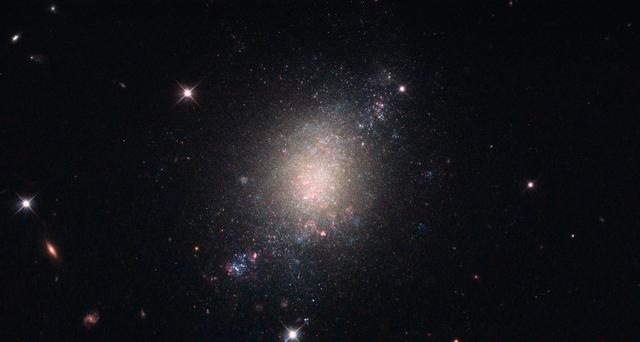
Hubble Scopes Out a Galaxy of Stellar Birth
2017-12-08 · NASA Image and Video Library
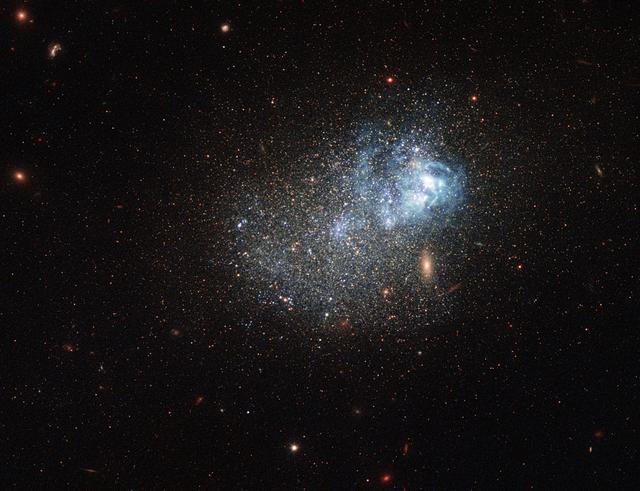
Hubble Sweeps a Messy Star Factory
2017-12-08 · NASA Image and Video Library
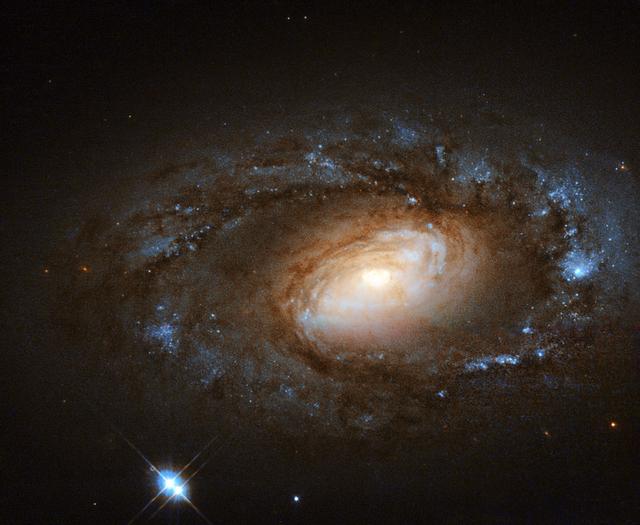
Hubble Spies Charming Spiral Galaxy Bursting with Stars
2017-12-08 · NASA Image and Video Library
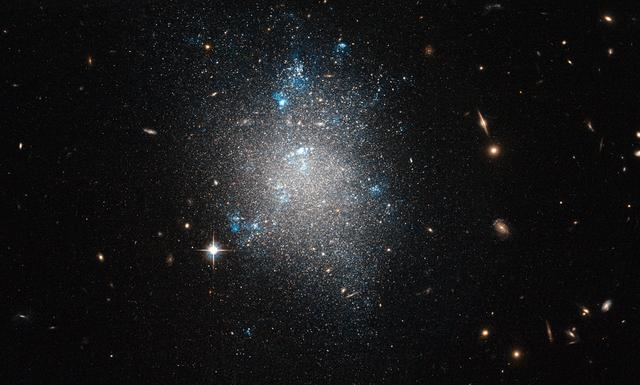
Hubble Views a Dwarf Galaxy
2017-12-08 · NASA Image and Video Library
Hubble Sees a Dwarf Galaxy Shaped by a Grand Design
2017-12-08 · NASA Image and Video Library