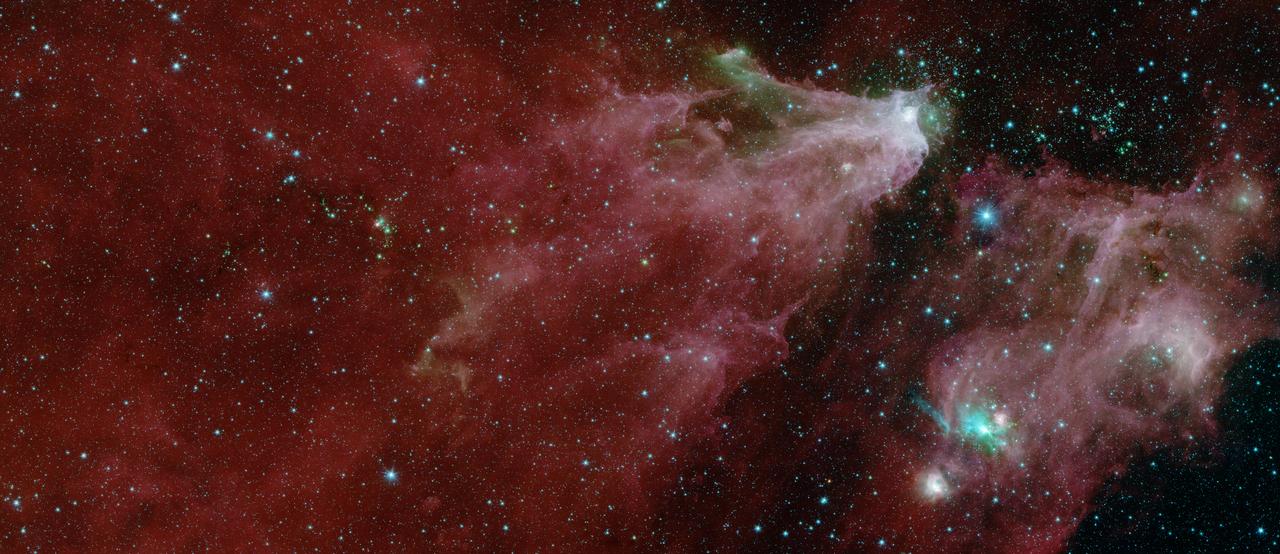
Cepheus C and Cepheus B Region by Spitzer (One-Instrument)
This image shows data from NASA's Spitzer Space Telescope, from the IRAC instrument, with colors corresponding to wavelengths of 3.6, 4.5, 5.8 and 8.0 µm (shown as blue, green, orange and red). The grand red delta filling most of the image is a far-away nebula, or a cloud of gas and dust. A second nebula is located in the lower right portion of the image. Within the first nebula, on the left side of this image, a dark filament runs horizontally through the green cloud. A smattering of baby stars (the red and yellow dots) appear inside it. Known as Cepheus C, the area is a particularly dense concentration of gas and dust where infant stars form. This region is called Cepheus C because it lies in the constellation Cepheus, which can be found near the constellation Cassiopeia. Cepheus-C is about 6 light years long, and lies about 40 light-years from the bright spot at the tip of the nebula. Two features identified in the annotated image are visible only in the multi-instrument version of the image, found here. The first is V374 Ceph in the larger nebula. The second is the "runaway star" in the smaller nebula. A second star cluster is located just above the second large nebula on the r
- Date
- 2019-05-30
- Photographer / author
- NASA/JPL-Caltech
- Collection
- JPL
- Archive
- NASA Image and Video Library
- Type
- photograph
Public domainsafest
Reason: a NASA work: not copyrighted in the United States.
Read from: NASA media usage guidelines: NASA material is not copyrighted in the US unless noted; no third-party credit or mark found.
Credit line
"Cepheus C and Cepheus B Region by Spitzer (One-Instrument)" (2019-05-30). NASA/JPL/NASA/JPL-Caltech. Public domain. https://images.nasa.gov/details/PIA23127Need photos for a whole script? Add Find Any Photo to Claude and ask for this one by its id: 25112.
More like this

Cepheus C and Cepheus B Region by Spitzer (Two-Instrument)
2019-05-30 · NASA Image and Video Library
Trigger-Happy Cloud
2009-08-12 · NASA Image and Video Library
Spitzer Spots Bubbles and Bow Shocks
2019-09-30 · NASA Image and Video Library
Multi-Wavelength Views of Protostars in IC 1396
2003-12-18 · NASA Image and Video Library
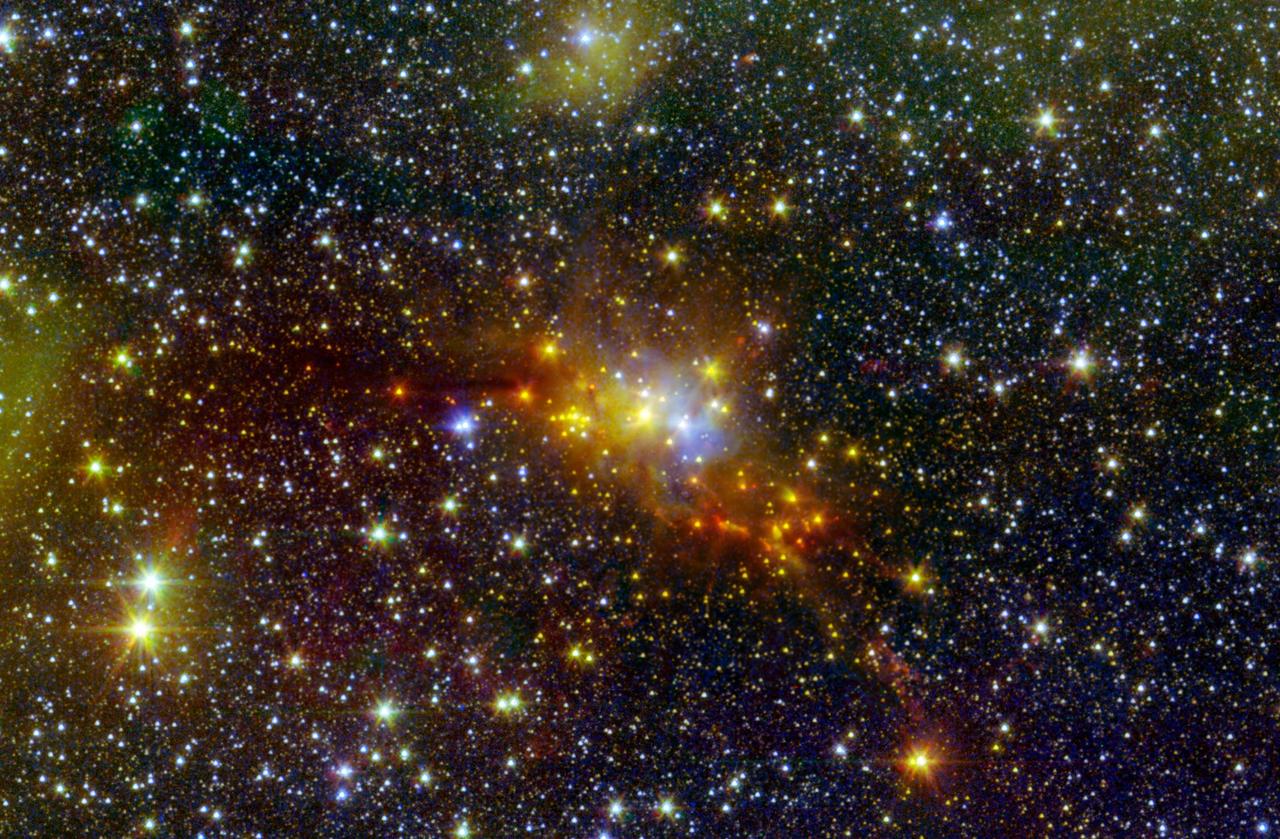
The Serpent Star-Forming Cloud Spawns Stars
2014-05-28 · NASA Image and Video Library
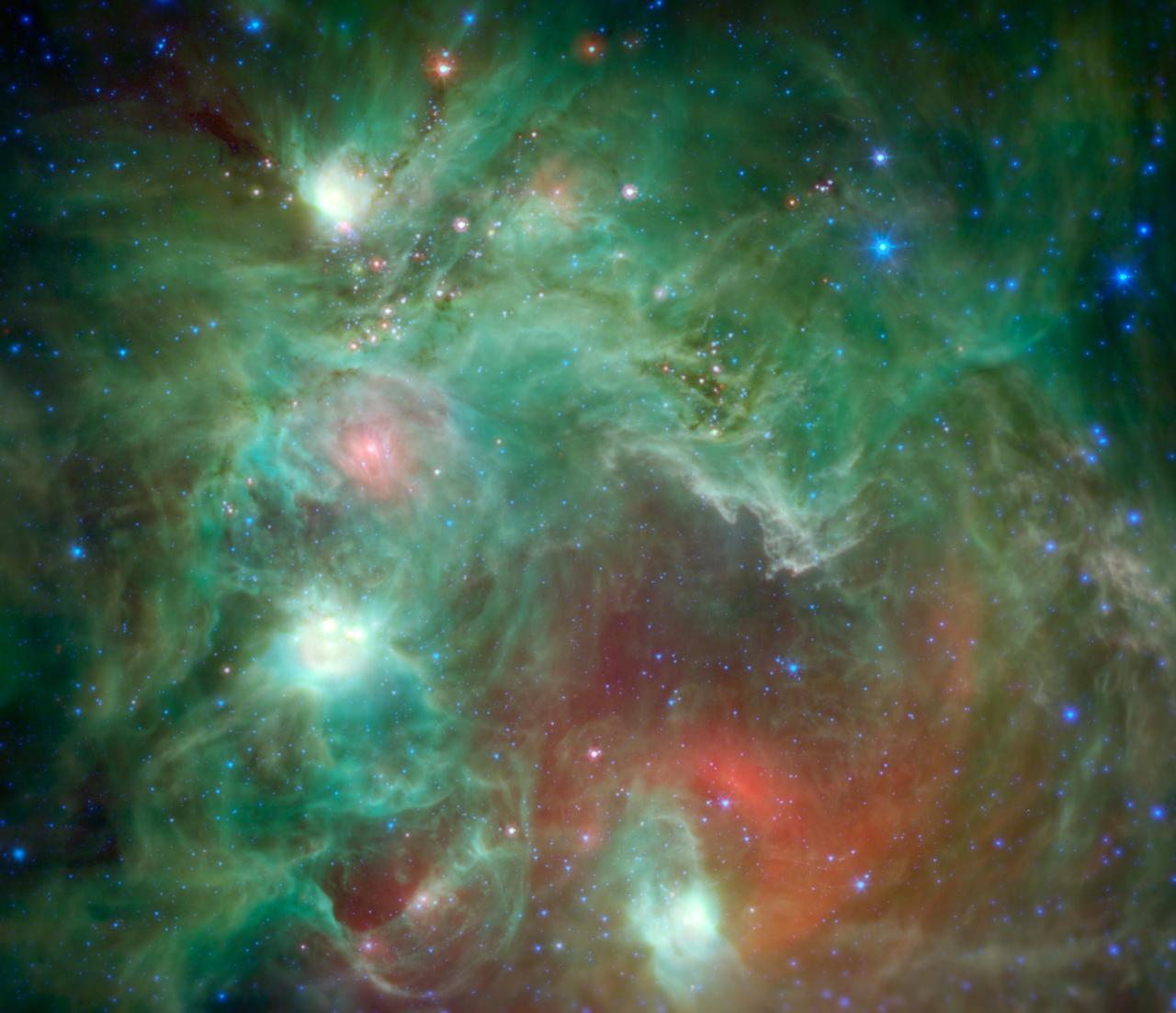
Seeing Beyond the Monkey Head
2015-08-20 · NASA Image and Video Library
Enterprising Nebulae
2016-09-08 · NASA Image and Video Library
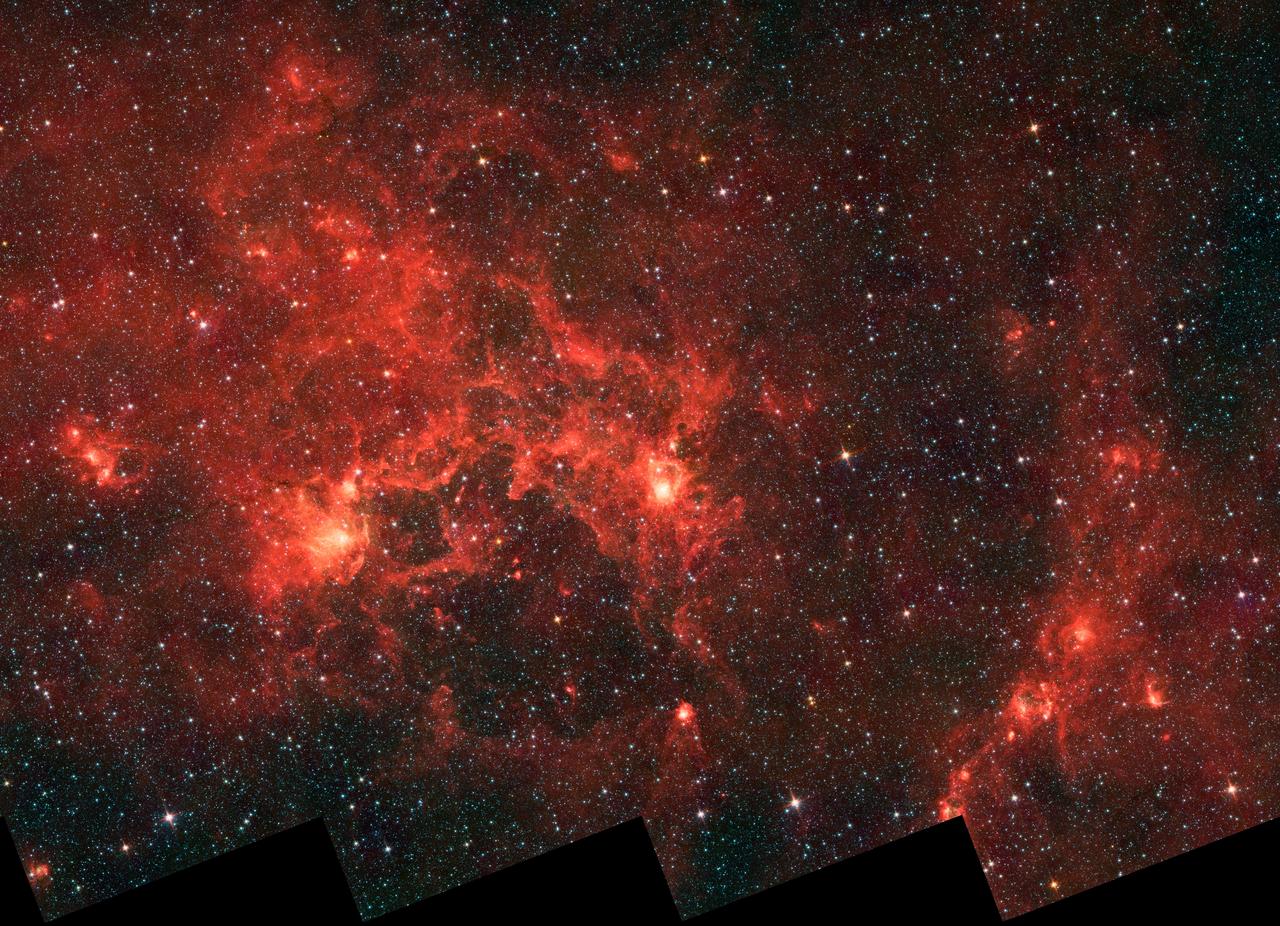
Dragonfish Coming At You in Infrared
2011-12-12 · NASA Image and Video Library