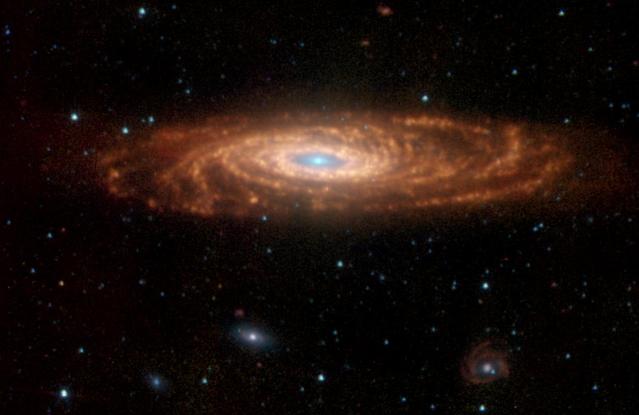
Morphology of Our Galaxy Twin
NASA's Spitzer Space Telescope has captured these infrared images of a nearby spiral galaxy that resembles our own Milky Way. The targeted galaxy, known as NGC 7331 and sometimes referred to as our galaxy's twin, is found in the constellation Pegasus at a distance of 50 million light-years. This inclined galaxy was discovered in 1784 by William Herschel, who also discovered infrared light. The evolution of this galaxy is a story that depends significantly on the amount and distribution of gas and dust, the locations and rates of star formation, and on how the energy from star formation is recycled by the local environment. The new Spitzer images are allowing astronomers to "read" this story by dissecting the galaxy into its separate components. The image, measuring 12.6 by 8.2 arcminutes, was obtained by Spitzer's infrared array camera. It is a four-color composite of invisible light, showing emissions from wavelengths of 3.6 microns (blue), 4.5 microns (green), 5.8 microns (yellow) and 8.0 microns (red). These wavelengths are roughly 10 times longer than those seen by the human eye. The infrared light seen in this image originates from two very different sources. At shorter wavele
- Date
- 2004-06-28
- Photographer / author
- NASA/JPL-Caltech/STScI
- Collection
- JPL
- Archive
- NASA Image and Video Library
- Type
- photograph
Public domainsafest
Reason: a NASA work: not copyrighted in the United States.
Read from: NASA media usage guidelines: NASA material is not copyrighted in the US unless noted; no third-party credit or mark found.
Credit line
"Morphology of Our Galaxy Twin" (2004-06-28). NASA/JPL/NASA/JPL-Caltech/STScI. Public domain. https://images.nasa.gov/details/PIA06322Need photos for a whole script? Add Find Any Photo to Claude and ask for this one by its id: 15894.
More like this
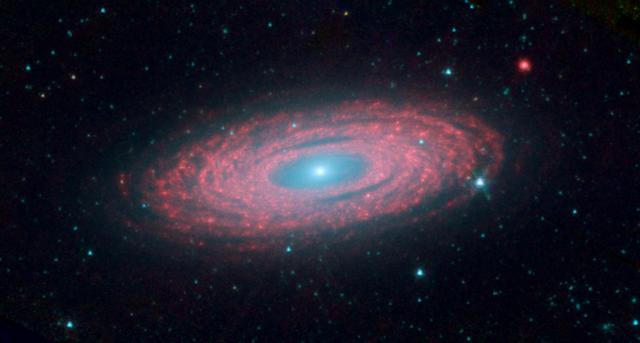
Why Are Galaxies So Smooth?
2009-04-30 · NASA Image and Video Library
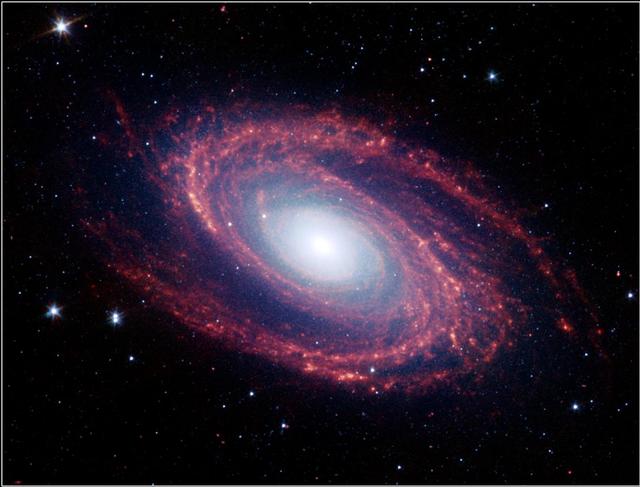
Short-Wavelength Infrared Views of Messier 81
2003-12-18 · NASA Image and Video Library
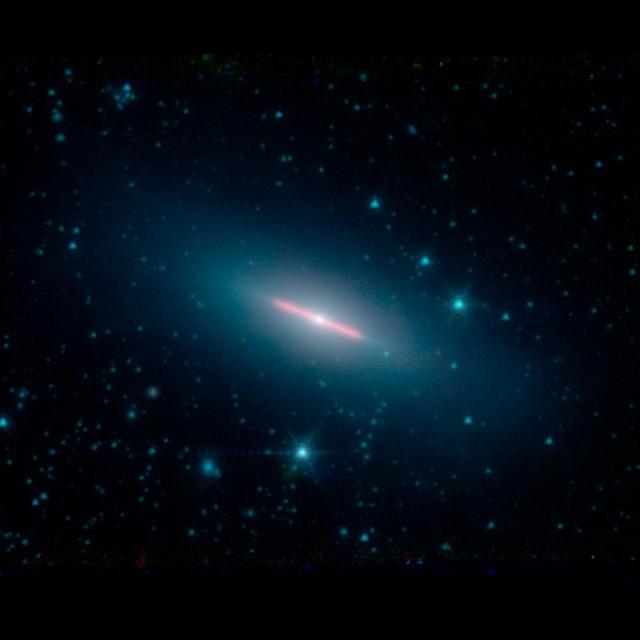
NASA's Spitzer Spots a Perfectly Sideways Galaxy
2019-07-31 · NASA Image and Video Library
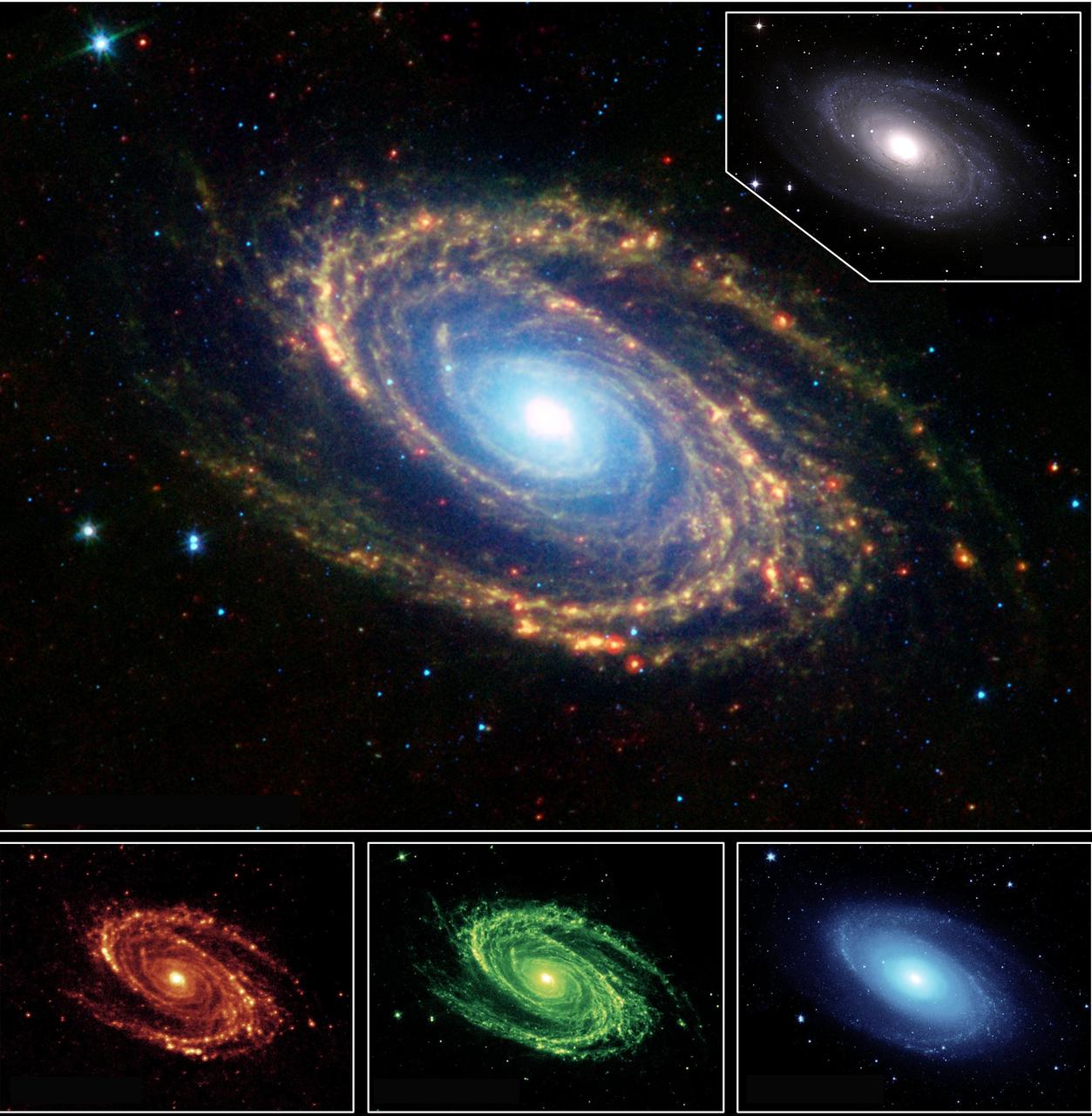
Multi-Wavelength Views of Messier 81
2003-12-18 · NASA Image and Video Library
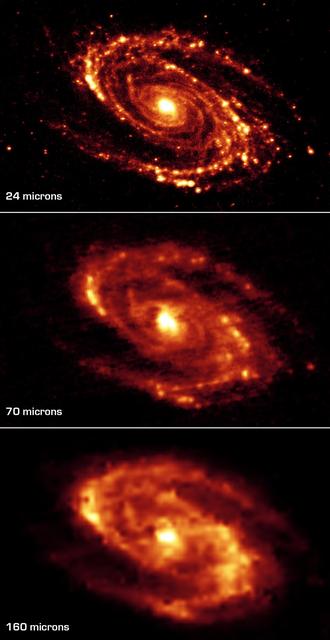
Long-Wavelength Infrared Views of Messier 81
2003-12-18 · NASA Image and Video Library
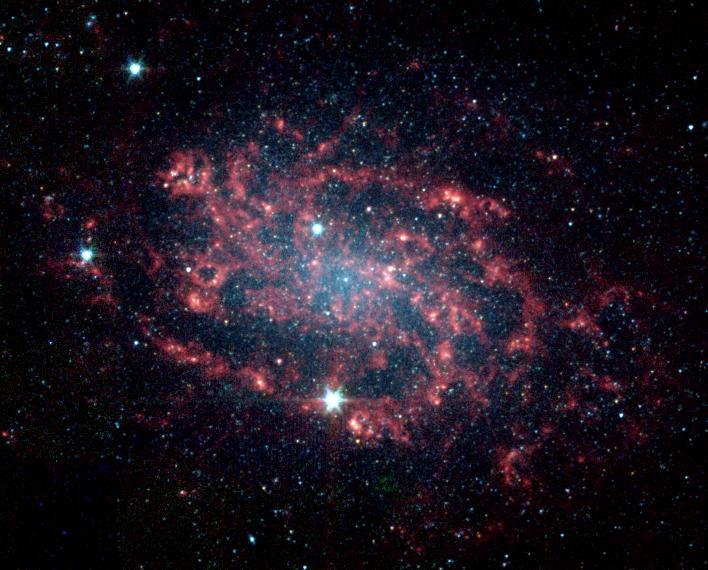
Dissection of a Galaxy
2004-05-11 · NASA Image and Video Library
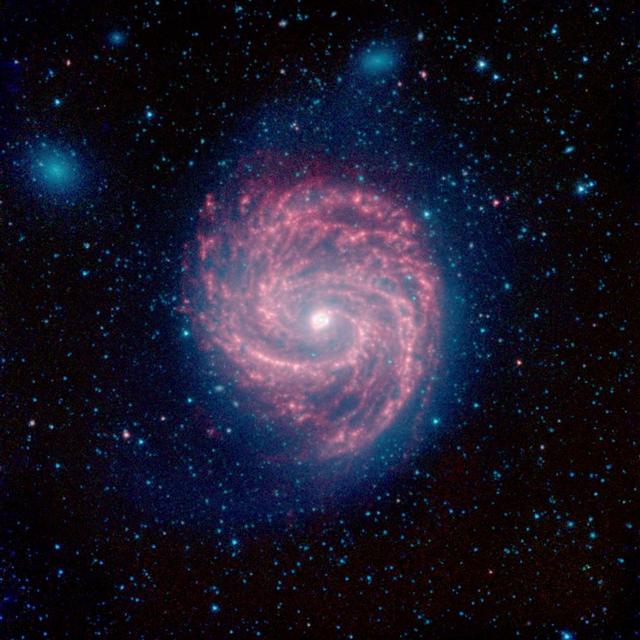
The Swirling Arms of the M100 Galaxy
2012-08-15 · NASA Image and Video Library
Pinwheel Looks Fab in Infrared
2008-07-21 · NASA Image and Video Library