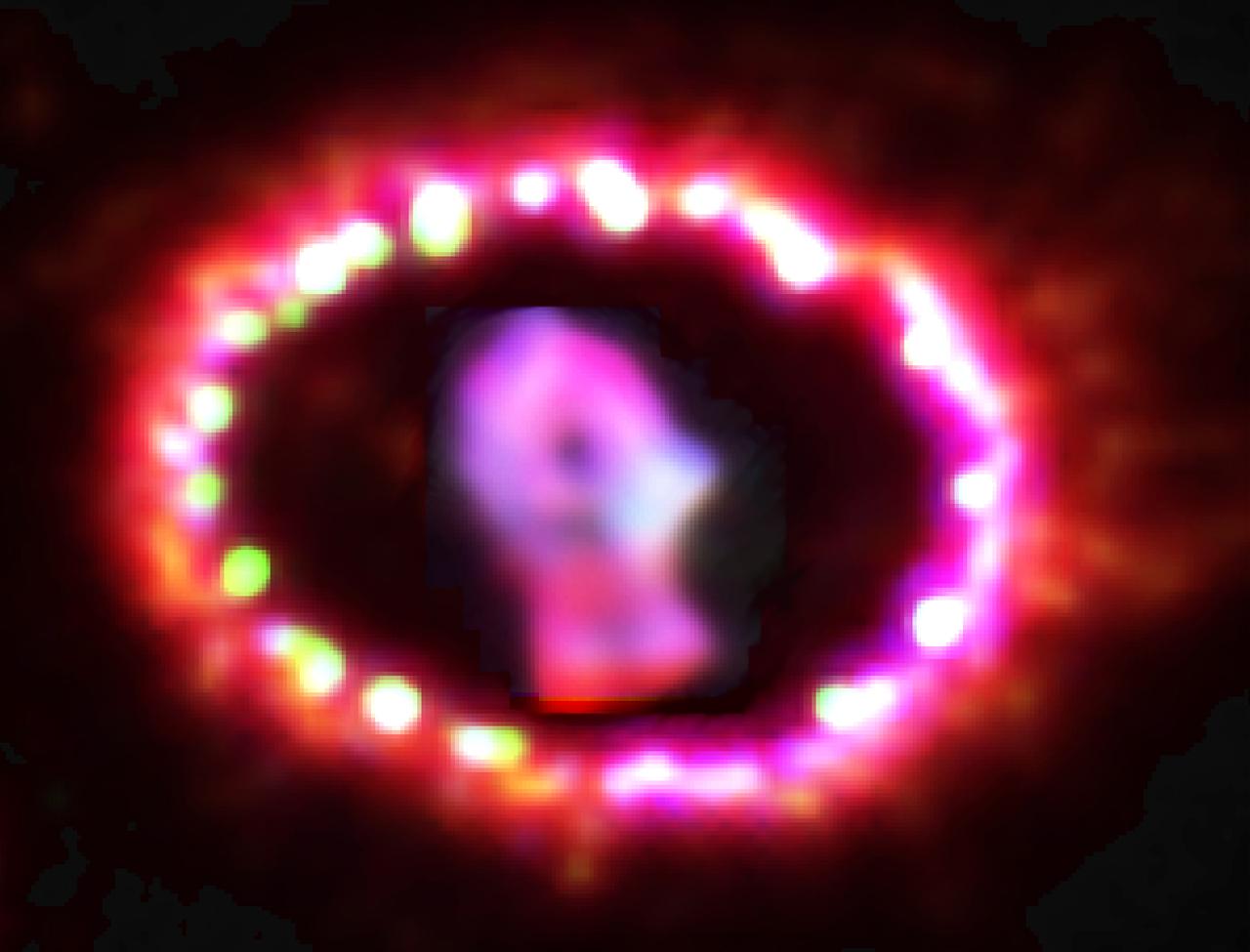
NASA's Hubble Sees A New Supernova Remnant Light Up
NASA image release June 10, 2011 Astronomers using NASA's Hubble Space Telescope are witnessing the unprecedented transition of a supernova to a supernova remnant, where light from an exploding star in a neighboring galaxy, the Large Magellanic Cloud, reached Earth in February 1987. Named Supernova 1987A, it was the closest supernova explosion witnessed in almost 400 years. The supernova's close proximity to Earth has allowed astronomers to study it in detail as it evolves. Now, the supernova debris, which has faded over the years, is brightening. This means that a different power source has begun to light the debris. The debris of SN 1987A is beginning to impact the surrounding ring, creating powerful shock waves that generate X-rays observed with NASA's Chandra X-ray Observatory. Those X-rays are illuminating the supernova debris and shock heating is making it glow in visible light. The results are being reported in the June 9, 2011, issue of the journal Nature by a team including Robert Kirshner of the Harvard-Smithsonian Center for Astrophysics (CfA), who leads a long-term study of SN 1987A with Hubble. Since its launch in 1990, the Hubble telescope has provided a continuous re
- Date
- 2017-12-08
- Collection
- GSFC
- Archive
- NASA Image and Video Library
- Type
- photograph
Public domainsafest
Reason: a NASA work: not copyrighted in the United States.
Read from: NASA media usage guidelines: NASA material is not copyrighted in the US unless noted; no third-party credit or mark found.
Credit line
"NASA's Hubble Sees A New Supernova Remnant Light Up" (2017-12-08). NASA/GSFC. Public domain. https://images.nasa.gov/details/GSFC_20171208_Archive_e001896Need photos for a whole script? Add Find Any Photo to Claude and ask for this one by its id: 16564.
More like this

New Hubble Observations of Supernova 1987A Trace Shock Wave
2017-12-08 · NASA Image and Video Library

Hubble Supernova Bubble Resembles Holiday Ornament
2017-12-08 · NASA Image and Video Library

The Dawn of a New Era for Supernova 1987A
2017-02-24 · NASA Image and Video Library
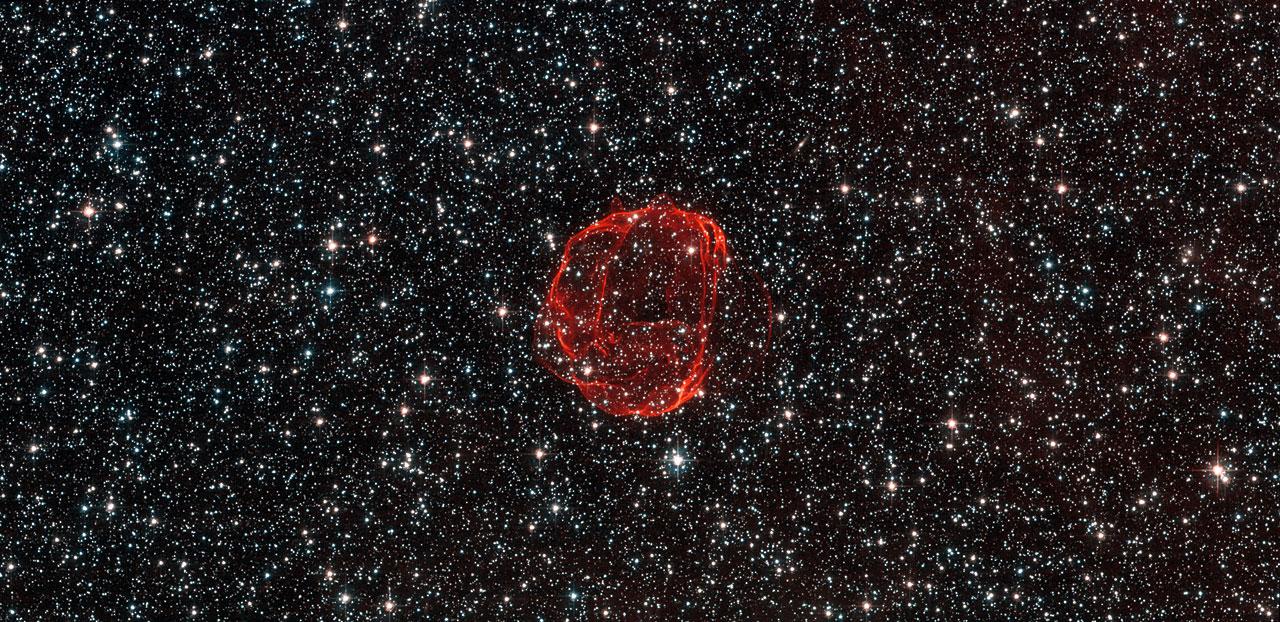
Hubble Sees the Remains of a Star Gone Supernova
2017-12-08 · NASA Image and Video Library
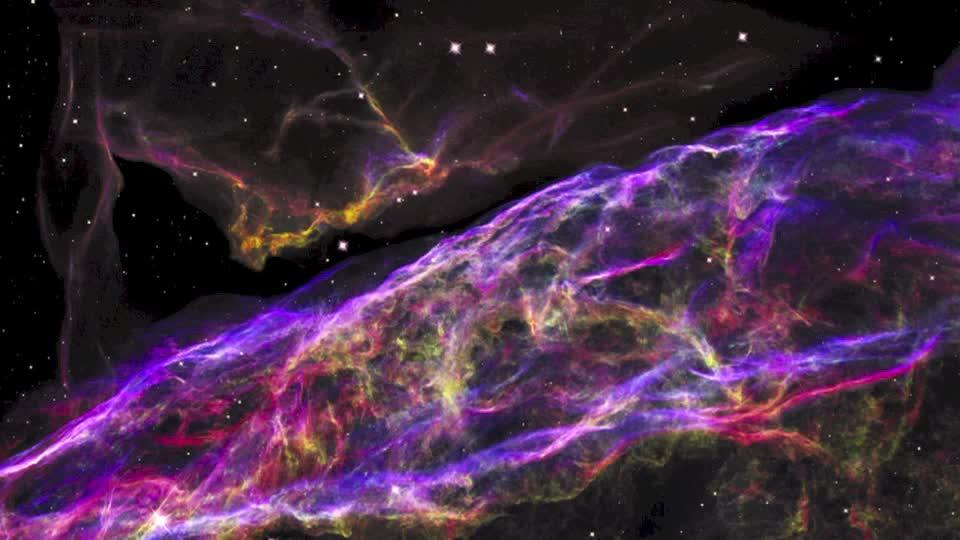
Hubble Zooms in on Shrapnel from an Exploded Star
2017-12-08 · NASA Image and Video Library

Hubble Captures Bubbles And Baby Stars
2017-12-08 · NASA Image and Video Library

Hubble snap a beautiful supernova explosion some 160,000 light-years from Earth
2017-12-08 · NASA Image and Video Library

Hubble Sees Hidden Treasure in Large Magellanic Cloud
2017-12-08 · NASA Image and Video Library