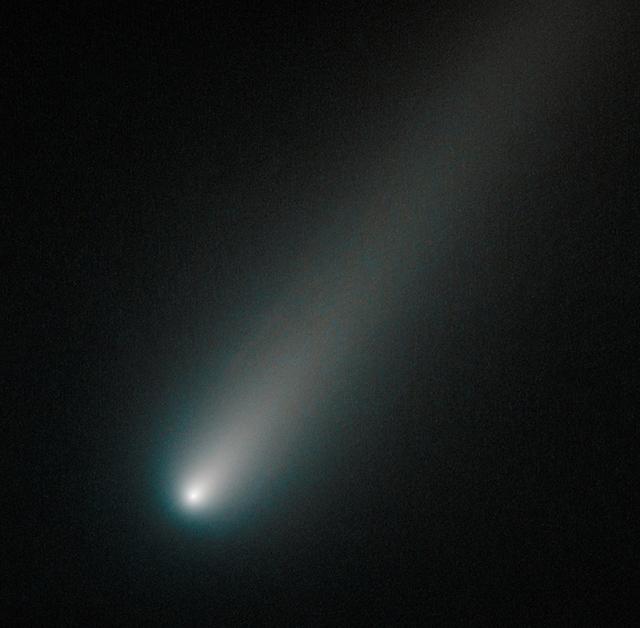
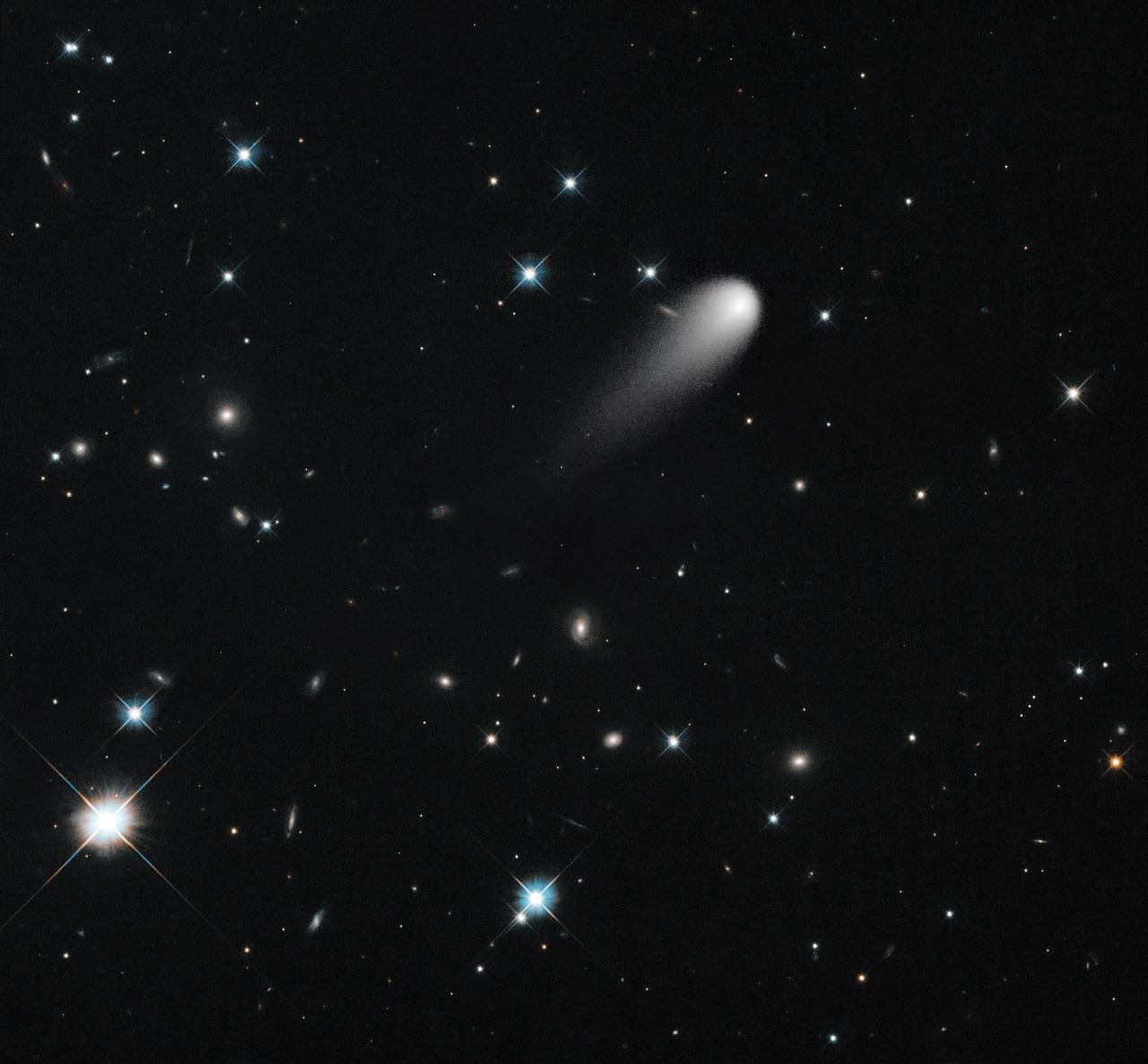
Oct. 9 Hubble View of ISON
On Oct. 9, 2013, Hubble observed comet ISON once again, when it was inside the orbit of Mars, about 177 million miles from Earth. This image shows that the comet was still intact despite some predictions that the fragile icy nucleus might disintegrate closer to the sun. The comet will pass closest to the sun on Nov. 28, 2013. If the nucleus had broke apart then Hubble would have likely seen evidence of multiple fragments. Moreover, the coma, or head, surrounding the comet's nucleus is symmetric and smooth. This would probably not be the case if clusters of smaller fragments were flying along. This color composite image was assembled using two filters. The comet's coma appears cyan, a greenish-blue color due to gas, while the tail is reddish due to dust streaming off the nucleus. The tail forms as dust particles are pushed away from the nucleus by the pressure of sunlight. Credit: NASA -------- More details on Comet ISON: Comet ISON began its trip from the Oort cloud region of our solar system and is now travelling toward the sun. The comet will reach its closest approach to the sun on Thanksgiving Day -- 28 Nov 2013 -- skimming just 730,000 miles above the sun's surface. If it come
- Date
- 2017-12-08
- Collection
- GSFC
- Archive
- NASA Image and Video Library
- Type
- photograph
Public domainsafest
Reason: a NASA work: not copyrighted in the United States.
Read from: NASA media usage guidelines: NASA material is not copyrighted in the US unless noted; no third-party credit or mark found.
Credit line
"Oct. 9 Hubble View of ISON" (2017-12-08). NASA/GSFC. Public domain. https://images.nasa.gov/details/GSFC_20171208_Archive_e001323Need photos for a whole script? Add Find Any Photo to Claude and ask for this one by its id: 17696.
More like this

NASA Hubble Sees Comet ISON Intact
2013-10-09 · NASA Image and Video Library
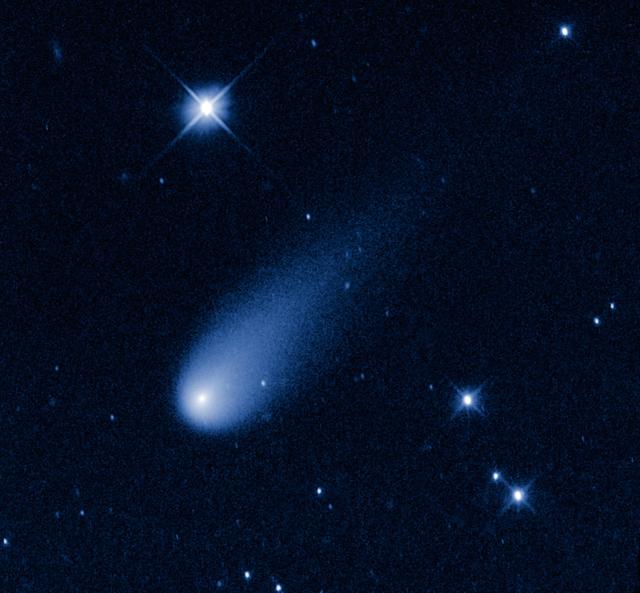
May 8 Hubble View of ISON
2017-12-08 · NASA Image and Video Library
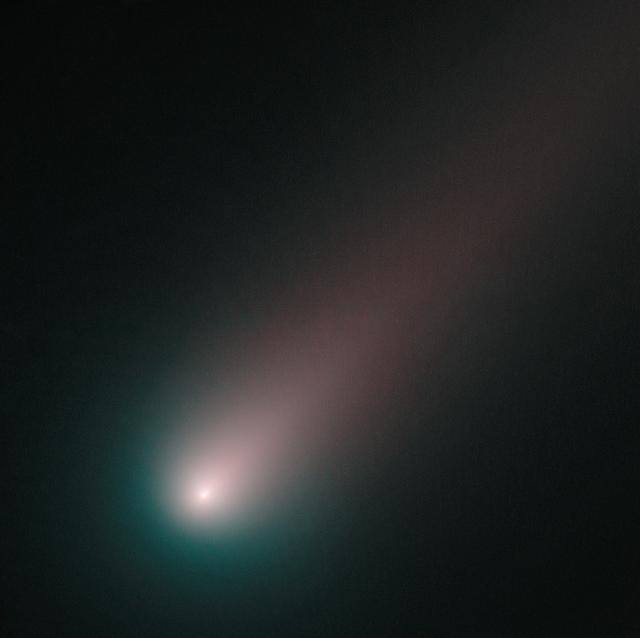
Hubble's Last Look at Comet ISON Before Perihelion
2017-12-08 · NASA Image and Video Library
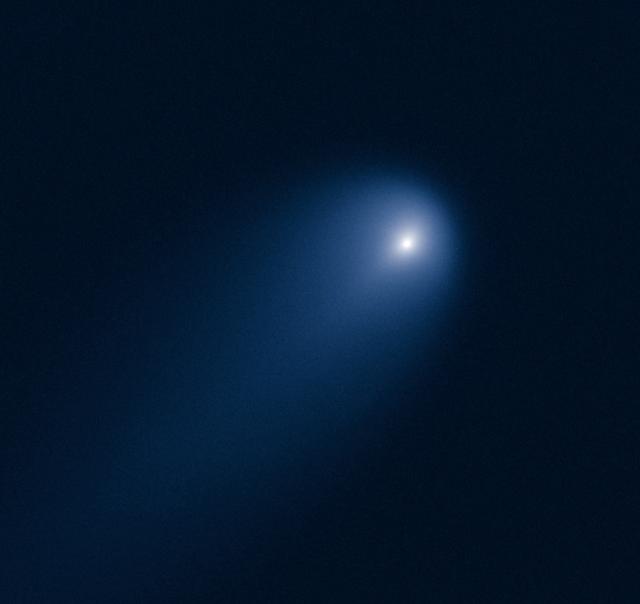
April 10 Hubble View of ISON
2017-12-08 · NASA Image and Video Library
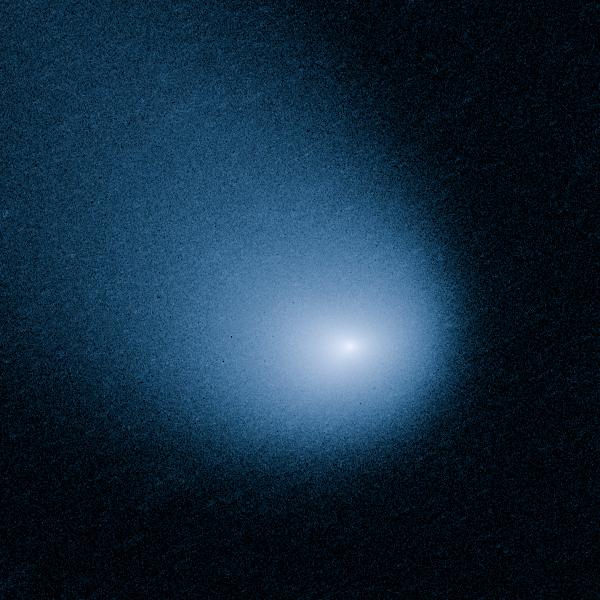
April 30 Hubble View of ISON
2017-12-08 · NASA Image and Video Library
Hubble's View of Comet Siding Spring
2017-12-08 · NASA Image and Video Library
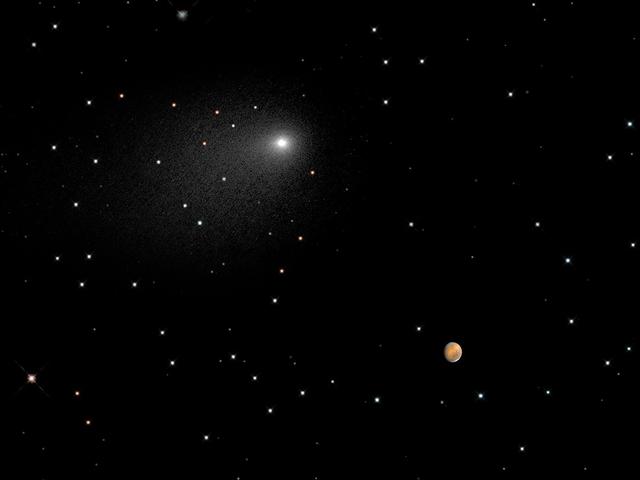
Comet Siding Spring Seen Next to Mars
2017-12-08 · NASA Image and Video Library
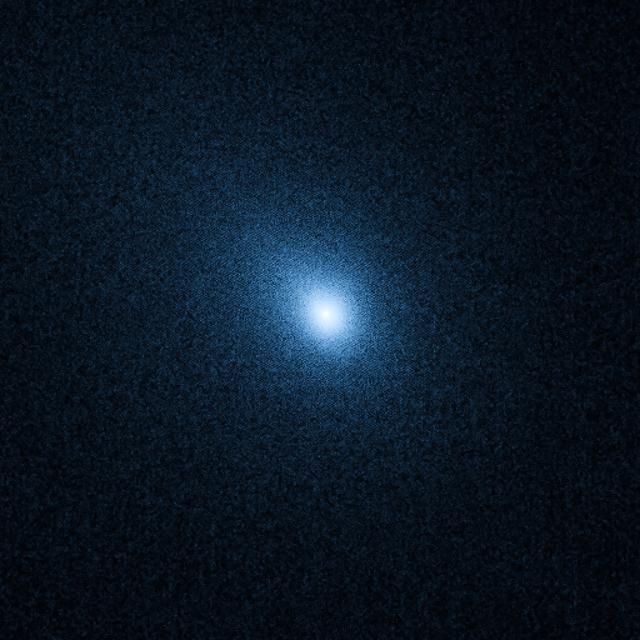
Hubble Probes Comet 103P/Hartley 2 in Preparation for DIXI flyby
2017-12-08 · NASA Image and Video Library