Space Science
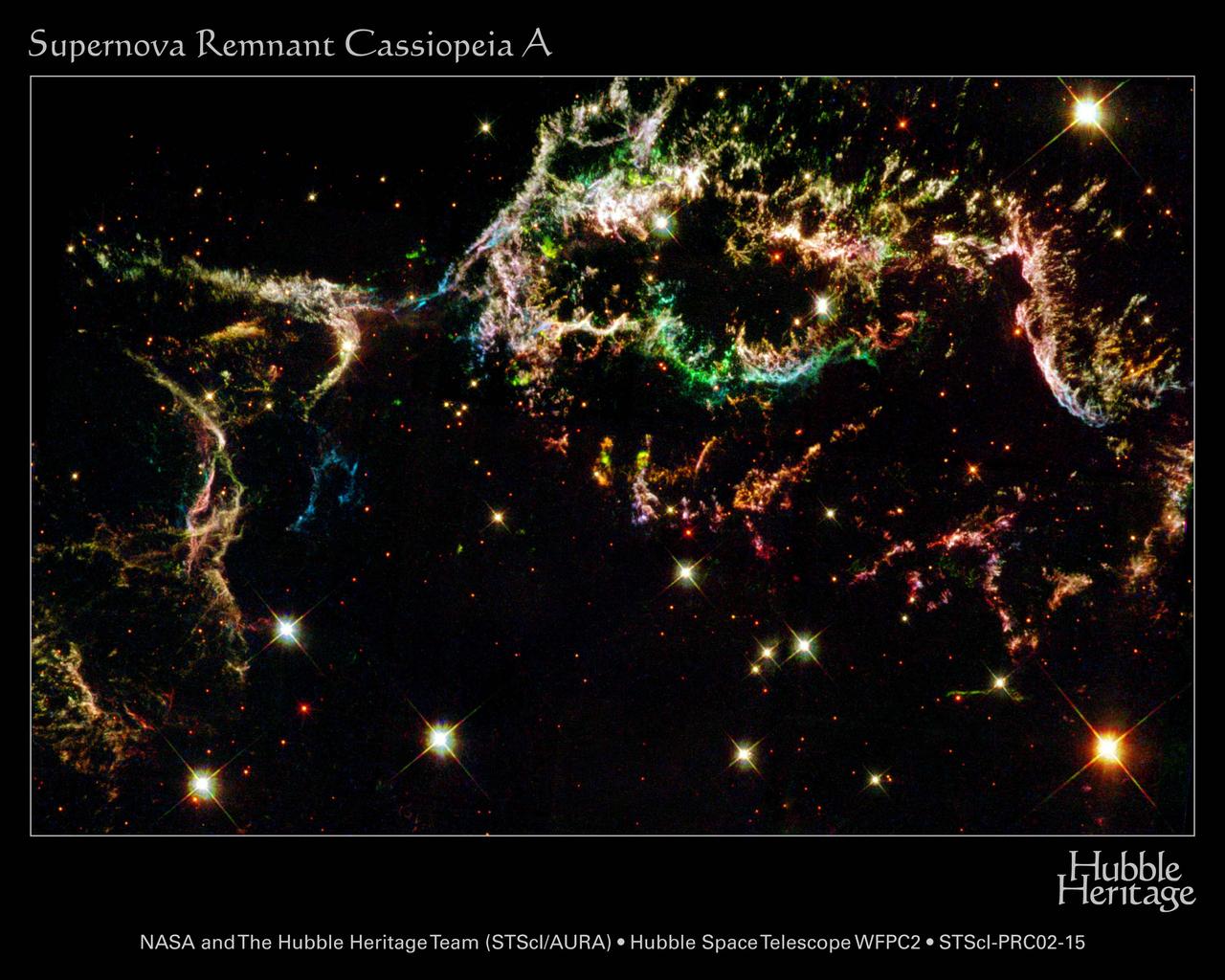
The colorful streamers that float across the sky in this photo taken by NASA's Hubble Space Telescope (HST) were created by the universe's biggest firecracker, the titanic supernova explosion of a massive star. The light from the exploding star reached Earth 320 years ago, nearly a century before the United States celebrated its birth with a bang. The dead star's shredded remains are called Cassiopeia A, or "Cas A" for short. Cas A is the youngest known supernova remnant in our Milky Way Galaxy and resides 10,000 light-years away in the constellation Cassiopeia, so the star actually blew up 10,000 years before the light reached Earth in the late 1600s. This HST image of Cas A shows for the first time that the debris is arranged into thousands of small, cooling knots of gas. This material eventually will be recycled into building new generations of stars and planets. Our own Sun and planets are constructed from the debris of supernovae that exploded billions of years ago. This photo shows the upper rim of the super nova remnant's expanding shell. Near the top of the image are dozens of tiny clumps of matter. Each small clump, originally just a small fragment of the star, is tens of
- Date
- 2000-01-01
- Collection
- MSFC
- Archive
- NASA Image and Video Library
- Type
- photograph
Public domainsafest
Reason: a NASA work: not copyrighted in the United States.
Read from: NASA media usage guidelines: NASA material is not copyrighted in the US unless noted; no third-party credit or mark found.
Credit line
"Space Science" (2000-01-01). NASA/MSFC. Public domain. https://images.nasa.gov/details/0203043Need photos for a whole script? Add Find Any Photo to Claude and ask for this one by its id: 18041.
More like this
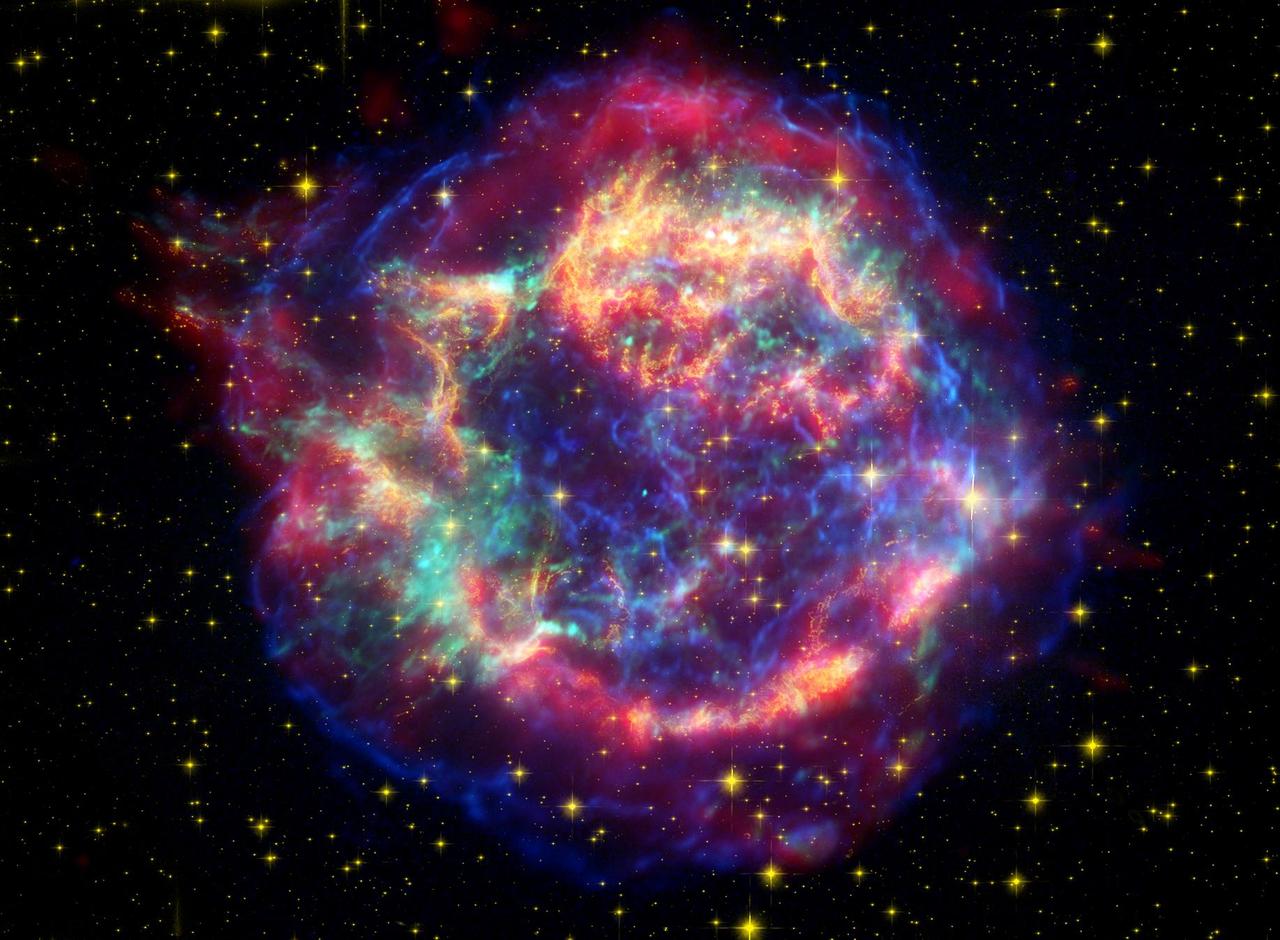
Cassiopeia A: Death Becomes Her
2005-06-10 · NASA Image and Video Library
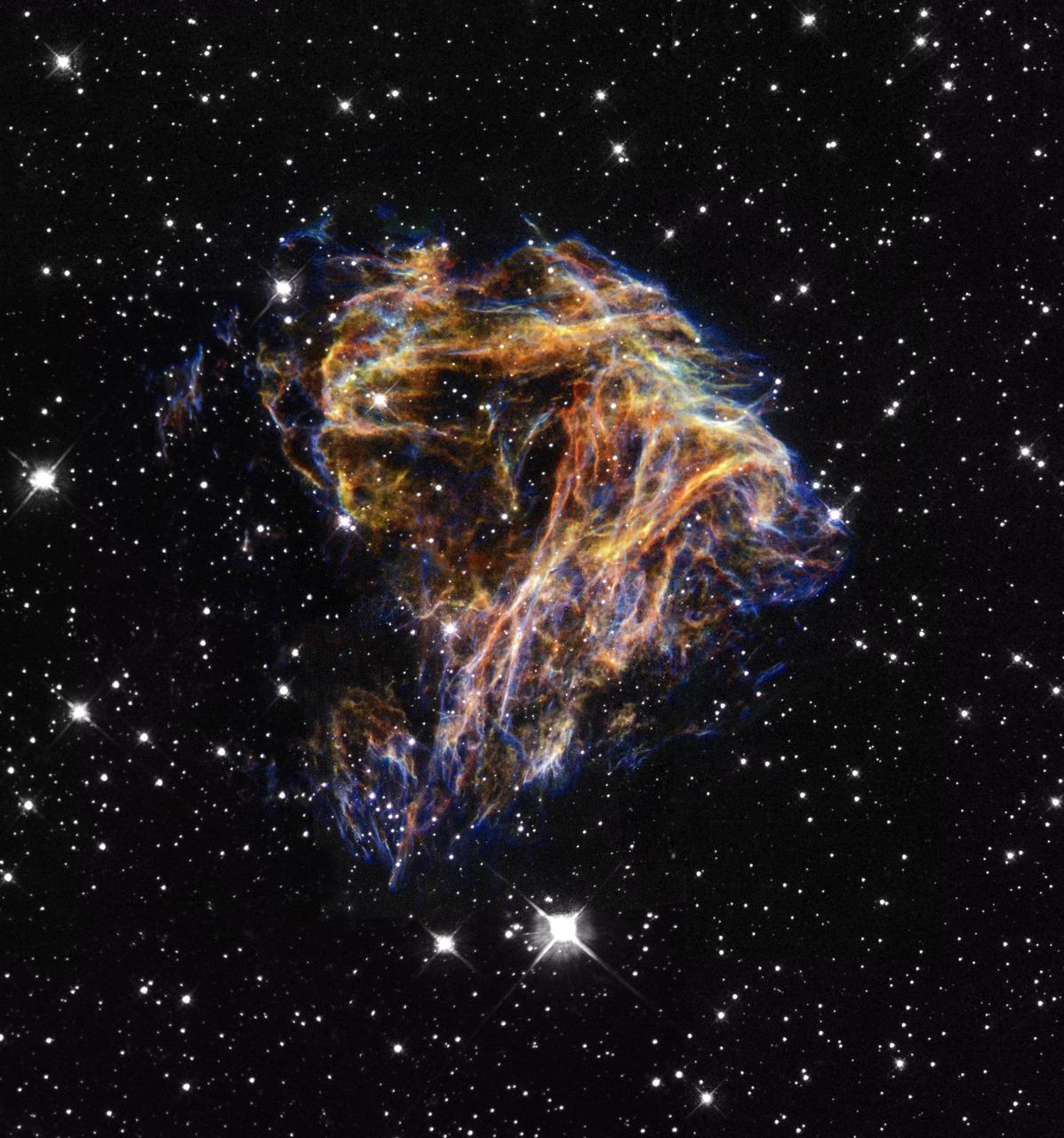
Celestial Fireworks
2003-07-03 · NASA Image and Video Library
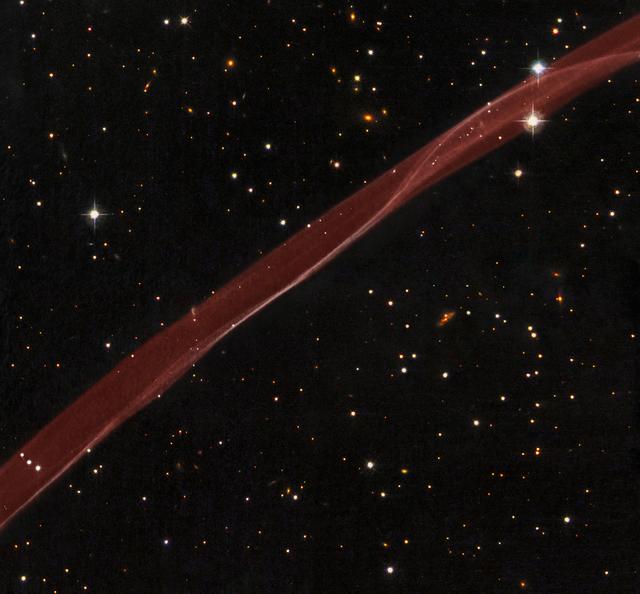
Hubble Sees Stars and a Stripe in Celestial Fireworks
2017-12-08 · NASA Image and Video Library

Crab Nebula
2017-12-08 · NASA Image and Video Library
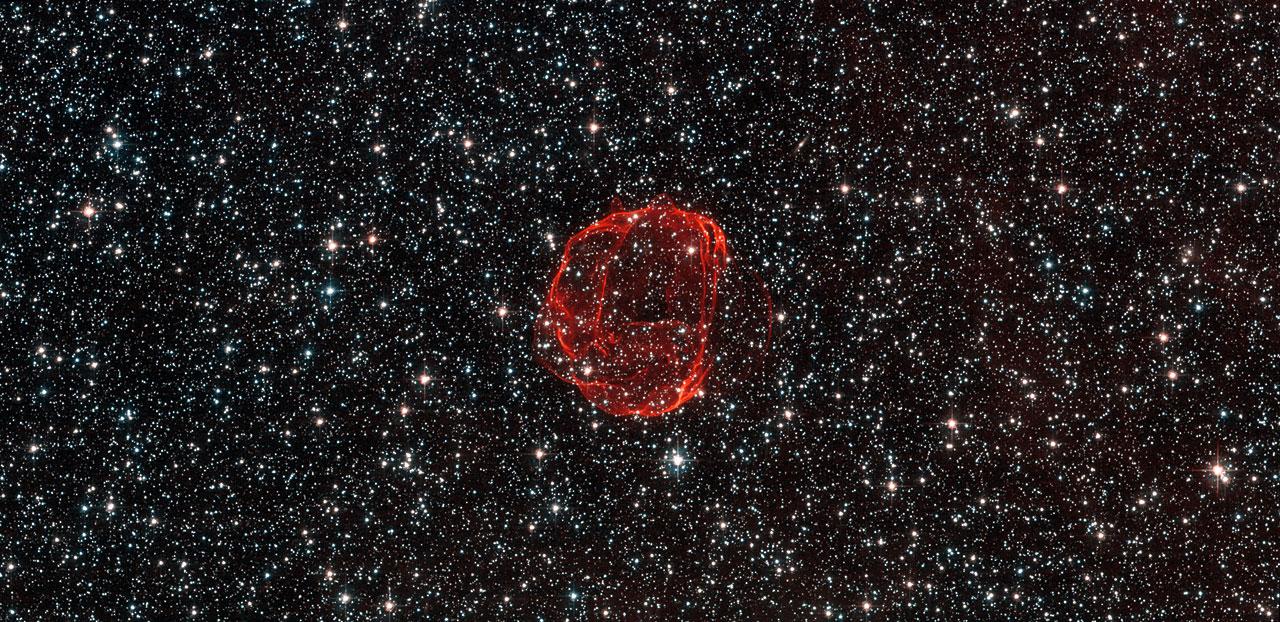
Hubble Sees the Remains of a Star Gone Supernova
2017-12-08 · NASA Image and Video Library
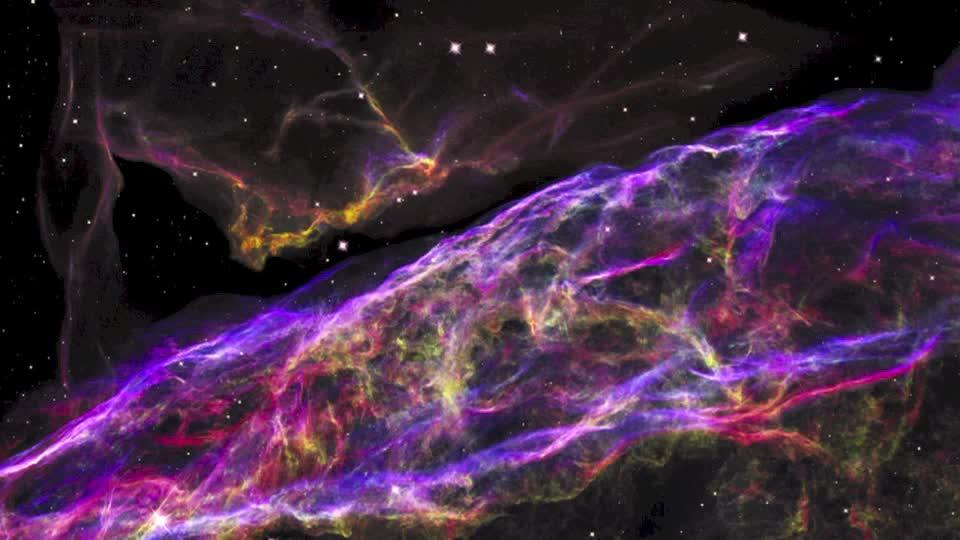
Hubble Zooms in on Shrapnel from an Exploded Star
2017-12-08 · NASA Image and Video Library

History of Hubble Space Telescope (HST)
2000-07-01 · NASA Image and Video Library
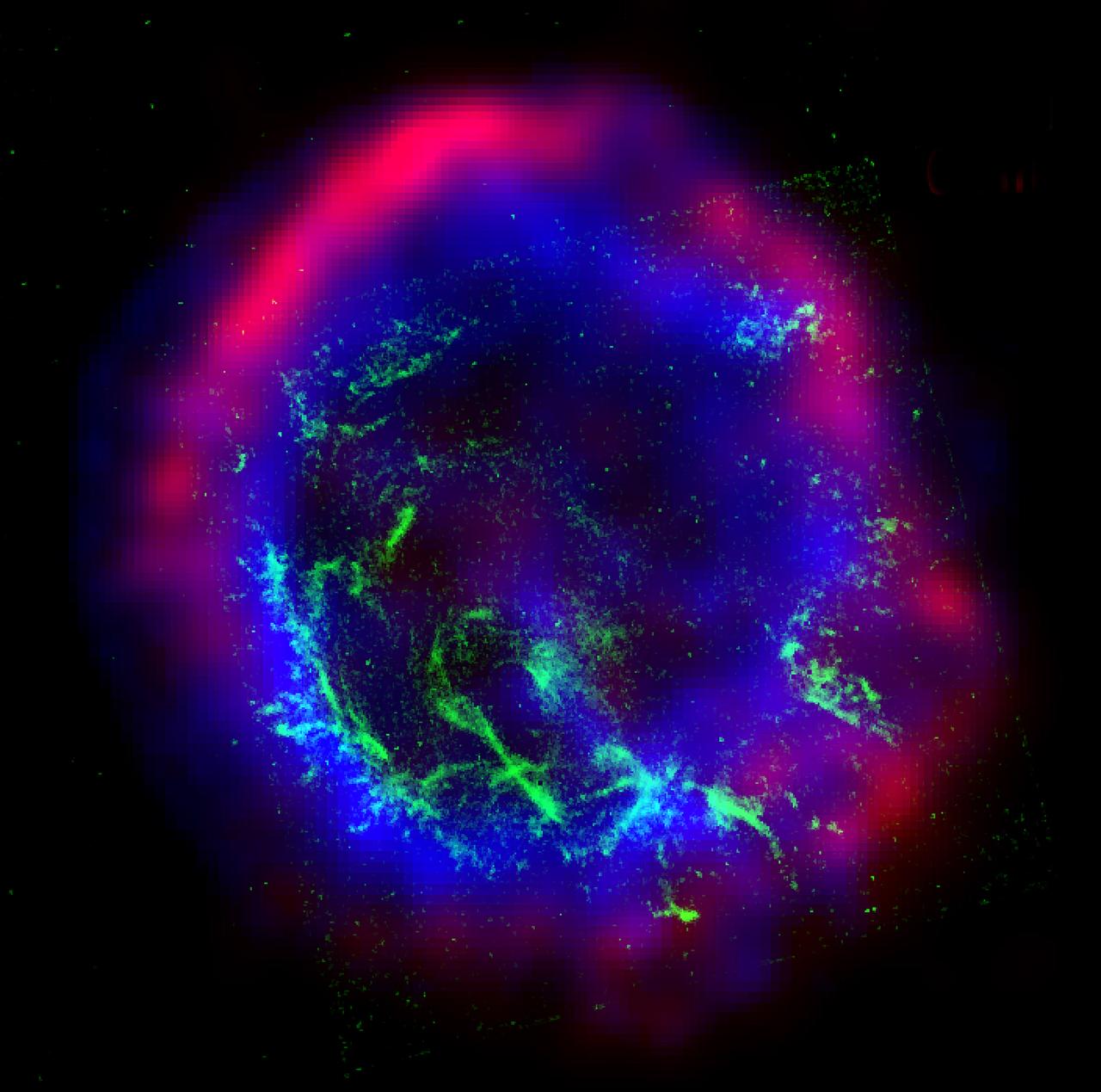
History of Chandra X-Ray Observatory
2000-11-01 · NASA Image and Video Library