
Hubble Finds Supernova Companion Star after Two Decades of Searching
This is an artist's impression of supernova 1993J, an exploding star in the galaxy M81 whose light reached us 21 years ago. The supernova originated in a double-star system where one member was a massive star that exploded after siphoning most of its hydrogen envelope to its companion star. After two decades, astronomers have at last identified the blue helium-burning companion star, seen at the center of the expanding nebula of debris from the supernova. The Hubble Space Telescope identified the ultraviolet glow of the surviving companion embedded in the fading glow of the supernova. More info: Using NASA’s Hubble Space Telescope, astronomers have discovered a companion star to a rare type of supernova. The discovery confirms a long-held theory that the supernova, dubbed SN 1993J, occurred inside what is called a binary system, where two interacting stars caused a cosmic explosion. "This is like a crime scene, and we finally identified the robber," said Alex Filippenko, professor of astronomy at University of California (UC) at Berkeley. "The companion star stole a bunch of hydrogen before the primary star exploded." SN 1993J is an example of a Type IIb superno
- Date
- 2017-12-08
- Collection
- GSFC
- Archive
- NASA Image and Video Library
- Type
- illustration (NASA artwork)
Public domainsafest
Reason: a NASA work: not copyrighted in the United States.
Read from: NASA media usage guidelines: NASA material is not copyrighted in the US unless noted; no third-party credit or mark found.
Credit line
"Hubble Finds Supernova Companion Star after Two Decades of Searching" (2017-12-08). NASA/GSFC. Public domain. https://images.nasa.gov/details/GSFC_20171208_Archive_e000993Need photos for a whole script? Add Find Any Photo to Claude and ask for this one by its id: 16598.
More like this

Hubble Sees a Star Set to Explode
2017-12-08 · NASA Image and Video Library
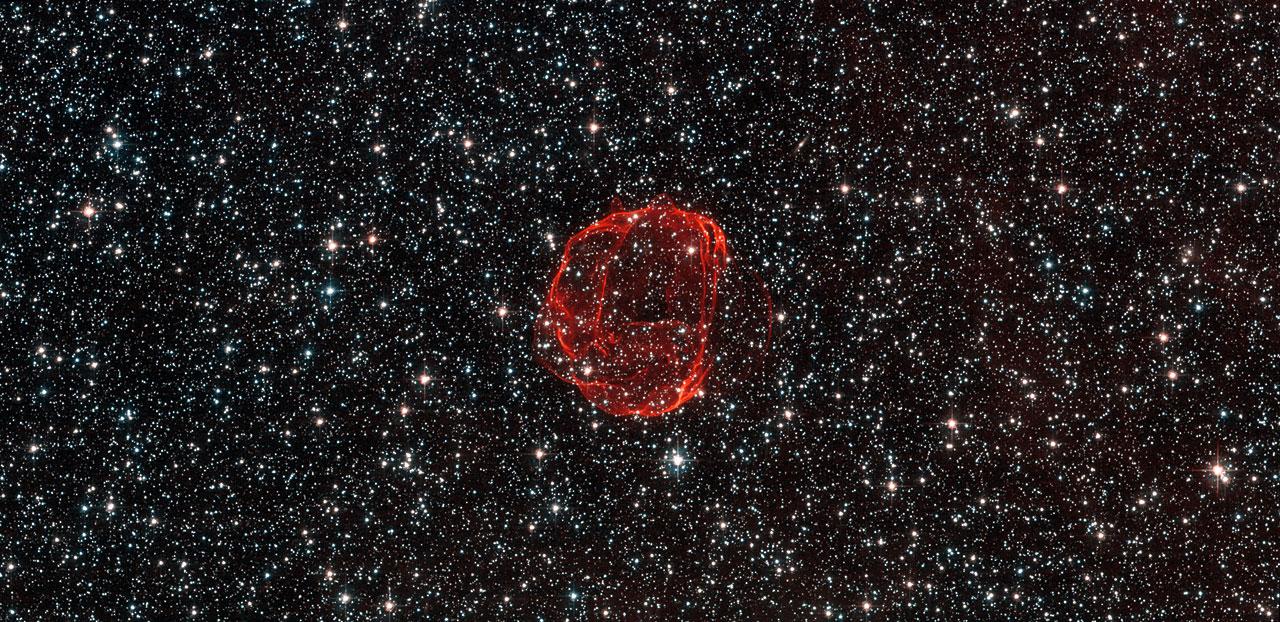
Hubble Sees the Remains of a Star Gone Supernova
2017-12-08 · NASA Image and Video Library
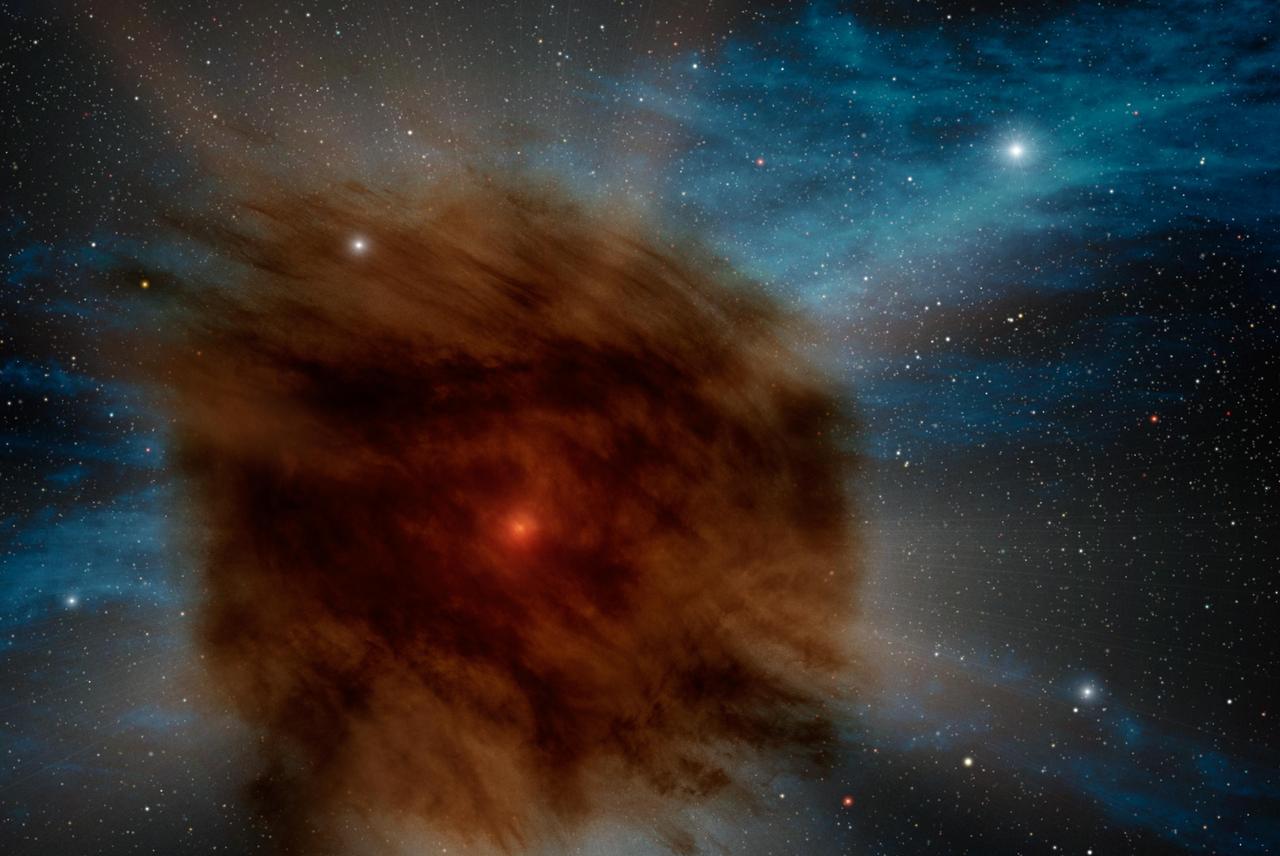
Giant Star Goes Supernova, Smothered by its own Dust Artist Concept
2010-10-12 · NASA Image and Video Library
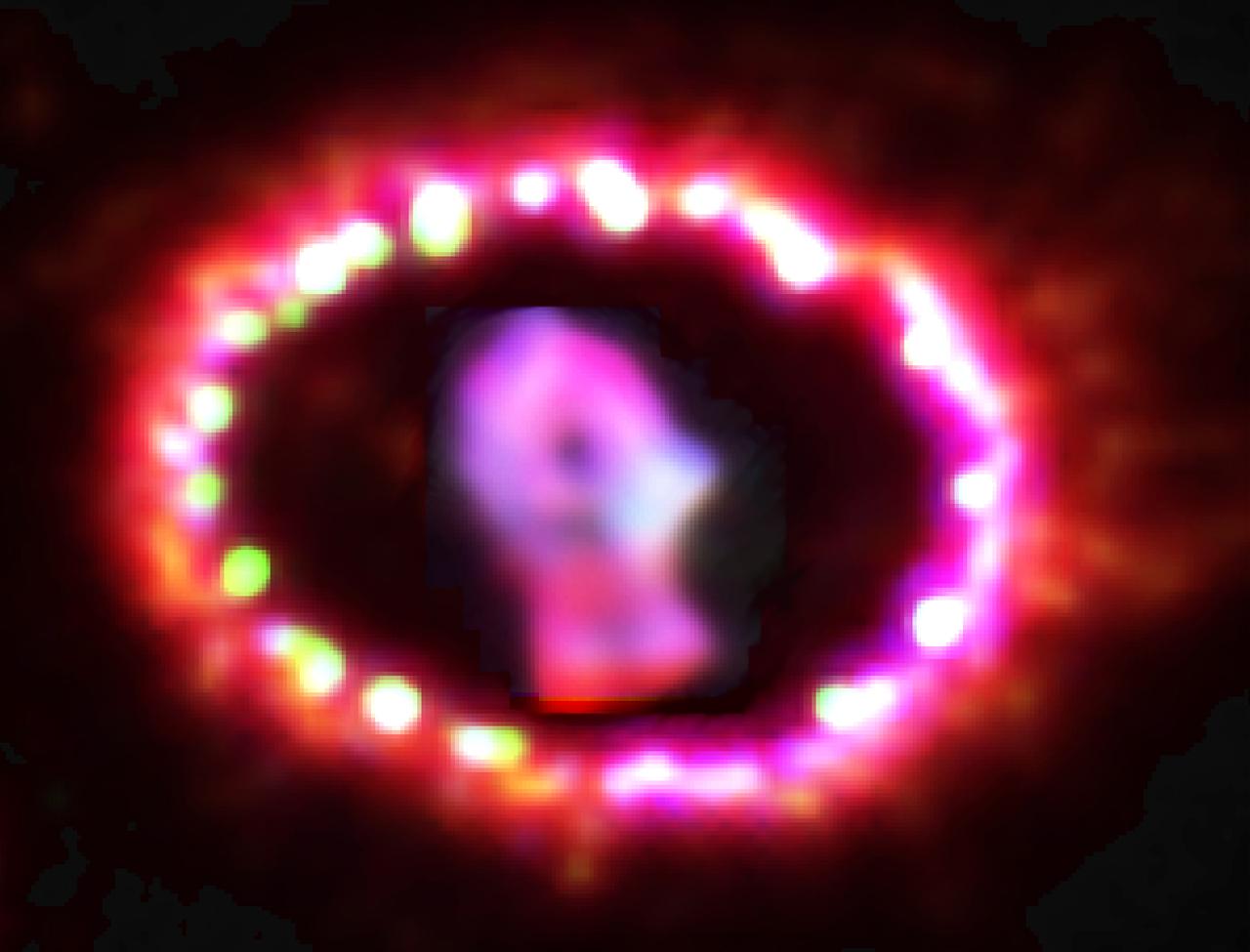
NASA's Hubble Sees A New Supernova Remnant Light Up
2017-12-08 · NASA Image and Video Library

Hubble snap a beautiful supernova explosion some 160,000 light-years from Earth
2017-12-08 · NASA Image and Video Library

Preview of a Forthcoming Supernova
2017-12-08 · NASA Image and Video Library

Hubble Supernova Bubble Resembles Holiday Ornament
2017-12-08 · NASA Image and Video Library

New Hubble Observations of Supernova 1987A Trace Shock Wave
2017-12-08 · NASA Image and Video Library