
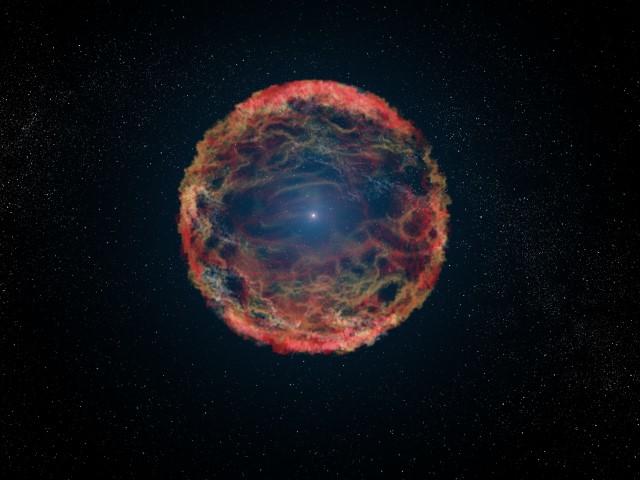
Preview of a Forthcoming Supernova
Supernova Supernovae can occur one of two ways. The first occurs when a white dwarf—the vestigial ember of a dead star—passes so close to a living star that its matter leaks into the white dwarf. This causes a catastrophic explosion. However most people understand supernovae as the death of a massive star. When the star runs out of fuel toward the end of its life, the gravity at its heart sucks the surrounding mass into its center. At temperatures rocketing above 100 billion degrees Fahrenheit, all the layers of the star abruptly explode outward. The explosions produced by supernovae are so brilliant that astronomers use their luminosity to measure the distance between galaxies, the scale of the universe and the effects of dark energy. For a short period of time, one dying star can appear to shine as brightly as an entire galaxy. Supernovae are relatively common events, one occurring in our own galaxy once every 100 years. In 2014, a person could see the supernova M82 with a pair of binoculars. The cosmologist Tycho Brahe’s observation of a supernova in 1572 allowed him to disprove Aristotle’s theory that the heavens never changed. After a supernova, material expelled in the explos
- Date
- 2017-12-08
- Collection
- GSFC
- Archive
- NASA Image and Video Library
- Type
- photograph
Public domainsafest
Reason: a NASA work: not copyrighted in the United States.
Read from: NASA media usage guidelines: NASA material is not copyrighted in the US unless noted; no third-party credit or mark found.
Credit line
"Preview of a Forthcoming Supernova" (2017-12-08). NASA/GSFC. Public domain. https://images.nasa.gov/details/GSFC_20171208_Archive_e001783Need photos for a whole script? Add Find Any Photo to Claude and ask for this one by its id: 17153.
More like this

Hubble snap a beautiful supernova explosion some 160,000 light-years from Earth
2017-12-08 · NASA Image and Video Library
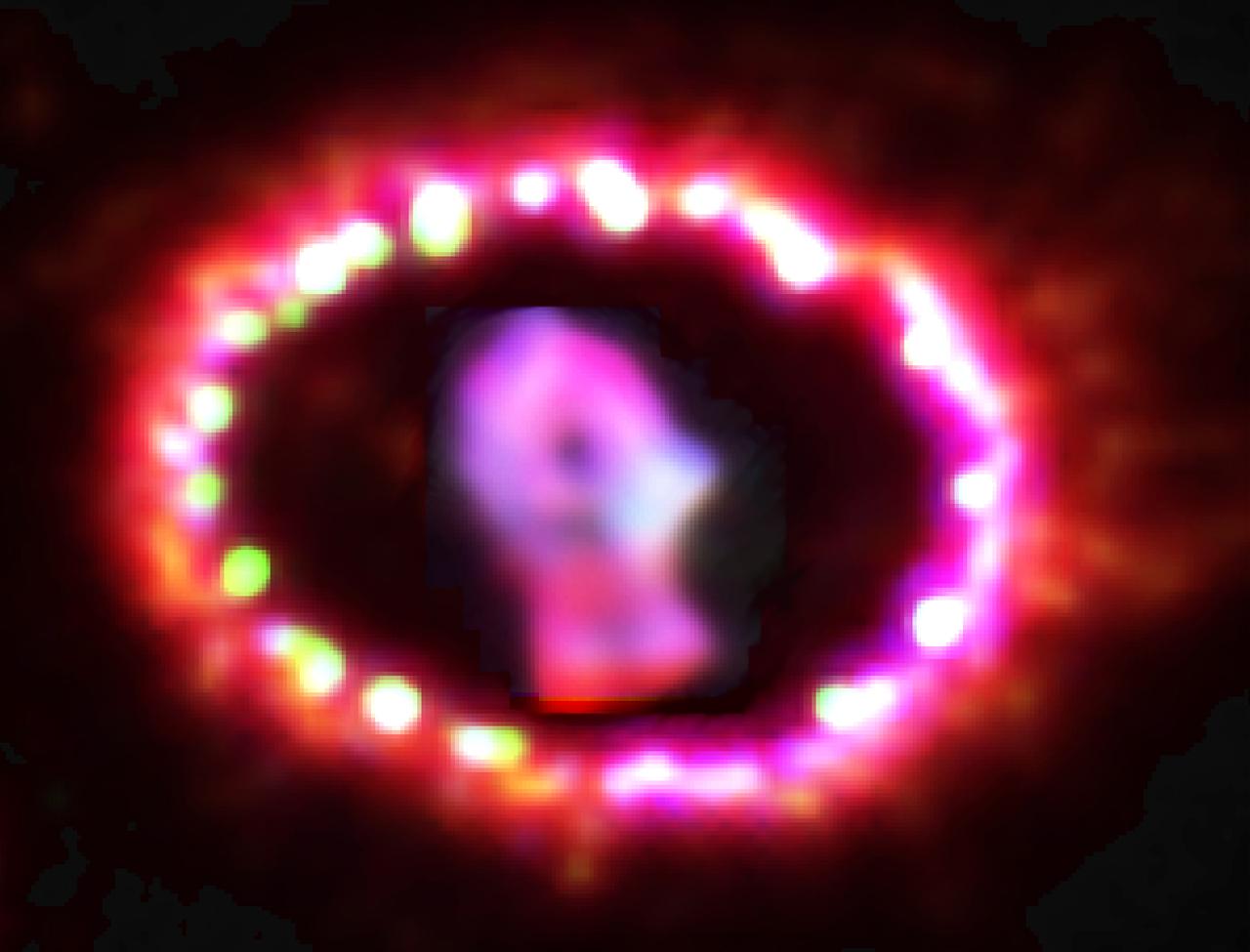
NASA's Hubble Sees A New Supernova Remnant Light Up
2017-12-08 · NASA Image and Video Library
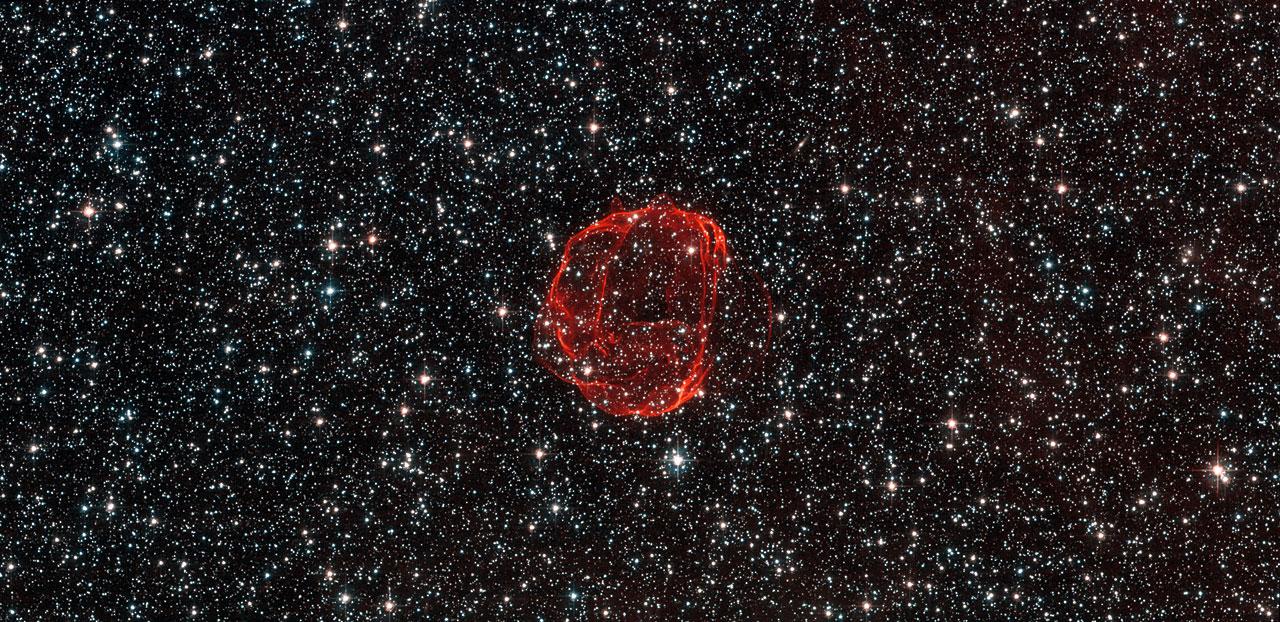
Hubble Sees the Remains of a Star Gone Supernova
2017-12-08 · NASA Image and Video Library
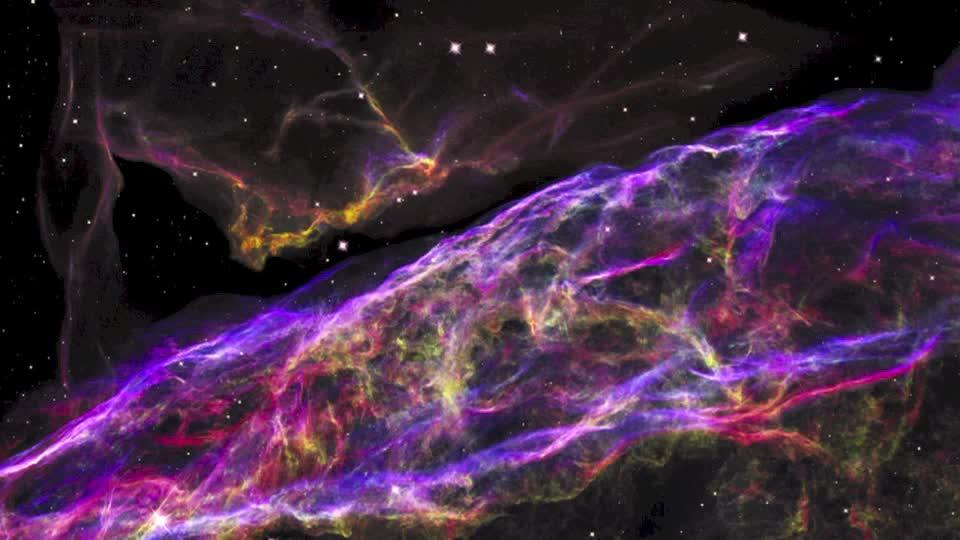
Hubble Zooms in on Shrapnel from an Exploded Star
2017-12-08 · NASA Image and Video Library
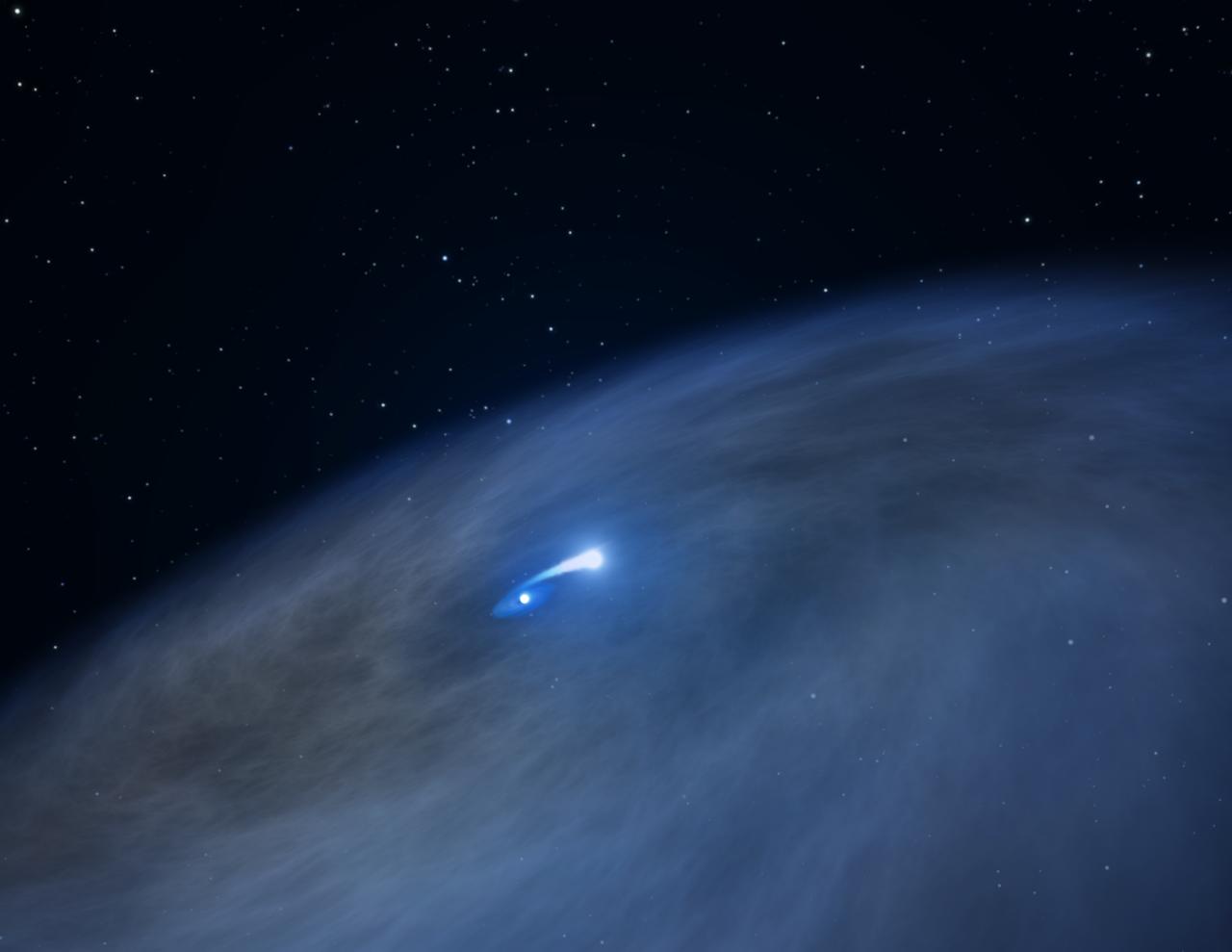
Hubble Observes One-of-a-Kind Star Nicknamed ‘Nasty’
2017-12-08 · NASA Image and Video Library

Hubble Sees a Star Set to Explode
2017-12-08 · NASA Image and Video Library
Hubble Finds Supernova Companion Star after Two Decades of Searching
2017-12-08 · NASA Image and Video Library
Hubble Sees a Dying Star's Final Moments
2017-12-08 · NASA Image and Video Library